

Leigh and his former toy, in the Arizona desert, May 2009. Sold October 2009. Photo and off-road driving by Nancy.
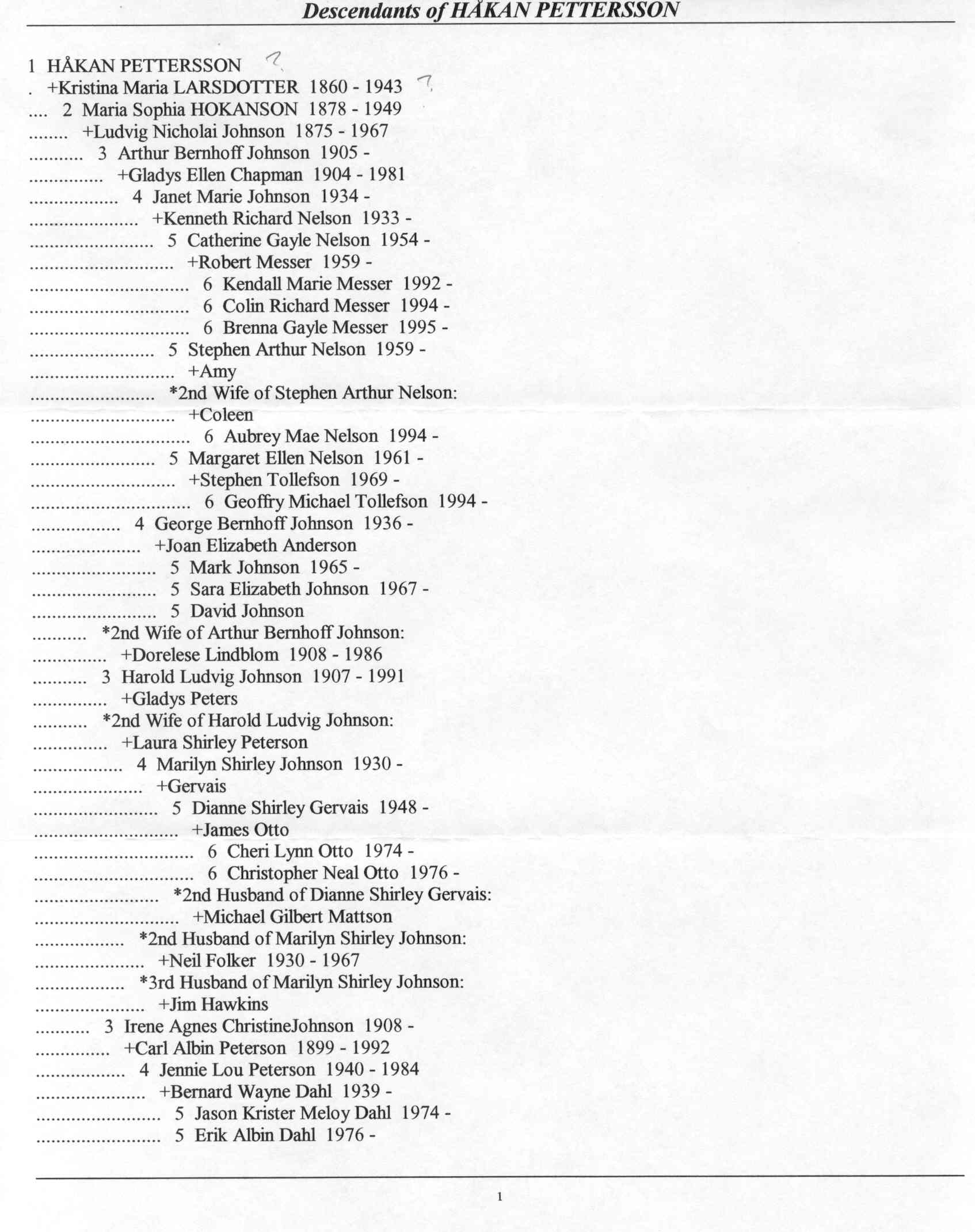
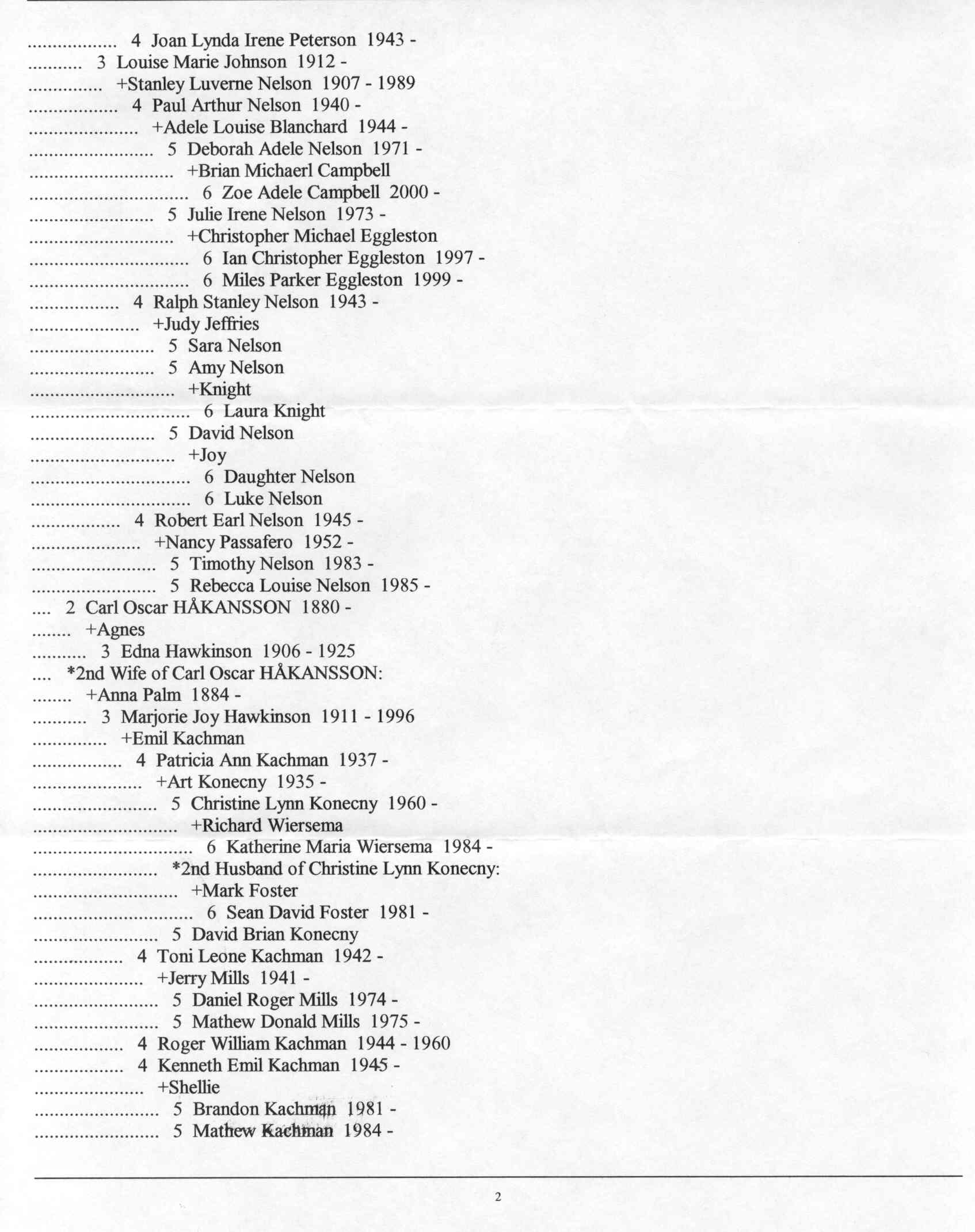
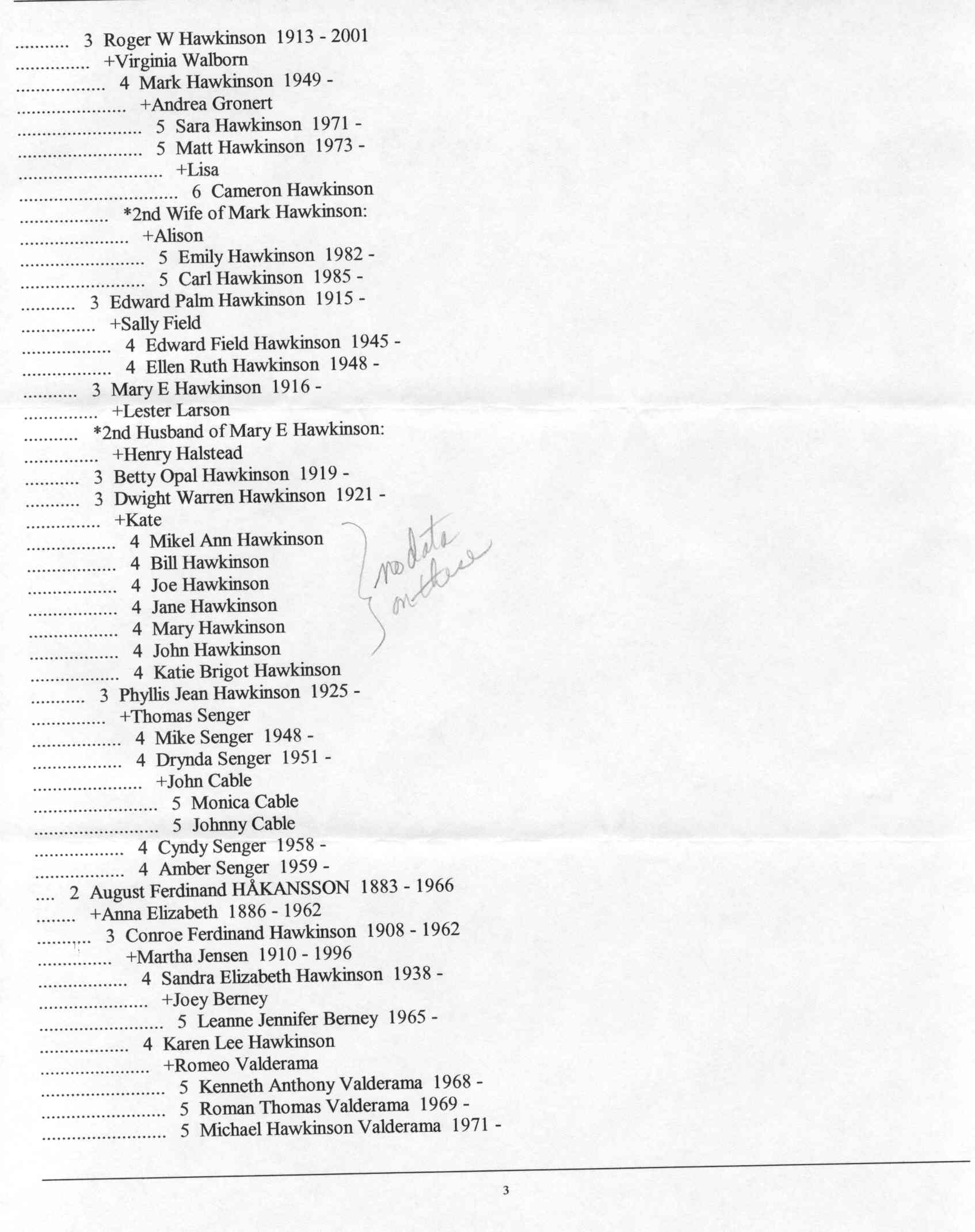
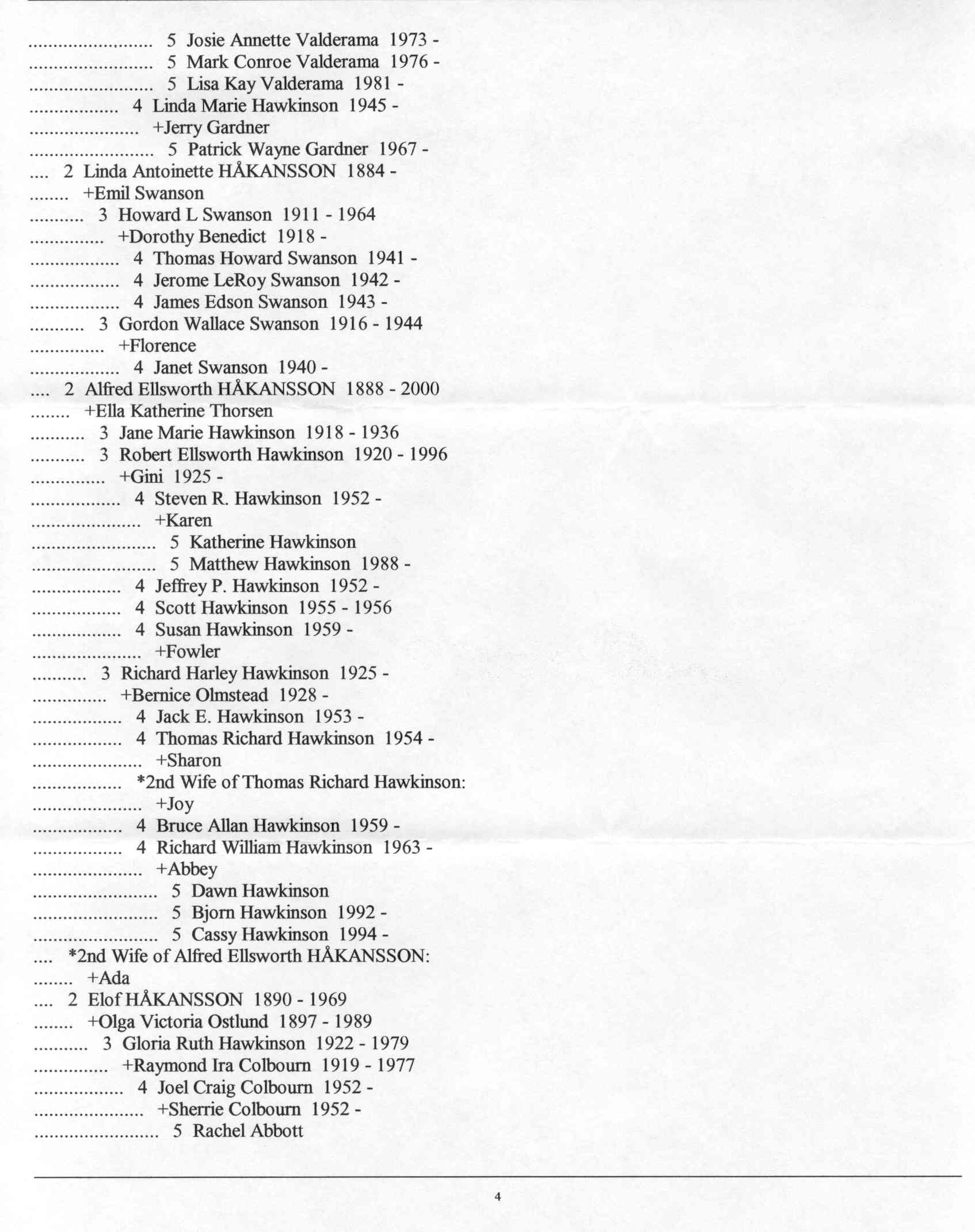
STEPHENSON, Kenneth Haig - on Thursday, June 19, 2008, in his 91st year. Husband of the late Kathleen Leslie Blott. Survived by his daughter Leslie Anne and her husband Brian Douglas Wilson; his granddaughter Martha Coralie and her husband Alexander Rados, and many nieces and nephews. A celebration of Ken's life will be held at the NEWCASTLE FUNERAL HOME, 386 Mill St. S (just north of 401 at the lights) on Friday, July 4, at 1:00 p.m. At his request, donations in his memory to the Newcastle Village and District Historical Society would be appreciated. (Expressions of sympathy may be made on-line through www.newcastlefuneralhome.com.)
From: "Albert Pletenik"
To: "Gordon Lewis"
Subject: Genealogy
Date: Wednesday, March 26, 2003 3:23 PM
Dear Gordon,
I don't know how much help I can be on the genealogy of the Larson family. On
the reunion picture, I can help you. The girl sitting next to me is my sister
whose name is Edith Anderson. As you know, I was adopted at age 6 weeks by
Arthur and Norma Larson. My sister remained with my biological father, Gus
Anderson. I have no recollection of the other names you mentioned. Sorry I can't
help you further.
Love, Esther
In 1686, the Sunday after Midsummer Day, came Håkan Tyggesson together with Lönbo-Lasse and Tjuva-Håkan to Jöns Nilsson in Glosebo. But he was in the church at the moment, so they could easily fish pikes in the mere near to the farm. When Jöns Nilsson came home, they started to argue about the fishing earlier that day. Tjuva-Håkan and Lönbo-Lasse mingled in the fight, and Tjuva-Håkan went forward to Jöns and said that he (Jöns) had spoken badly about Tjuva-Håkan to the parson. Jöns denied that, but Håkan took a few steps back, raised the rifle and shot Jöns. The criminals fled from the scene of their crime, and the next day Jöns died.
Håkan Tyggesson was judged for the participation in the
murder. But in front of judge he told a story of how the day of
the killing of Jöns, had done innocent pleasures. Fishing of
pikes and hunting wild-ducks. He managed to convince the judge
that he was innocent. He was set free, but he was judged to pay
fine for trade with stolen properties (another crime not related
to the killing of Jöns Nilsson). Tjuva-Håkan was judged for the
murder, but he managed to flee. Soldiers were sent after him,
but it took nearly two years before the justice caught him up.
In May 1688 Tjuva-Håkan visited Amund in Skälstången. Amund gave
him food and Scandinavian vodka. When Tjuva-Håkan swaggered
about all crimes he had done, Amund lost his temper and with an
axe-head hit him twice in the head. Tjuva-Håkan died, but Amund
wasn't charged for the killing. The legality in the killing of
Tjuva-Håkan was never questioned.
Best regards, Per
People was satisfied and calmed down when Tjuva-Håkan was executed. Earlier that year Lönbo-Lasse had also been condemned to death and was now in safe custody on Kalmar castle. They just awaited the court of appeal to ratify the death sentence. But they shouldn't be rid of him that easy.
His origin name was Lars Olsson/Olufsson. In his youth he served four years as a soldier. Even then he had stolen things and had to run the gauntlet six times in Vassmolösa. Later he joined the band of highwaymen, who lived in the forests. During a few years he had operated together with Tjuva-Håkan, who had been a loyal servant to him. The second intercession day 1686, they went to Anders Larsson in Buskabod, Fridlevstad. He was away on the morning service. Every man was in the church, so the thieves could operate undisturbed. A few women were left but Lasse and Håkan got rid of them by lock them up in a cottage on the farm. It was the hope chest they wanted. Håkan kept watch while Lasse in peace and quiet could take the expensive articles: 9 silver belt, 16 silver chains, 5 silver spoons, 2 silver rings, 2 pair of leather breeches, 10 chamois leather, 1 coat with silver buckle, skirts, shoes, trousers, sweaters, gloves, caps, various jewelry in silver etc. In "Danska Flyen" they unlawfully had taken silver and clothes, and in Elmbo, Konga jurisdictional district, they had stolen one silver spoon and on cheese, while the owner watched. But Lasse had much more than these crimes on his conscience, and the jury and the peasantry in Torsås and Vissefjärda parishes complained miserable about his and his fellow's indecent robberies, which filled the people with terror. But now he was jailed in Kalmar castle, in safe custody. They all believed.
The court of appeal changed the verdict, from death to run gauntlet twice and then work the rest of his life with iron collar in Marstrand. After he had ran gauntlet he managed to escape twice from those who should take him to Marstrand. Soon he was back in his home districts, but he didn't dare/risk to stay at his wife's house. Instead he lived in the forests between Lönbo and Glosebo. He hoped to get pardon from the king so he kept quiet for a year without making any people any hurt. There were many that were accused in front of the judge because they during this time had housed or given him food and drink. It was worst for Maria Persdotter in Öjebomåla who had let him in while the manservants tried to catch him. She denied, but was convicted when they found Lasse's coat hanging in her hall. Then she confessed that she had helped him escaped from the window when they sheriff entered. For her offence she was whipped. But it didn't take long time before Lasse was back in the game again. Six weeks before Easter in 1690, he met Ingier Åkesdotter in Långemåla in Tvings parish. She became a loyal companion. The day after Easter they went north on false passport. According to Lars the meaning was that he should get work in Kopparberget and by that save his own life. Outside Linköping they were caught and removed to Kalmar castle. In June 1690 pro tempore district court-session was held in Vassmolösa to hear Lars Olsson. The session continued in two days, during which Lasses whole register of his sins passed in review before a big public. Except for stealing, he was accused of various faults. In Kroksmåla while the people was in church, he had frightened the old man Jon Persson and his wife (who were at home and watched the farm) so they were forced to flee to the forest. Whereupon he undisturbed could grabb whatever he wanted. At Tygge in Skruvemåla, Gumme in Petamåla and Per in Hägemåla, he had stolen silver. In Torhult he had hit Per Germundsson, taken food and drink, barked on his wife and fired his rifle, so the wad had fallen on a maid carrying Per's child. Boatswain Hindrich Malm was hit with the rifle under the left ear.
A purse, which Lasse had when they captured him, consisted of silver (which had stolen from Johan Svensson in Långasjö). A leather purse contained with witchcraft articles, among these a snakehead, a fetal membrane, rowan, a raven heart etc. He had been given the things on the way to Marstrand, but he said that he didn't know what the purpose with the things was or the name of the man who had given him these things. It was illegal to devote to black magic.
Many people came to the judge and accused Lars for thefts, they believed Lars had done. Lasse answered them by saying they shouldn't accuse him for things he hadn't done. Lasse told that there were people who committed crimes. He continued to say that Per Löf's wife in Bungamåla, had asked him to get her arsenic to kill her stepson. Lasse also knew what Gertrud Jonsdotter in Stålberg should mix in the drinks to get rid of an uncomfortable witness. Lars Olsson was exorted consider his eternal souls blessedness and truthful confess what more he had done those years he spent in the forest. But he claimed that he had nothing more to admit and applied for pardon. The Judge for second time condemned him to death. This time the sentence was carried out. He was hanged October 1, 1690.
SOURCE: Laurentius Larsson
>To: "Per Carlzon"
>Date: Wed, 24 Apr 2002 20:00:16 -0500
>>Hi, Per.
>>I have not heard from Jorgen Danielsson yet. However, I came across another name for you: Andrew Peterson, who has an e-mail address of appeters@pacbell.net
>>He seems to be a relative of August Norlin. I have attempted to attach two messages. I hope you get them. He uses Ancestry.com for posting some of his family history.
>>Sincerely, Leigh
- Eleanora May King: Born May 14, 1875 in Roseville Twp., Newton Co., MN; Died April 26, 1957 in Tacoma, Pierce Co., WA (age 81). Married November 1, 1899 in Goodhue Co., MN to William Henry George: Born May 26, 1876 in Irving, Kandiyohi Co., MN; Died September 1, 1948 in Spanaway, Pierce Co., WA (age 72).
Descendants of Alfred Harris
Generation No. 1
1. ALFRED1 HARRIS was born December 07, 1846 in NY, and died March 29, 1925 in New London, Kandiyohi, MN, Hawick Cem. MN. He married (1) JENNIE LORRIE HAGEN 1868. She was born 1854 in Norway, and died August 01, 1907. He married (2) EMILY KING 1912, daughter of RUSSELL KING and DIADAMA TRUESDELL. She was born April 13, 1848 in WI, and died October 17, 1936 in Roseville, Kandiyohi, MN.
Notes for ALFRED HARRIS:
1880: Paynesville, Stearns Co, MN: Alfred K 32 b. in MI? farmer, wife Jennie K 26 b. Norway, Elmer 9, Lillie J. 3, Gertie L.M. 7 months, all born MN
NEW LONDON TIMES, Apr 9, 1925 Frt Pg - Alfred Harris, whose death was mentioned briefly in last week's issue, He was born in New York State Dec 7, 1846, and thus reached the age of 78 years, 3 months, and 22 days. He was the oldest son of Mr. and Mrs. Gust Harris. When still a boy, he moved with his parents to Hudson, Mich., and in 1865 came to Minnesota and settled on a farm 3-1/2 miles east of New London, where his parents lived for many years, and where they died more than 30 years ago. In October, 1868 Alfred married to Miss Jennie Hagen at Union Grove, Meeker county, and for a number of years after his marriage resided in the vicinity of Hawick. Seven children were born to this union, five of whom survived him. namely, Mrs. Lillie J Payne of Hawick, Mrs. May Frayer and Mrs. Anna Noakes of Brainerd, Henry R Harris of Hackensack, and Roy A Harris of St. Cloud. The deceased children are Elmer Harris, who died Feb 22, 1896, and Mrs. Martha E of Noakes, who died Jul 9, 1908. In 1901 the family moved to Brainerd, where they resided until the death of Mrs. Harris, which occurred Aug 1, 1907. Later Mr. Harris returned to Kandiyohi county, and about 11 years ago was again united in marriage with Mrs. Welch of Hawick, who survives him. Mr. Harris had been in poor health for a year, and had been confined to his bed for about a month, but seemed to be improving. His daughter, Mrs. Frayer and Mrs. Noakes of Brainerd, and son Roy, of St. Cloud, had been here to visit with him, but had returned to their respective homes, inasmuch as he seemed so much better, and his sudden passing came as a great surprise to them. Mrs. Payne was the only one of his children with him when the end came. He was conscious until the last and death came very peacefully. Beside the wife and children heretofore mentioned, he is survived by two sister, Mrs. James Buchanan of this village, and Mrs. James Dilley of St. Cloud, and five brothers, George, William, John and Daniel, all of New London, and Ed, of St. Cloud, all of whom were in attendance at the funeral except the latter mentioned. He is also survived by thirteen grandchildren and one great grandchildren and several nephews and nieces. The funeral was held at the New London Presbyterian church at 2:30 P.M. on March 31. Because of the sickness of Rev. Findley, the services were conducted by Rev. Haggans of Paynesville. The remains were placed at rest in the plot beside those of his wife and two children who had gone before, in Hawick cemetery. The pallbearers were, F.H. Smithson, W.O. Parker, C.J. Parker, A.E. Hudson, F.P. VanVorst, and W.W. Barber, all old friends of the deceased. Henry Harris of Hackensack was the only member of the family absent at the funeral. He has been sick ever since the war and was unable to see his father at any time during the latter's sickness.
Notes for EMILY KING:
1860: Warsaw, Goodhue Co MN: Russell 54 b. NY, Diadama 52 b. NY, Celestia 14 b. WI, is my 2nd Great Grandmother - Jean. Emily 13 b. WI, Martin 10 b. WI
1865: Warsaw, Goodhue Co MN: EMILY LIVING W/HER PARENTS
1870: Indiana, Clinton Twp, Boone Co: Levi Marley-23 b. Ind, Emily-22 b. NY, Harry-1, b. MN. (1950 WIS Census, Emily was b. NY)
1880: ?
1930: New London, Kandiyohi, MN: Emily Harris 82 b. WI, widow. With her, Levi Welch 40 b. MN.
NEW LONDON TIMES Oct 29, 1936 - Mrs. Emily Harris passed away Oct 17 at the age of 90 yrs, 6 months and 4 days. Funeral held Oct 21 at the Johnson funeral home at New London and M.E. church at Hawick w/Rev. C. B. Dahlberg of the Swedish Mission Church of New London officiating. Pallbearers, O.B. Thorson, F.H. Smithson, W.O. Parker, J. Carlyle, Frank McLouth, W. H. Jones. Interment in family lot Roseville Cemetery. Mrs. Harris well known in this community, lived here most of her life. Survived by 4 sons, 1 daughter, grdchildren, gr grdchildren. CARD OF THANKS: - read "our Mother Emily Harris. Signed the Welch Brothers.
Children of ALFRED HARRIS and JENNIE HAGEN are:
i. LILLE J2 HARRIS, b. 1877.
ii. MAY HARRIS.
iii. ANNA HARRIS.
iv. HENRY R HARRIS.
v. ROY A HARRIS.
vi. ELMER HARRIS, b. 1871.
vii. MARTHA E HARRIS.
Descendants of Gust Levi Harris
Generation No. 1
1. GUST LEVI2 HARRIS (WILLIAM1) was born August 25, 1903 in Kandiyohi County, MN, and died December 10, 1957 in MN State Sanatorium, Cass County, MN, Burial Oak Hill Cem. New London MN. He married ANNA M HALZINGER September 02, 1925 in Willmar, Kandiyohi, MN. She was born 1890, and died 1960.
Notes for GUST LEVI HARRIS:
New London Times, Dec 19, 1957: Gust Levi Harris, 54 died Dec 10th at Walker MN. Funeral at New London Presbyterian Church, burial Oak Hill Cem. Survived by wife, a daughter, (Bonita) Mrs Durard Garberich, Danvers & son, Gayle, Mpls., 3 grdchildren, brothers, Sid Harris, Michigan & Melvin, New London, sister, Mrs Clarence Riser, Hibbing. Pallbearers: Julius Miller, Charles Parker, Harold Barber, Jim Watson, Wesley Emerson, Rueben Hofstad. Music by Mr/Mrs Charles McLouth & Mrs Robert Richardson.
Gust was divorced from Anna Halzinger.
Children of GUST HARRIS and ANNA HALZINGER are:
i. BONITA M3 HARRIS, b. 1927.
ii. GAIL A HARRIS, b. 1929.
viii. GERTIE HARRIS.
Descendants of Irene Nora Harris
Generation No. 1
1. IRENE NORA2 HARRIS (JOHN E1) was born June 12, 1906 in Burbank, Kandiyohi Co MN, and died April 29, 1970 in Willmar, MN Buried Oak Hill Cem. New London MN. She married LAWRENCE JONES. He was born April 18, 1898 in MN, and died December 05, 1970 in
Descendants of John E Harris
Generation No. 1
1. JOHN E1 HARRIS was born March 06, 1865 in MI, and died February 20, 1945 in New London, Kandiyohi, MN, Oak Hill Cem. New London. He married IVA MATHILDA KING Abt. 1910, daughter of MARTIN KING and CYNTHIA MOTTS. She was born April 25, 1883 in Roseville, Kandiyohi, MN, and died January 26, 1966 in New London, Kandiyohi, MN.
Notes for JOHN E HARRIS:
NEW PAYNESVILLE PRESS - Mar 1, 1900 - Hawick News: John Harris has recently taken to himself a wife in the person of Miss Joy King, (step) daughter of Levi King formerly of Paynesville. ("Joy", is Iva Mathilda King, 17, dau of Martin King & Cynthia Motts)
1900: New London, Kandiyohi MN: John Harris, 35 b. May 1865 MI, Ivy 17 b. Apr 1883 MN, Servant, Hilda King (dau of Levi King & Margaret Hoffman) 15, b-Nov 1884 MN
1910:Burbank, Kandiyohi,MN; John Harris-45 b. MI, Joy-27 b. MN, Estella M-7, Irene-4, both b. MN
1920: Burbank, Kandiyohi, MN; John Harris-54, Ida-37, Estella-19, Irene-13, Johnie-8, Harvey-7/12. Living w/Father-in-law Levi King-82
widower b. NY
1930: Burbank, Kandiyohi Co, MN: John Harris 60 b. MI, Mathilda (Iva) 47 b. MN, Children: John L 18, Harvey L 10, Earl M 7, all b. MN. Living w/Cousin Elvera Welch, 15, b. MN, (Par: Arthur/Blanche Welch) & Nephew Melvin Harris 21 b. MN (Par: William/Addie (King) Harris.
NEW LONDON NEWS, Mar 1, 1945: John F Harris, 79, died at his home east of New London, Feb 20th. Survived by wife, two sons in the service, Earl & Harvey, one son, John in Mpls & two daughters, Stella, Mrs George Johnson & Irene, Mrs Lawrence Jones, both of Mpls. Funeral New London Presbyterian Church. Burial Oak Hill Cemetery.
Notes for IVA MATHILDA KING:
New London News, Jan 27, 1966 - Mrs. John (Iva) M Mclouth, 82, of New London, died Wednesday morning at the Willmar Rice Memorial Hospital. Funeral services held at the Presbyterian church, with Rev. M.D. Kruse officiating. Burial, Oak Hill Cemetery. Besides her husband, she is survived by daughter, (Irene) Mrs. Lawrence Jones; three sons, John of Minneapolis, Harvey of New Jersey and Earl of Willmar; Four stepchildren also survive; Mrs. Rollin Gable, Mrs. John Frink, Mrs. Roger Lind, and Duane, all of New London.
Children of JOHN HARRIS and IVA KING are:
i. ESTELLA AKA STELLA2 HARRIS, b. June 22, 1900, New London, Kandiyohi Co MN.
ii. JOSEPH HARRIS, b. February 11, 1904, Burbank, Kandiyohi Co MN; d. February 17, 1904, Burbank, Kandiyohi Co MN.
iii. IRENE NORA HARRIS, b. June 12, 1906, Burbank, Kandiyohi Co MN; d. April 29, 1970, Willmar, MN Buried Oak Hill Cem. New London MN; m. LAWRENCE JONES; b. April 18, 1898, MN; d. December 05, 1970, Willmar, Kandiyohi, MN, Oak Hill Cem. New London MN.
iv. JOHN LEE HARRIS, b. November 06, 1911, MN; d. July 24, 1972, Mpls. Hennepin Mn Burial Oak Hill Cem New London MN; m. MARJORIE UNKNOWN.
v. HARVEY L HARRIS, b. Abt. 1920.
vi. EARL MARTIN HARRIS, b. October 31, 1923, MN; d. June 11, 1982, Willmar, Kandiyohi, MN, Fairview Cem. Willmar MN; m. MARJORIE UNKNOWN.
Descendants of Walter King
Generation No. 1
1. WALTER4 KING (GEORGE WASHINGTON3, RUSSELL BROWN AKA GEO W2, ELIJAH1) was born October 08, 1871 in MN, and died April 01, 1942 in Redwood Falls, Redwood, MN. He married SADIE SAMANTHA HARRIS October 30, 1901 in Willmar, MN. She was born July 28, 1880 in MN, and died 1954.
Notes for WALTER KING:
Redwood Gazette-Apr2, 1942 - Last rites for Walter King, 71, who farmed a few miles west of Redwood Falls, MN, since 1895 before retiring, will be in the Church of Christ. Burial Redwood cemetery. He died from a paralytic stroke after ailing since 1934 when he suffered a sunstroke. Rev. Harry Bucalstien will conduct the services which will follow immediately the union Good Friday worship at the church. Pallbearers Walter Wolverton, George Eckhart, Everett Wetmore, J.A. Storts, A.L. Britton, Wayne Prindle. The veteran farmer is survived by his wife, daughter, Mrs. R.L. Friedley of Waterloo, Iowa, sons, Gordon and Donald of Redwood Falls, MN, a sister Mrs. Will George of Kaponsin, Wash. 5 brothers preceded him in death. Also surviving are 8 grandchildren--Perry, Sydney, Joyce, and Jack, Children of Mrs. Friedley; Gordon Jr. and Wayne, sons of Gordon and Wayne, sons of Gordon; Marlene and Carol Jean, daughter of Donald. And a boy whom Mr. and Mrs. King raised from the age of four, Claud Abel, now resides Seattle, Wash. Walter was born near Willmar, MN October 8 1870, the son of Mr/Mrs. Washington King, living there and near Windom until he moved to the Redwood Falls area in 1895. He married Sadie Harris October 30, 1901, in Willmar, MN. He made his home on several farms west of the city during his active years & moved into the city w/Mrs. King in 1935, after retiring. He was a member of the Dist. 4 school board & member of Church of Christ 38 yrs, serving on building committee 1906-1908 & deacon for many yrs.
Notes for SADIE SAMANTHA HARRIS:
(SARAH ABBEY HARRIS>>(Sadie's mother)>>> Paynesville Press, 20 Oct 1927: Mrs Harris- Passes Away at Home of Daughter in This City on Saturday. Friends here were surprised to learn of the death of Mrs. Sarah Harris which occurred Saturday October 15th at 1:40 P. M. at the home of her daughter, Mrs. Ella Van Vorst in this city. Although Mrs. Harris was 83 years, six months and twenty-two days old at the time of her death she had always been very active and spry and was ill only a few days before her passing. Sarah A. Abbey was born in Canada on February 22, 1844. In 1852 she moved to Fon du Lac and they lived in that city until the year of 1867 when they moved during the spring of the year to a farm about twenty mile east of St. Cloud, Minn. They moved to a farm near Paynesville in the spring of 1876 and being among the early settlers of that country, they helped develop and settle the town of Regal. Mr. Harris passed away on May 21, 1899. In June, 1912 Mrs. Harris moved to Paynesville and here she has made her home ever since. Twelve children were born to Mr. and Mrs. Harris, eight of whom are living. The surviving children are William Harris of Deerwood, George Harris and Mrs. Ella Van Vorst of Paynesville, Ernest Harris of Regal, John Harris of Paynesville, Mrs Walter King of Redwood Falls, Mrs.Alfred King of Bertha and Mrs Ida Brewer of Detroit Michigan. Four daughters have died, Ann, passed away at the age of 1 year, 10 months and Violetta at the age of three years. Mrs. Wallie Van Vorst (Elizabeth) died on July 26, 1914 at the home of Mrs. Ella Van Vorst in this city and Della, Mrs. Charles Neuman, died at the home of her daughter, Olive in Canada on July 7, 1926. Besides her children she is survived by two brothers, Abner Abby of Grand Forks, N. D. and Frank Abby of Fairbury, Nebraska, and a number of grandchildren and great grandchildren. Funeral services were conducted from the home of her daughter, Mrs. Ella Van Vorst at 1:30 o'clock Monday afternoon and at 2 o'clock from the Methodist Episcopal Church of which she has been a member for a great number of years. Those acting as pall bearers were Hugh Burr, L. J. Foreman, Millard Carlock, Frank Brownm, Paige Blaisdell and Dell Roach. The remains were laid to rest in the Paynesville cemetery. Those from out of town who were here to attend the funeral were Mrs. Walter King of Redwood Falls, Mr. and Mrs. Alfred King of Bertha, William Harris fo Deerwood, Charles Neuman and daughter, Pearl, of Velva, N. D. Mrs. Eugene Nickels, Mr. and Mrs. Longwell and Robbins and Lloyd Van Vorst of Minneapolis.
Children of WALTER KING and SADIE HARRIS are:
2. i. DOROTHY5 KING, b. Abt. 1907, MN.
3. ii. GORDON KING, b. December 18, 1911, MN; d. April 07, 1975, Hennepin, Mpls Mn, Buried Rice Lake Cem. Circle Pines Mn.
4. iii. DONALD RUSSELL KING, b. Abt. 1917, MN.
Generation No. 2
2. DOROTHY5 KING (WALTER4, GEORGE WASHINGTON3, RUSSELL BROWN AKA GEO W2, ELIJAH1) was born Abt. 1907 in MN. She married R. L. FRIEDLEY. He was born 1901 in IA.
Children of DOROTHY KING and R.L. FRIEDLEY are:
i. PERRY6 FRIEDLEY.
ii. SYDNEY FRIEDLEY.
iii. JOYCE FRIEDLEY.
iv. JACK FRIEDLEY.
3. GORDON5 KING (WALTER4, GEORGE WASHINGTON3, RUSSELL BROWN AKA GEO W2, ELIJAH1) was born December 18, 1911 in MN, and died April 07, 1975 in Hennepin, Mpls Mn, Buried Rice Lake Cem. Circle Pines Mn. He married ALICE JOHANNAH ALLEX. She was born July 07, 1914 in ND, and died December 10, 1993 in Circle Pines MN.
Children of GORDON KING and ALICE ALLEX are:
i. GORDON6 KING.
ii. WAYNE KING.
4. DONALD RUSSELL5 KING (WALTER4, GEORGE WASHINGTON3, RUSSELL BROWN AKA GEO W2, ELIJAH1) was born Abt. 1917 in MN. He married DOROTHY DEAN RUSSELL. She was born Abt. 1919.
Children of DONALD KING and DOROTHY RUSSELL are:
i. MARLENE6 KING.
ii. CAROL JEAN KING.
Descendants of William Harris
Generation No. 1
1. WILLIAM1 HARRIS was born June 14, 1856 in Adrian, MI, and died June 20, 1940 in New London, Kandiyohi, MN. He married ADDIE B KING September 07, 1898, daughter of LEVI KING and EMMA WASHBURN. She was born April 20, 1878 in MN, and died June 01, 1962 in Willmar, Kandiyohi, MN.
Notes for WILLIAM HARRIS:
1900: Irving Twp, Kandiyohi, MN: Will Harris 40 b. WI or MI, Addie 22 b. MN, nephew John Delley 15 b. MN.
1910: New London, Kandiyohi, MN: Will Harris 53 b. MI, Addie 32 b. MN, Emma 10, Sidney 9, Gustaf 6, Melvin 2, all born MN.
NEW LONDON TIMES, June 27, 1940 Frt Pg.- William Harris was born at Adrian, Mich., March 14, 1856. He passed away June 20, 1940, reaching 84 years. He enjoyed good health until the last year, being confined to his bed for a month. He came to New London township in 1865 at the age of 9 years old, with his parents, Gust and Mary Harris. They settled on a homestead and lived almost continuously all his life. He married Addie King on Sept. 7, 1898. To this union a daughter and three sons were born. Emma Sidney of Durand, Mich., Gust and Melvin at home; 5 grandchildren. Survivors his wife & children, sister Mrs. Jas Dilley of New London, George, John and Dan of New London and Ed of St. Cloud, relatives and friends. Interment Oak Hill Cemetery.
Notes for ADDIE B KING:
Terminal bronchopneumonia,Chronic brain syndrome w/arteriosclerosis w/psyschosia. Burial, State Hospital Cemetery, Willmar MN. Unable to find an obit.
Children of WILLIAM HARRIS and ADDIE KING are:
i. EMMA2 HARRIS, b. Abt. 1900.
ii. SIDNEY HARRIS, b. Abt. 1901.
2. iii. GUST LEVI HARRIS, b. August 25, 1903, Kandiyohi County, MN; d. December 10, 1957, MN State Sanatorium, Cass County, MN, Burial Oak Hill Cem. New London MN.
iv. MELVIN JUSTIN HARRIS, b. July 11, 1907, New London, Kandiyohi MN; d. January 25, 1982, Roosevelt, Crow Wing Mn, Burial Grandview Mem Gardens, Hibbing MN; m. FREDA BEGLEY.
Generation No. 2
2. GUST LEVI2 HARRIS (WILLIAM1) was born August 25, 1903 in Kandiyohi County, MN, and died December 10, 1957 in MN State Sanatorium, Cass County, MN, Burial Oak Hill Cem. New London MN. He married ANNA M HALZINGER September 02, 1925 in Willmar, Kandiyohi, MN. She was born 1890, and died 1960.
Notes for GUST LEVI HARRIS:
New London Times, Dec 19, 1957: Gust Levi Harris, 54 died Dec 10th at Walker MN. Funeral at New London Presbyterian Church, burial Oak Hill Cem. Survived by wife, a daughter, (Bonita) Mrs Durard Garberich, Danvers & son, Gayle, Mpls., 3 grdchildren, brothers, Sid Harris, Michigan & Melvin, New London, sister, Mrs Clarence Riser, Hibbing. Pallbearers: Julius Miller, Charles Parker, Harold Barber, Jim Watson, Wesley Emerson, Rueben Hofstad. Music by Mr/Mrs Charles McLouth & Mrs Robert Richardson.
Gust was divorced from Anna Halzinger.
Children of GUST HARRIS and ANNA HALZINGER are:
i. BONITA M3 HARRIS, b. 1927.
ii. GAIL A HARRIS, b. 1929.
STEPHENSON, Kenneth Haig - on Thursday, June 19, 2008, in his 91st year. Husband of the late Kathleen Leslie Blott. Survived by his daughter Leslie Anne and her husband Brian Douglas Wilson; his granddaughter Martha Coralie and her husband Alexander Rados, and many nieces and nephews. A celebration of Ken's life will be held at the NEWCASTLE FUNERAL HOME, 386 Mill St. S (just north of 401 at the lights) on Friday, July 4, at 1:00 p.m. At his request, donations in his memory to the Newcastle Village and District Historical Society would be appreciated. (Expressions of sympathy may be made on-line through www.newcastlefuneralhome.com.)
Sielaff, Edna
MIDDLETON - Edna Sielaff, age 90, passed away on Thursday, Nov. 30, 2006, at
Alterra Clare Bridge in Middleton. She was born on July 12, 1916, in Boyd, Wis.,
to the late Edward and Mary (Fedler) Wanish. A 1933 graduate of Boyd High
School, Edna went on to further her education at the University of
Wisconsin-Madison earning a B.S. in education in 1938 and in 1939, she earned a
master of philosophy degree and a major in history. Edna was united in marriage
to Gerald W. Sielaff on Oct. 18, 1941. He preceded her in death in 1974. She was
employed with Forest Products Lab after graduation. After being a stay-at-home
mom she returned to the UW for several refresher courses and then worked in the
periodical room at UW Memorial Library from 1968 until 1979. Edna was a member
of AAUW, Civic Club and the Women's Club of Madison. She is survived by a
daughter, Mary Jo (Jay) Brennan of Watertown; a son, Jerry (Jill) Sielaff of
Middleton; five grandchildren, Stephanie (Chris) Chamberlain of Santa Cruz,
Calif., Jennifer Gullickson of Austin, Texas, Zachary Sielaff at Purdue
University, Corey Sielaff at the University of Kansas and Chris Sielaff of
Middleton; three great-grandchildren, Jaime, Logan and Jesse Chamberlain of
Santa Cruz, Calif.; along with many other relatives and friends. In addition to
her husband, Gerald Sielaff, Edna was preceded in death by a daughter, Sandi
Gullickson; two brothers, Harvey and Bill; three sisters, Clara, Alice and
Helen; and a son-in-law, John (Jay) Brennan. Take my bones, every muscle, every
fiber and nerve in my body and find a way to make a crippled child walk. Explore
every corner of my brain. Take my cells, if necessary, and let them grow so
that, some day, a speechless boy will shout at the crack of a bat and a deaf
girl will hear the sound of rain against her window. Burn what is left of me,
and scatter the ashes to the winds to help the flowers grow. If you must bury
something, let it be my faults, my weaknesses and all prejudice against my
fellow man. Give my sins to the devil. Give my soul to God. If, by chance, you
wish to remember me, do it with a kind deed or word to someone who needs it. If
you do all I have asked, I will live forever. "Do not stand at my grave and
weep. I am not there, I do not sleep. I am a thousand winds that blow; I am the
diamond glints on snow. I am the sunlight on ripened grain; I am the gentle
autumn's rain. When you awaken in the morning's hush, I am the swift uplifting
rush of quiet birds in circled flight. I am the soft star that shines at night.
Do not stand at my grave and cry. I am not there; I did not die." Edna lived,
she loved, she left this world with no regrets! Gunderson Funeral and Cremation
Centers 7435 University Ave. (608) 831-6761 www.gundersonfh.com
Be happy and full of cheer
All through the coming years
Be kind to friends
They'll love you until the end
May God walk and keep you
In every little thing you do
MOTHER
AUTOBIOGRAPHY
by
IRENE BEATRICE ABBEY
My father Oliver Alvie Abbey came from Moose Jaw, Sask. in the year of Eighteen Hundred and Eighty to the small country town of Jaffray, B.C., which had mostly farms and lumber mills. Dad was a Steam Engineer in Moose Jaw. He worked on a steam shovel for the C.P.R. Railway, and as he had First Class Papers, he ran the steam engine for the sawmill at Jaffray for a few years. I was born in Jaffray in Nineteen Hundred and Three, so obviously I do not remember much of my birthplace at that time. From there we moved to a small place called Elk Mouth, where the Elk River joined the Kootenay River (later called Craig). There was a hotel there and a sawmill, and usually wherever there is a sawmill a small town builds up. Dad was Steam Engineer there for several years until the lumber ran out. About five miles from there was a large company by the name of Ross Saskatoon Lumber Company, who built a large mill, so Dad took over running of the Steam Engines. They logged the timber on the West side of the Kootenay River and so the town of Waldo, B.C. grew.
A Mr. Baker came out from England and he had a brain wave and thought why not buy up a lot of this land and block it off into orchards, which he did and called them the B.C. Orchards. He did some work on them and planted a few apple trees. He then went to some of the larger places and painted such a beautiful picture of them in peoples’ minds that they bought them without seeing them. They were a very disappointed lot as there were no buildings on the land and no way to irrigate the land and Mr. Baker had returned to England. Some of the people built homes on their land and tried to make a living and some didn't bother at all, but they will probably think twice before they buy anything sight unseen in the future.
Dad was also looking for a farm, and he found what he wanted in Flagstone, B.C. which he bought from a fellow by the name of Mike Derroisie. I was about school age now and Mike would call me his little tootsie wootsie, and the nickname "toots" has stayed with me through the years. There were eight of us children so far. The boys and Dad built a log house. They hewed the logs themselves and it wasn't long before we had a real warm snug home. Dad bought some cattle, hogs and chickens and we grew all our own vegetables and planted some fruit trees. Mother and the boys were kept busy as Dad stayed on working at the mill to keep money coming in until we could get the farm paying.
-2-
Mother was one of the nicest persons you would want to know, and we all adored her. Dad was a stern Easterner and only spoke once and we did what we were told so our love was mostly centered around Mom. We had about a mile and a half to walk to school, and we came home for lunch except if it was very cold during the winter, we would take our lunch. We loved the spring of the year the best when the snow would begin to melt in March and April and the hills would get bare. We would take our shoes off and run and jump and play. Sometimes we would be playing making bridges and rivers from the run-off water and be late for school so would play truant. I remember one afternoon my brother, Clarence, and I were playing rivers and being late were afraid to go to school so we kept on playing. Dad happened along that day, so he sent us home. That evening after supper we were called out to the kitchen and asked the reason we didn't go to school so we said we'd been playing and lost track of time and were afraid to go in so late. Dad got out his razor strap and we each got a little of it. We didn't play rivers anymore!
Clarence and I were together most of the time. His nickname was "Chick" as he was always catching chipminks and squirrels as he liked to play with them. We two had a job during the summer months of herding the milk cows. We would take them away back on the hills and were supposed to watch them and keep them together and bring them home in the evening. One Saturday we went out as usual and Chick had taken one of Dad's cigars (who only smoked them once in a while). We lit it up and had a few puffs and then were so ill we thought we'd die. We heaved and heaved and then we laid down and went to sleep. We had a good Collie dog and she stayed with the cows, but when we awoke they were nowhere to be seen. We looked and looked but couldn't find them so had to go home without them. Out came the razor strap again and we were sent to bed without any supper. We didn't feel much like eating anyway, but we didn't smoke any more cigars either. In the morning the dog had brought the cows home, so we felt much better.
As there was quite a lot of timber around Flagstone a family by the name of Downs moved in and started a sawmill, so Dad was able to move closer to home. It was situated about two miles from our farm, and he could be with us every night after that. Mother and the boys still looked after the farm. Jack and Henry would be about fourteen and sixteen now. This fall they were planning to go hunting. There was an island with lots of deer, and they could ford the river on horseback as there were lots of shallow places and the river was quite low in the fall. They strapped their guns on their saddles and took off to the island. The brush was very thick. Jack was in front and Henry was following behind him when a twig caught the trigger on Henry's gun, and it went off. It struck Jack in the calf part of his leg, and being close it tore his leg badly. In those days the
-3-
transportation was very poor. The early train had left in the morning, and the other one was in late afternoon. The nearest hospital at that time was in Cranbrook. Mom dressed his leg the best she could. They had to amputate his leg and then gangrene set in, and they had to operate again and remove more of his leg. The shock was too great, and he didn't recover. It was a terrible shock to Mom, and I don't think Henry ever got over the accident either as he was never the same after that. They thought the world of each other and had always worked together on the farm.
Dad was a good provider but handled the money himself. Mother had clothes and everything to cook with but never any extra money to spend on herself for things she may have liked to have other than the plain everyday needs. After Jack died, Henry wouldn't stay on the farm but went out to work and would send so much of his earnings home to Mom and she put it away as she wanted to take a trip back to Moose Jaw to visit here own mother. Her maiden name was Small, and her father was dead. She had one brother who was also dead. She had five sisters living, Tillie and Lillian, Bertha, Faithful and Florence. Two of her sisters still lived in Moose Jaw, one in Vancouver, one in Calgary and the youngest one in California.
Now the farming fell to the younger boys: Vern, Archie, and George. My oldest sister, Lillian, was born between Henry and Vern and she looked very much like our father and could get away with most anything. We had a new baby sister now, Violet, and this fall she would be five months old, but she caught a cold which turned into pneumonia. Mom took her to the Fernie hospital, but she died. Mom brought her home in a wee casket and when she opened it and showed her to us, we were struck with augh as she looked like a wee angel lying there all in white. We missed her very much as we were all fond of babies.
Everything continued normally until the following spring. Dad would eat
dinner at the mill where he worked, and they used water from the
Kootenay river for cooking. It was high water time. Dad came down with
typhoid fever, and then we all caught it except Mother and Archie. Dad
and I were sent to the Cranbrook hospital. Dad's condition was critical,
but I didn't have it as bad. I was nine years old now. It was the first
time I remembered seeing my oldest brother, Wilbur. He had stayed in
Moose Jaw with Mom's mother and went to high school. After high school
he was employed as an Engineer on the railroad. He was making a trip up
through Cranbook and stopped at the hospital to visit with Dad and
me. The rest of the family were confined at home. Mom and Archie were
the nurses, and the doctor went down  and gave them directions on their care. The hospital was full that
spring as everyone had it at the camp and most families at home had one
or two stricken with it also.
and gave them directions on their care. The hospital was full that
spring as everyone had it at the camp and most families at home had one
or two stricken with it also.
-4-
Dad and I were in the hospital for about six weeks. I can remember how happy I was when the nurse said I could get up and sit on a chair. She put my housecoat on and said to sit there and dangle my legs a little and she would come back and lift me onto a chair. Feeling pretty big, I thought I could do it by myself, so I slid off the bed and landed on the floor; my legs were too weak to hold me up. We had nothing but milk and water to drink for six weeks and it took a few days to get strength back into our legs. We were really glad to go home to be with the rest of the family.
Flagstone was situated alongside the Kootenay River, and just above the river was the Great Northern Railroad. The nearest town was South at Gateway, Montana. The Canadian and U.S. Customs was located here. The Anderson's owned a Hotel here and a nice little store. Dad would go down on a Saturday to buy groceries and visit with friends. Those were the horse and buggy days so that is the way we traveled. One Saturday Dad brought home an old-fashioned phonograph with a large, curved horn and some records, and did we kids ever enjoy it. All the kids in town would come to our house and we had loads of fun.
Our swimming pool was the back waters of the Kootenay River. I remember one time we all went swimming, and we had a boat; and the older boys said it was time everyone learned how to swim. They took us out where it was deep, and we had to get out and swim back. It nearly cost me my life, so we didn't try that again, but soon afterward I learned to swim quite well. At one time the Kootenay River was quite busy. There were steamboats that came up from Bonners Ferry as far as Fort Steele. A Bonners Ferry company logged across the river from Flagstone; they had a large camp there, and the logs were driven down the Kootenay River. Some of the pilings that were driven in by the shore to keep he boats from grounding are still visible. After the boats stopped running there was a ferry boat that used to cross the river at Flagstone until they built a bridge at New Gate. We had extra high water one year and it took the ferry out and it was never replaced.
There would be from fifty to seventy-five families in Flagstone now. The mills in those days hired mostly single men and there were also about a dozen or more Hindous' who lived in a place down by the mill. They piled lumber and were very good at their work. Halloween was a hilarious night in those days. The boys would string wire around the Hindous' house and then throw stones at the door. The Hindou's would come out in their night attire and fall over the wire, and then you'd hear Hindou language, and the boys would run for their lives. They played lots of pranks in those days.
-5-
These are the names of some of the families that we chummed with: Tom Crowley's -- six children, one boy Davey and the girls were Agnes, Loretta, Jessie, Mary, and Ann. Their cousins, the Dave Crowley's had three children: Robert, Ronnie, and Irene. Mrs. Hamyln was a widow with two girls: Leola and Viola. She was our Sunday School teacher. The Malm family lived on a farm about two miles from ours and they had five boys and one girl, Elsie. A Norwegian family by the name of Eklof who had four boys and a Mr. & Mrs. Hansen who were related lived on a farm nearby. The Jack Down's family had three children, two boys and one girl, Frances. The boy’s names were Allen and Russell. Russell went to school with us and was the life of the school. We had homemade desks in those days and two would sit together. Our teachers name at that time was Mrs. Allen and we all loved her. Russell would get down and make eyes at her over the top of his desk and sometimes she'd be peeved but most of the time she would laugh and then we would all have a good laugh. The Down's family and our family were real close friends. Allen adored our mother and stayed with us part of the time. Sam Barkley was an adopted boy of the Frank Down's family. Frank Downs owned the mill. The boys would come to our place often; they liked Dad but were a little afraid of him, however, Dad liked the boys and treated them as his own. By this time, we had worn out the old, curved horn photograph and replaced it with an Edison Disc. On Saturday evening the gang would come, and we would dance and have loads of fun. Mom always had lots of homemade bread and cookies. One night Sam Barkley was winding up the phonograph and the spring broke and dad was just coming in from doing chores. Sam ran in the bedroom and crawled under the bed as he thought Dad would punish him. Probably if it had been one of our own boys Dad would have! Sam got a new spring and Dad put it in the phonograph for us and our happy days went on.
In the fall when it was threshing time all the boys would come and help Dad thrash. He had a small steam engine he used for power and the boys had to haul water for it. One day Archie upset the cart and spilled the water. Dad was terrible to cuss and swear so Archie was bawled out and sent for more water. One day Dad went over to work on the threshing machine. Davey Crowley was there this day and he loved to sit on a block of wood and imitate Dad by swearing like him. He had his back to Dad and when he was nearly through Dad came up behind him and grabbed him and nearly scared the life out of him. Dad got as much of a kick out of it as we did.
-6-
Around this time the timber began to run out and the Downs' brothers sold out to brothers by the name of Joice. The mill was operated on a smaller scale, and some of the families moved out and went to Eureka, Montana, as there was quite a large mill there. We sure missed them but there were dances regularly, and they would come to them by horse and buggy and spend the night. Saturday night was dance night in those days and the dance would last until three or four o'clock in the morning so they would stay the night and drive back on Sunday afternoon. People would come from Eureka, Rexford, Gateway, Waldo, Roosville, Grasmere, and all the small places around. Everyone would mix and be friendly and we had some lovely times.
My sister, Lillian, was going with Merlyn Scott from Eureka, and he would drive up Saturday night in a team and buggy and stay until Sunday evening. We would tease them and want to go along for the buggy ride, but Merlyn always had a bag of candy and would say run along and play. We thought the world of him and was sure he would become one of the family, but Lillian met another fellow and Merlyn lost out. Sunday was the big for ball games. Most of the time they were played in Flagstone but occasionally they would be held in Waldo or Eureka.
By this time, I would be around thirteen years old, and was allowed to go to the dances if Mom was going. She was usually on a committee or helping with the lunch, so I was able to go most of the time. Mom was a real good dancer, but Dad didn't care to dance but he would often go to talk with the men folk. On one particular night that there was a dance, Mom was tired and didn't go and Dad was away on business. My sister, Lillian, and the older boys went. Around eleven o'clock there was a knock at the door and Allen Downs had come over from Eureka. When he saw Mom wasn't at the dance, he came up to get her. There was talk of the first World War and the young men were beginning to be called up, and Allen thought he might not have another chance to dance with Mom. Mom got ready to go and she also let me go. We had a lovely time and Mom was glad that she did go as it was the last time we saw Allen alive. He caught a severe cold that night which turned into pneumonia, and he died within a week. He was twenty-four years old then.
Some new families moved in, the Joe Brulottes, a French family, and the Mitchell's. The Brulotte's had one girl, Annie, and five boys, Adolph, Willie, Albert, Mitchell, and Homer. The Mitchell's had one girl, Doris, and two boys, Glen and Douglass. Mrs. Mitchell had a lovely voice and sang at concerts and parties, and of course, all the children were our playmates.
-7-
One day our boys and Glen and Douglas took their twenty-twos and went out to shoot gophers. They ran across a skunk and Glen was sprayed by it, so he took all his clothes off, tied them on a long piece of rope they had with them and dragged them home. Another time Glen was being punished in school by our teacher, Mr. Corney. He took Glen over his knee and was using the ruler on him when his sister, Doris, got up and threw her books and an ink bottle at the teacher. He made her stay after school and apologize.
By now our family had grown some more -- Mary, Alfred, Dorothy, and Edith. We were a family of fifteen; nine boys and six girls and were as happy as could be. By this time, the timber was running out and the mill was closing down. We still had dances. The music was local -- violin, drums, guitar. There was a real nice dance hall at Gateway, Montana, so the folks down there would put on a chicken mulligan with buns, all sorts of pickles and coffee. Everyone would bring their own dishes. The food was prepared in the hall kitchen. The hall would be packed and there would hardly be room to dance but what a wonderful time we would have.
The first dance I went to was with Homer Brulotte and our teacher, Miss Opie Harris, and her boyfriend, Bud Joice. Miss Harris and Bud Joice were married that fall and went to live in Edmonton. I shall never forget that dance as I had just bought a new pair of button boots and they were tight, and my poor feet sure suffered. All the ladies wore boots laced and buttoned.
At the Newgate-Gateway Port, Mr. Flemming was the American Customs Officer, and Mr. Brooks was the immigration Officer, and Mr. J. McDonald and Mr. Ted Lynn were the Canadian Custom Officers. It was a little rough in the bootleg days, but otherwise they were very nice to all of us. The Port was closed down in later years when the Great Northern Railway discontinued service from Rexford to Fernie. Mr. Flemming was transferred to the Roosville Port; Mr. McDonald moved out to Vancouver, Mr. Brooks died, and Mr. Lynn stayed on at his home in Newgate and passed away some years later.
Sister Lillian's new boyfriend was a fellow who moved to Dorr, B.C. about six miles from our place. His name was Jack Loveland and he was handsome and didn't take very long in winning her away from Meryln. Jack had a sister and brother-in-law on a farm, and he stayed with them. They were there only a short time and then they moved to St. Paul, Minneapolis. Shortly after, the First World War started. Lillian went down to Minneapolis and she and Jack were married. They had two children, Jackie, and Billie.
These were terrible days for the Mothers. My oldest brother, Wilbur, enlisted right away. When he was overseas Mom always seemed to be expecting a telegram and she wasn't very happy. Henry was called up, but he didn't pass his medical, and Dad kept Vern out to help on the farm. The other boys were too young.
 -8-
-8-
 This
was around the time the first Ford cars came out. Dad purchased one and
what a joy it was. They cost quite a lot in those days, so it was real
precious. No one could drive it but Dad although he would occasionally
let Vern drive. There was no irrigation on our farm -- mostly dry
farming, but Dad put in a ram and water was pumped up with it from a
spring coming out of the bank above the railroad track. He built a large
tank to hold the water so he could irrigate the garden and small
orchard.
This
was around the time the first Ford cars came out. Dad purchased one and
what a joy it was. They cost quite a lot in those days, so it was real
precious. No one could drive it but Dad although he would occasionally
let Vern drive. There was no irrigation on our farm -- mostly dry
farming, but Dad put in a ram and water was pumped up with it from a
spring coming out of the bank above the railroad track. He built a large
tank to hold the water so he could irrigate the garden and small
orchard.
We were bothered quite a lot in those days with tramps who we called railroad bums. Sometimes there would be two and three a day wanting something to eat. Mother never turned them away but would get them to cut wood or do some work for their meals. I remember one fellow who came, and Mother said he could cut her some wood while she made his dinner and he said he was too hungry, and he would cut wood after he ate. She said o.k., but when he went out, he didn't stop at the woodpile so after that they had to do their woodcutting first. One evening a fellow came and Dad was home. We had just had our supper and he wanted something to eat. Dad bawled him out and told him that he had fifteen children to feed and clothe and he had never had to bum a meal in his life, but he said yes, you poor starving devil, come in and eat. He came in but he was so afraid that he couldn't eat! After that Dad got Mom an Airedale dog and they were afraid to come near the place. He was a wonderful watch dog.
A telegram came saying brother Wilbur was missing. They were terribly anxious days for Mom. Then another telegram came saying he was wounded. Then a letter came saying that he had been gassed and one side of his face burnt with the gas. He had been unconscious for eighteen days. He was in the hospital for a year and then was discharged. He was real glad to get back to Canada. He brought back an English bride. She was a lovely girl and a seamstress, and she did a lot of sewing for all of us. They went to live at Baynes Lake, and Wilbur worked at a sawmill there for some years. He couldn't get back on the railway as his eyesight had been damaged in the war.
This next year was my last at school. Our teacher's name was Jim Carney. He had firey red hair and was quite strict, but we all liked him. After that I started working out. With so many of us children we didn't have the money to go to high school as it meant boarding away from home. I looked after children while their mothers were having another baby. The babies were usually born at home; sometimes there would be a doctor and sometimes the father himself would have to be the Doctor. A housewife would come in and bath and dress the baby and the mother while she was in bed. In those days you were supposed to stay in bed ten days. If you got up on the ninth day something would be sure to happen to you as that was the day you were to lie real quiet. Now you can go home on the third or fourth day.
-9-
 The
first family I worked for were the Elis Sweet's. They lived on a farm
over at Roosville near the U.S. border. They had moved there from
Flagstone. He was the blacksmith for the logging camp there. We had a
great time with an old friend of the family, Bert Hyde, who used to work
for Dad on the farm. He was very fond of Lillian, but she didn't care
much for him, and would play all kinds of tricks on him. He slept in a
tent not far from the house and one night she put a snake in his bed and
nearly scared the life out of him. Another time there was a storm come
up so after he went out to bed she went out and pulled all the stakes
out and the tent blew down on top of him. We called him the green
Englishman. The boys took him hunting one afternoon on the Island. Two
would start out at one end of the Island and drive the deer to the other
end and then would shoot what they wanted. Bert got separated from Vern
and he thought he was lost so he climbed a tree and started hollering
for help -- you could hear him for miles. The boys had to go back and
show him the way out, and he never went hunting after that. That fall he
left and went to Fernie and got a job working in the Trites-Wood Store.
He married a Scotch girl and lived there for a few years and then moved
to Roosville. He was Customs Officer there for quite some time. They had
three children and were expecting another. They were my second job. The
children's names were Henry, Herbert and Christina and another boy was
born. They had sent for the Doctor from Eureka, but he didn't arrive in
time, so I helped with the baby and had it washed and dressed when the
Doctor arrived. The next summer they lost their little girl. They had
been painting and left a bottle of turpentine in the kitchen and she had
got the top off and drank some. Before they could get her to Eureka to
the Doctor she had died.
The
first family I worked for were the Elis Sweet's. They lived on a farm
over at Roosville near the U.S. border. They had moved there from
Flagstone. He was the blacksmith for the logging camp there. We had a
great time with an old friend of the family, Bert Hyde, who used to work
for Dad on the farm. He was very fond of Lillian, but she didn't care
much for him, and would play all kinds of tricks on him. He slept in a
tent not far from the house and one night she put a snake in his bed and
nearly scared the life out of him. Another time there was a storm come
up so after he went out to bed she went out and pulled all the stakes
out and the tent blew down on top of him. We called him the green
Englishman. The boys took him hunting one afternoon on the Island. Two
would start out at one end of the Island and drive the deer to the other
end and then would shoot what they wanted. Bert got separated from Vern
and he thought he was lost so he climbed a tree and started hollering
for help -- you could hear him for miles. The boys had to go back and
show him the way out, and he never went hunting after that. That fall he
left and went to Fernie and got a job working in the Trites-Wood Store.
He married a Scotch girl and lived there for a few years and then moved
to Roosville. He was Customs Officer there for quite some time. They had
three children and were expecting another. They were my second job. The
children's names were Henry, Herbert and Christina and another boy was
born. They had sent for the Doctor from Eureka, but he didn't arrive in
time, so I helped with the baby and had it washed and dressed when the
Doctor arrived. The next summer they lost their little girl. They had
been painting and left a bottle of turpentine in the kitchen and she had
got the top off and drank some. Before they could get her to Eureka to
the Doctor she had died.
After that I went up to Corbin to work for some friends of Mom's, Mr. & Mrs. Drydon's daughter. He was the Policeman at Waldo and their daughter was married to a policeman by the name of Shipman at Corbin. I stayed with them six weeks, and a daughter was born to them. I stayed on in Corbin and worked in a boarding house for a few months. Corbin was a mining town. It was very pretty up there during the summer months. There were two new families who moved to Flagstone when I got back, the Charlesworth's, an English family, and the Blakleys. There were five children in the Charlesworth family, four girls and one boy. Harold was the only boy in the Blakley family. He wanted to be my boyfriend but at that time I was going with a boy by the name of Elwood Jeufelt who lived in Eureka, so I had no time for Harold but did go out with him once in a while. The Charlesworth's took over the Post Office. They had bought some land across the Kootenay River and were planning on moving to it when the buildings were completed.
-10-
A few months after that a family of Bruce's moved in. They had five boys and two girls. The girls, Cora and Susie looked after the two younger boys as their mother and father were dead. I was with them a good part of the time. Frank was a happy-go-lucky guy, and we went together most of that summer. Dan, the oldest boy, was married and had two children. George was single. Dad didn't care for the two older boys and wasn't very pleased to have me going around with them. That Fall they moved to the States and we heard some time later that they had been caught rustling cattle. Frank had been shot and Dan was wounded and did a jail term. George managed to get away. George came back later and married my dearest girlfriend, Florence Lanfere. Florence's family lived at Gateway and I would go down and stay with her and she would come up and stay with us quite frequently. One time I had gone down to visit with Florence for a few days and she was working for a family by the name of Kipps. Mr. Kipps was an Indian from Browning, Montana, and was married to a lovely white girl. A baby girl had just been born to them and she looked very much like her father, and she called it her little papoose. I helped Florence there one day, and Mrs. Kipp told us how she had come to marry her husband. Her family were very wealthy and had oil wells in Browning. She was the only child’ and they thought the world of her. Her father was away a lot and they had a chauffeur to take her and her mother wherever they wanted to go. She fell in love with the chauffeur, and her father and mother were horrified so they let the chauffeur go and Billie Kipp was hired as chauffeur. She was never allowed to go anywhere without her mother after that, so the first chance she got she ran away with Billie Kipp and they were married. Her folks wouldn't have anything to do with her after that for a long time. Billie was the Foreman on the railroad at Gateway for a long time. Some years later Mrs. Flemming told me that Billie had died from T.B., and that Mrs. Kipp and her little girl had gone to live with her mother as her father had died also. Her daughter had grown into a lovely and pretty girl and was very talented. After George and Florence were married’ they went to live in Montana. They had two pretty girls, and still live there on a farm.
There were five girls and two boys in the Lanfere family. The boys were musically inclined, one played the drums and the other played the guitar. Two of the girls married brothers by the name of Burlingham and they played the violin and banjo and played for the dances around at that time. Albert Brulotte played the violin also and would spell them off so the others could dance. Albert was sweet on Lillian, but Dad wasn't very pleased as he was Catholic, and Dad belonged to the Orangemen’s Lodge in the East before he came to B.C. I remember one night particularly well when Albert came to visit Lillian. He would stay until around eleven or twelve. He lived about four miles from our place, and about halfway there had been an Indian and his horse and outfit buried a short way from the road. After Albert left Lillian took a white sheet and headed across to this grave and was walking up and down by it
-11-
when Albert came along. He was so scared he ran all the way back to our house and then the boys had to take him home. He wouldn't come up to the house anymore at night by himself. The boys had told him it was Lillian, but he didn't believe them as he didn't think she would be brave enough to do anything like that. Lillian wasn't afraid of anything. She could ride horseback and play ball as good as most boys. The Kootenay Indians would put on a grand show in July at Edwards Lake in those days. They would hold pow wows and lots of Indians from other tribes as well would come. There was a plateau there consisting of about ten acres and they would put their teepees all around the top of it and build their dance pavilion in the middle, made of ten-foot posts with poles across, and then they covered the poles with fir branches so they would be in the shade during the day. The evening was the best time to go to watch. They would have a parade first, the horses would look magnificent with the beaded buckskin, saddles all shined up; and the squaws would ride with the braves, all dressed up in beaded buckskin and colorful print dresses with feathered head dress. It was very beautiful to see. They would parade in front of their teepees for about a half hour, and anyone who went in and rode with them would be given a beautiful pair of beaded gauntlet gloves. Lillian rode with them and she got a pair of beautiful white gloves. We loved to watch them dance. They would have three or four drums that were made from cow hides stretched tight over a round form of some sort, and they would beat on them and dance and sway to the rhythm of the music. It was beautiful to watch. The squaws would form a ring around the outside and keep going around and chanting with the drums. Their pow wows usually lasted about a month, and we would go over two or three times while they were there. There are not very many Indians left around here now, some have moved away, and some have died. They have small pow wows which are held at the Village.
Brother Wilbur and his wife, Gladys, were expecting their first baby so I went up to work for them. A baby girl was born who was named Dorothy. I stayed with them a month, and while I was there, I met a boy, Cyril Radford. He was a very nice boy and I thought we two would marry someday. We had a wonderful time that summer. I worked for Mrs. Adolph for three months after I left my brothers. Adolph's owned the sawmill there. From there I went to Jaffray, my birthplace, and worked for Mrs. Joe Desroisser. Cyril would come up there on weekends, but I didn't have much time to spare as there were five children and a new baby. Mrs. Desroisser had milk fever and it settled in her legs and she was in bed for three months. Mr. Desroisser had a farm ten miles from there, so he only got home on weekends.
-12-
 There
was a cow to milk, chickens to feed, plus the housework. The washing was
the hardest part as it was done on the washboard and it took the better
part of the day for the general wash, and of course, I did the baby's
wash every day. Some of the kids were going to school so I would make
them sour dough hot cakes for breakfast; and as they had quite a way to
go, they would take their lunch. When the day was over, I was ready for
bed! They were very nice people, and the kiddies were good, and being
used to a large family at home I got along fine. But I was glad to go
back home and rest up for a while after that. Sister Mary was growing up
so we would take in the dances, ball games and picnics. I was home most
of that fall and winter. We started going with Frank Letcher and Fred
Roo that winter and got to know them real well. Wilbur had moved to
Fernie now to work for the mines. He couldn't go down in the pits
because of being gassed but he worked on top. When they were expecting
their second baby I went up to care for her again. I was with them about
three months and Cyril Radford would come up on weekends and we would go
to the show and for walks on Sunday. My brother liked him, so he didn't
mind. While here I saw my first vaudeville show. It was called Youth and
showed what could happen through the years. There were dope addicts and
alcoholics and it showed how people got mixed up in these terrible
things. After my sister-in-law, Gladys, could get around and do her
work, Frank came in and took me home. He had a Maxwell car. After a few
weeks at home, I went to work for Mrs. George Seufert, who lived in
Grasmere on Gus Peterson's farm. Gus did some prospecting in the
mountains most of the summer. After he died people by the name of
Gorrie's mined it and shipped a few cars of boron, a substance used in
X-Ray work in hospitals. The Seuferts were a very nice family, and a
baby girl was born to them whom they named Audrey. They had two other
girls, Virginia, and Winnifred. They lived in Grasmere four years and
then moved to Chateau, Montana. They still live there although I didn't
see them again until after I was married and had a family, and then we
took a trip down and visited them for a while.
There
was a cow to milk, chickens to feed, plus the housework. The washing was
the hardest part as it was done on the washboard and it took the better
part of the day for the general wash, and of course, I did the baby's
wash every day. Some of the kids were going to school so I would make
them sour dough hot cakes for breakfast; and as they had quite a way to
go, they would take their lunch. When the day was over, I was ready for
bed! They were very nice people, and the kiddies were good, and being
used to a large family at home I got along fine. But I was glad to go
back home and rest up for a while after that. Sister Mary was growing up
so we would take in the dances, ball games and picnics. I was home most
of that fall and winter. We started going with Frank Letcher and Fred
Roo that winter and got to know them real well. Wilbur had moved to
Fernie now to work for the mines. He couldn't go down in the pits
because of being gassed but he worked on top. When they were expecting
their second baby I went up to care for her again. I was with them about
three months and Cyril Radford would come up on weekends and we would go
to the show and for walks on Sunday. My brother liked him, so he didn't
mind. While here I saw my first vaudeville show. It was called Youth and
showed what could happen through the years. There were dope addicts and
alcoholics and it showed how people got mixed up in these terrible
things. After my sister-in-law, Gladys, could get around and do her
work, Frank came in and took me home. He had a Maxwell car. After a few
weeks at home, I went to work for Mrs. George Seufert, who lived in
Grasmere on Gus Peterson's farm. Gus did some prospecting in the
mountains most of the summer. After he died people by the name of
Gorrie's mined it and shipped a few cars of boron, a substance used in
X-Ray work in hospitals. The Seuferts were a very nice family, and a
baby girl was born to them whom they named Audrey. They had two other
girls, Virginia, and Winnifred. They lived in Grasmere four years and
then moved to Chateau, Montana. They still live there although I didn't
see them again until after I was married and had a family, and then we
took a trip down and visited them for a while.
The next family I worked for was the Robert Nolan's who lived a short way from the Seuferts. He had a small mill. They had two girls, Mildred, and Lorraine. Mrs. Nolan had been ill for some time, so I helped with the housework and looked after the girls. When Mr. Nolan finished cutting the timber there, he moved to Fernie and worked in the Government house until he died. Mrs. Nolan is still living and has her home in Cranbrook.
My last job away from home was up in the mountains at Galloway for some
friends of ours. They had a logging camp and wanted me to help with the
cooking and serving. I was with them for four months. It was very pretty
up there. I met new people and there was a fellow by the name of Bruin
Hamilton who I liked. Mary Ann, the daughter of the folks I worked for
had
a boyfriend so we would all go hiking on Sunday.
-13-
After I came home brother Vern was married to a schoolteacher by the name of Stella Keenane. She was very pretty but turned out to be a poor manager. They had a baby girl, and they lived together for five years. They separated and Stella moved to Vancouver and Vern moved to Tulsa, Oklahoma where he obtained a divorce. He started working in a bus depot and finally bought it. He remarried, a widow with two children, a boy and a girl, whom I have never seen. Vern has been back once since he moved down there so it has been a long time since we have seen him. We never heard if Stella ever remarried, but Dad did hear from his granddaughter a few times and she enclosed some photos. She was a very pretty girl.
Mr. & Mrs. McCabe bought out the store from Mr. West and moved to Flagstone. She was a lovely person, but he appeared to be rather harum-scarum. Rosco McCabe had been crippled with polio and was on crutches. Esther was my age. Then there was Robert, Donald, and another girl, Orilie. Esther and I were together a lot. She was very good at sewing so we would get together and make our own dresses. Frank and I and Esther and her boyfriend, Waldo Lenard, were together most of that summer. Brother Henry thought a lot of Esther and was very fond of Rosco. Henry never found anyone he loved or cared for enough to marry or he didn't want to be tied down, so he is still a bachelor. We always called him Ollie, the Swede, because he chewed snuff. The McCabes lived in Flagstone for a few years and then sold out to Charlie Ferguson. They moved to Spokane, Washington. Esther and Waldo were married some years later, but I heard later that they had separated. Robert became a barber and had his own shop in Spokane. Donald was poisoned some years later. He had a cold and took poison instead of cough syrup. Mr. McCabe was a dope addict and we heard that he had died. Mrs. McCabe, Esther and Orilie and Rosco moved to Seattle, Rosco is in a rest home in Seattle and still writes to my sister, Mary.
After that Mrs. Hunter took over the store and post office. She married Dobie Webb. Dobie Webb was a peculiar man who lived in a little log house about four miles from us. He wrote to a matrimonial paper for a wife and this Mrs. Hunter answered his letter, her name before was Miss Duffit, so when she said she would come out to marry him he started a new house, but they were married before it was finished. They went to Fernie to get married and when they came home the folks around went to their home in the evening to shiveree them. He came out with the shot gun and told us to leave, but she came out and finally got him quieted down, and so we all went in for a while, left our gifts and had lunch. He never did finish the new house and after a year a baby boy was born. He would never let her see any of his mail but one day she noticed a letter in a woman’s handwriting so when he had gone to Fernie she pried open his desk and found numerous letters from his first wife and two children -- a boy and a girl whom he also had to support. She showed him the letters when he came home, and he went into a rage and beat her, so she and the baby came down to our place. She tried to talk him into getting a divorce and their getting remarried but that didn't work out, so they went to court, and he got two years in prison.
-14-
A few years later she married Robert Hunter, he adopted the boy, Leslie, and then a girl was born to them and they called her Margerite. Leslie joined the Navy and was lost overseas in the Second World War. They lived happily for some years and then Mr. Hunter died. By this time Flagstone was getting smaller all the time, so they moved the post office over to the Simon Taylor Lumber Company. She was there for a few years and then she married a man by the name of Holmes, and they moved to Elko and took over the post office there. Mr. Holmes has also passed away now and she is getting old so I don't think she will marry again -- that should be enough for one lifetime.
Dad started to put together a mill to cut his own timber as there was quite a bit of timber on our farm. They sawed some that fall and when the snow came, and it turned cold they did the logging and decked the logs so they would be ready for spring. I can remember in June when it was high water time, they were bootlegging liquor across the border, and a Mr. Bob Sloane came to get Dad to build him some big flat boats. He would load them up and go down the Kootenay River to Rexford, Montana, and a truck would be waiting for him to pick up the load of liquor. The first load he had about five thousand dollars’ worth of liquor and lost most of the load. The river was swift in high water and he was going over some rapids and struck some rocks and upset it. He was back on the third day and took out another load which he managed o.k. as he knew the bad parts of the river. He went down with several more loads after that and made a lot of money, but it didn't do him much good as he got drinking and was killed at a railroad crossing at Rexford a few months later. He left a wife and daughter.
After Dad finished his timber he went over to Grasmere and sawed timber for a Mr. Lancaster, and I went over to cook for Dad and the boys. Archie, George, Clarence and Stanley and Dad ran the mill and the Lancaster's did the logging. Alfred, Mary, Dorothy, and Edith were at home with Mom on the farm and sometimes Mary would come over and stay with me for a few days at camp. I cooked for them that summer and winter, and in the following year Frank and I were married in Cranbrook. Frank's family came from Hill Springs, Nova Scotia, to Fernie in Eighteen Hundred Ninety-six and started a livery stable. There were no cars then so they had some good horses and would hire them out and also take people sightseeing. Fernie was a rough mining town in those days. They were there when the town burnt down. Their barn and house didn't burn and there were a couple of other houses standing but that was all that was left. Fernie built up again quickly and became quite a large place. Franks' father, Thomas Martin Letcher, lived there for some time and then bought a farm in Grasmere. There was a large family of them also, eight boys and five girls. Mrs. Letcher died of Brights disease in Grasmere at the age of fifty-four. She took up Christian Science, but it didn't do her much good. Mr. Letcher lived on there with the two younger girls and boys and then sold that place and bought a home in the orchard
-15 -
at Roosville and was there until his son-in-law, Jack MacDonald, bought an interest in it and then took over. Mr. Letcher and his son, Edward, started a small mill in Grasmere which they worked together until Edward married. Mr. Letcher retired, and he stayed with us some years later and loved to be around Frank and the boys and would often scale the logs for them. He was a good and wonderful man -- he didn't drink or smoke. His sons didn't take after him, but they grew up in Fernie, one of the roughest towns in the West where liquor was abundant. Aunt Maude, Mrs. Jack O'Rouke, often stayed with us, and would tell us things that had happened in the early days of Fernie. Uncle Charlie O'Rouke often came down to Flagstone on the train and got our Dad &g drive him over to Grasmere. H loved horses and he sure like is liquor, but he always brought us candy and we thought he was tops. Uncle Charlie O'Rouke and Uncle Jack O'Rouke were Mrs. Letcher's brothers so when Frank Quit school at fourteen, he stayed with Uncle Jack and Aunt Maude. He would drive the team for Uncle Jack. He worked at the brewery and would haul beer to the hotels and do other work around. Frank's oldest brother, Joe, was quite wild and caused them lots of heart ache, but he was one of the best auto mechanics in Fernie. His brother, Blair, worked as a brakeman on the railroad, and he was full of the devil and drank quite a lot. He married, had two children -- a boy and a girl, and then they moved to Whitefish, Montana, where he resided until he died. Frank's brother, George, worked at Simon Taylors sawmill hauling logs. He married a schoolteacher by the name of Jenny Nikols. They had three children when he was in a car accident and died of injuries. Another girl was born after he died. Brother Herbert lives in Cranbrook. They have two children, Gary, and Joyce. He operated a service station but has now sold out and retired, but does a few odd jobs just to keep in trim or perhaps out of mischief. Frank's youngest brother, Edward, has a sawmill and logging outfit which he has now sold out, and retired. He was married but they didn't have any children. The first man that came to the Roosville valley was John Phillips. The legend was that he had been chased out of England. There were only Indians there then and so he married the Chiefs daughter and became the boss of the Indians. He was good to them if they did what he wanted but if not, they were severely punished. He was on a farm and a large family was born to them, and gradually other white people moved in. His wife was a good cook and if anyone came to the house at mealtime they were always asked to stay, but his wife never ate with them. She and the girls would put the meal on the table and then remain in the kitchen. I never met him, but I did meet his wife. I helped one of her daughters, Parnell, and her mother was staying with her at the time. She had a wonderful sense of humor. The girls were all nice looking, but the boys took after the Indian side of the family. Their mother lived until she was ninety-four.
-16-
A short while after Phillips moved in Fred Roo moved to Roosville and started a store, post office and hotel-rooming house. The freight was hauled by team and wagon. Fred Roo was English, a jolly sort of fellow and got along well with everyone. He came from Winnipeg. After the town of Elko built up, he moved there and had a store. His son, Frederick stayed on in Roosville and his mother stayed with him until they were established in Elko. They gradually sold out at Roosville, and that is where we moved to after Frank and I were married. Fred stayed with us. It was just a shell of a place -- was real cold in the winter and you had to have a stove in every room. We closed the top part off and just used the lower part of it. Frank and Fred started a garage and worked on trucks and cars. Fred still had the post office, and they turned the store building into a dancehall. It was two miles from the Montana border, and the folks down there would come up on picnics and take in the dances. A lovely little creek ran close by so Frank's dad gave him ten acres of land, and we built a home on it and started a small orchard. We got a cow, some chickens and horses, and Frank built a garage and went on working on cars and trucks. Our first baby was born on January 26, 1924. It was a cold winter and we had lots of snow. Emma was born near Eureka, Montana, at the home of an old friends of Mom's, Mrs. Jack Downs. She was a nurse and would take in maternity cases. Dr. Long was her doctor.
We moved into our own house that summer and what a joy it was to be by ourselves. About four months before Emma was born, we lost another brother, Stanley. He fell on one of the cut-off saws at the mill and cut his leg severely. They took him to Eureka and the doctor dressed it there and sent them on to Spokane. Gangrene set in and they amputated his leg twice, but he had lost so much blood that when he came out of the ether he called for Mom and died. He was fourteen years old then. Dad wanted to take Alfred over to the mill then, but Mom wouldn't let him go, she said the mill was no place for kids. When Dad was through there, he sold the mill and started a store. He purchased a few sheep and some cattle. Dad was a wonderful worker and was never idle. Everything he owned was well looked after. He had his tools and the boys had theirs, and woe-betide them if they touched his. He had a wonderful memory and knew where everything was placed. It was not long after this that Mom began to feel listless and tired, and we worried about her health. Mary had some friends by the name of Sinclair who were taking a trip to California and they wanted Mom to go along. Mom said she'd better go as she may never get another chance. She was gone
-17-
 about
three weeks. Our sister, Lillian, lived in California, and Mom also had
a sister living there so she visited with them and had a lovely trip.
When she came back, she went out to the Coast and stayed with Dad's
brother for a couple of months. Mother was really getting ill now so Dad
sent for Mary to come home. They took Mom to the Fernie hospital and
they said she had pernicious anemia and should have been under the
doctors care long ago. They kept her in the hospital for a few months
and then she came home, but she never got well and gradually got weaker.
We did everything we could to make her life as happy as we could. Mom
was fifty-eight when she died. We were expecting a new baby in August
and that is when Mom was taken from us. Cecil was born on August 22 and
Mom died the 29. When Cecil was two days old, they brought Mom over to
see him. She said then he would probably be the last baby she would see
so new as she wouldn't be long in going. Mom had stayed with me two
weeks in the early spring, and I was very thankful that she had.
about
three weeks. Our sister, Lillian, lived in California, and Mom also had
a sister living there so she visited with them and had a lovely trip.
When she came back, she went out to the Coast and stayed with Dad's
brother for a couple of months. Mother was really getting ill now so Dad
sent for Mary to come home. They took Mom to the Fernie hospital and
they said she had pernicious anemia and should have been under the
doctors care long ago. They kept her in the hospital for a few months
and then she came home, but she never got well and gradually got weaker.
We did everything we could to make her life as happy as we could. Mom
was fifty-eight when she died. We were expecting a new baby in August
and that is when Mom was taken from us. Cecil was born on August 22 and
Mom died the 29. When Cecil was two days old, they brought Mom over to
see him. She said then he would probably be the last baby she would see
so new as she wouldn't be long in going. Mom had stayed with me two
weeks in the early spring, and I was very thankful that she had.
Fred Roo and Mary were married and lived on with Dad for a while, and then they moved over to Roosville and made their home there. They had four children, one girl and three boys. The care of the home now fell to Edith and Dorothy, but in a few years they married also. Later Dad moved his store over to Roosville beside Mary and Fred and he lived there until he died. Archie married a girl from Fernie by the name of Martha Crompton. They have two boys and live on a farm across the Kootenay river from Flagstone. George married Blanche Wakefield and they live in Fernie. Clarence married a schoolteacher, and they have three boys, Walter, Arthur and Gerald and they were real boys. Alfred, whom we called Slim, married a girl from Vernon and they live in Cranbrook. He has two stepchildren, Joan, and Roy, and one son of his own. Dorothy married Lawrence Turney, they had two girls and one boy, and live in Cranbrook. Edith married Robert Taylor, they have three girls and one boy. He works for the CPR and they also live in Cranbrook. Wilbur has also moved to Cranbrook and is making his home there. He has worked for the city the last few years and is now retiring. His son also works for the City and his daughter is married and living there also. She works for the Walkley Meat Market as does her husband.
Now our own family are growing up so we will soon be all alone. We are building a new home on our farm at Roosville and will retire there. We hope to do a little traveling and see some of the places we had not been able to see in the years gone by.
IRENE BEATRICE LETCHER