Swedish Life
Many thanks to Per Carlzon in Sweden for contributing the following information about the history of life in ancient Sweden.
October 10, 2023
Hi, Leigh!
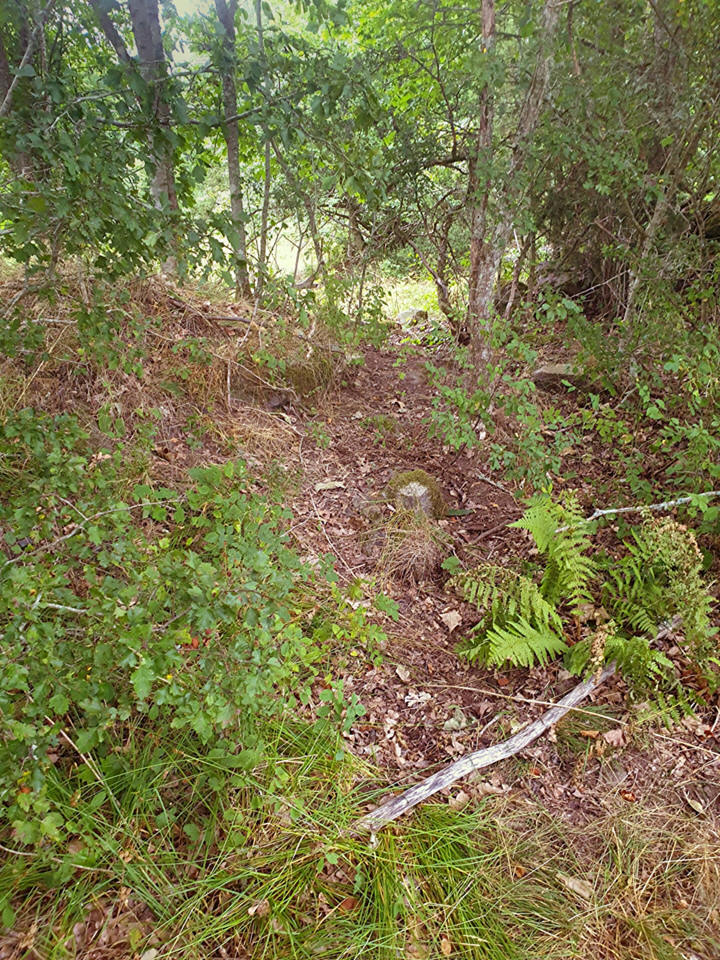
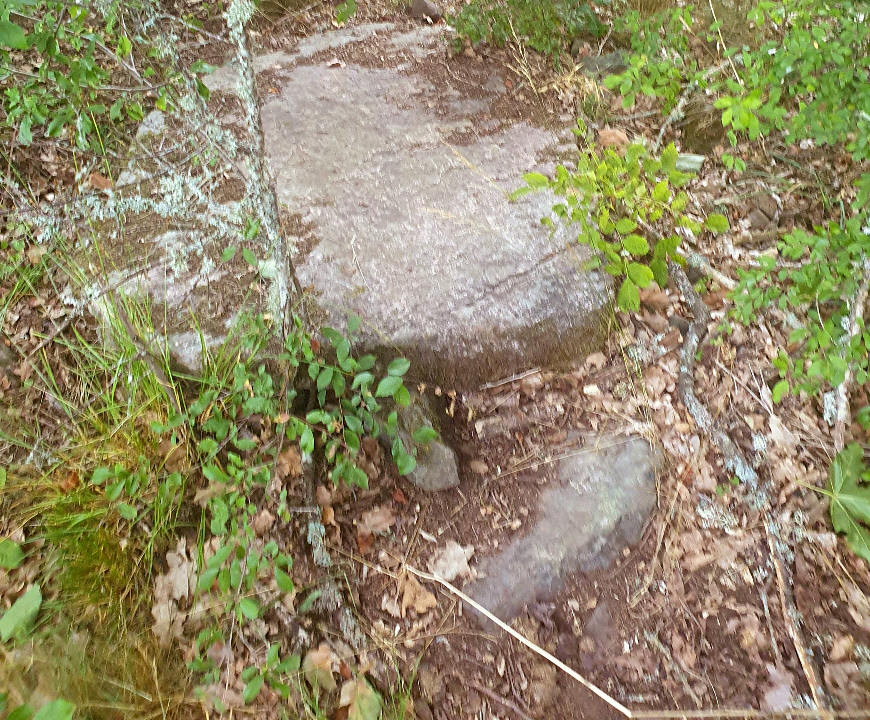
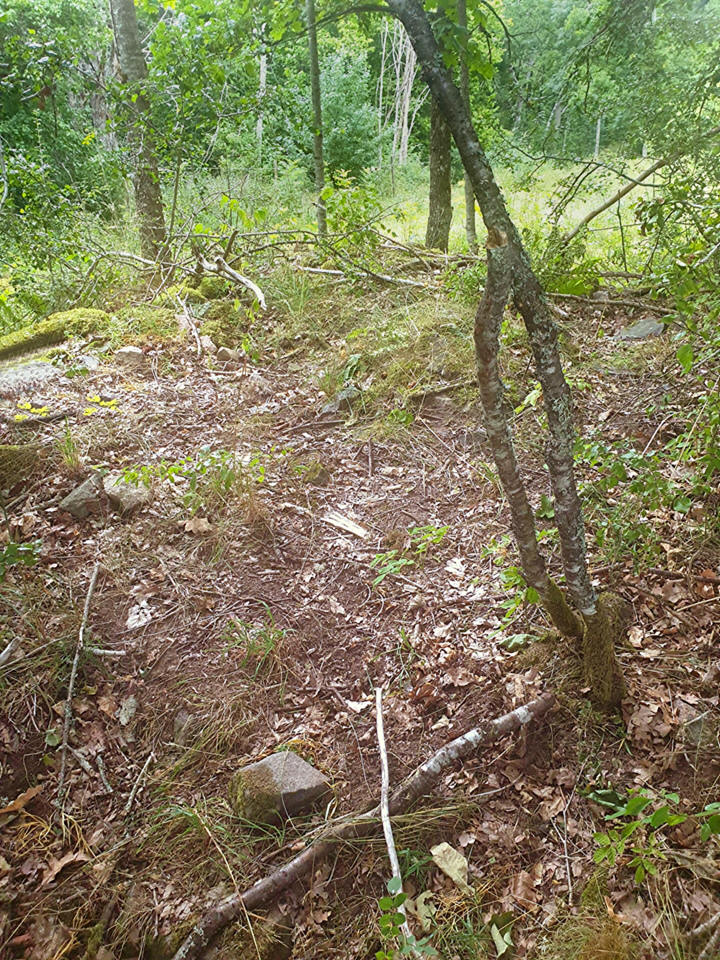
Then I will send you some photos via that email instead. Let me know if I already have shared them with you. It will probably be about 3-4 photos per email. Last as well as this year I went to the village of Stora Skörebo where our ancestors can be traced back to Sven Andersson who was a peasant there from at least 1624. The photos will show you house plots from that place. In the 19th century there were two agriculture reforms which splited the villages. I will find information to send you. In order to be correct I can't be sure that its the actual house plots to the house where Sven Andersson lived but maybe. It's at least very close.
Regards, Per

October 7, 2015
Hi,
Leigh!
I have attached an updated version of the family tree and one of the earliest
documents about the family. It is from 1539 and shows our ancestor, Masse Kryp (Måns
Olsson Kryp), in the list of taxpayers.

Regards, Per
October 11, 2013
Hi, Leigh!
How are you?
I have managed to dig up more information about our ancestors. I take the information step by step.
Our ancestor Ölfving Persson had apparently trouble with the law. Around 1680 – you’ll get the correct year later – his case was brought up and examined at the court in Vassmolösa. For some reason he was in conflict with Bengt in Trollefjäll and Jöns in Juanslycke. They had used gossips and – probably also (the Swedish word “munbruk” can be interpreted in many ways) – profanities against each other. The court managed to reconcile the adversaries. They had however to pay 20 rix-dollar silver coins in fine.
He - Ölfving Persson - was married three times and it’s not easy to know who the mother of which child is. One of the wives – and maybe one of our ancestors – was Elin Olufsdotter. She came from Kroka, Söderåkra parish, and she had a brother, Buge (Bue) Olufsson, who was born around 1641. According to the church records he had been a cavalryman in Skåne for 2 years, farmer for 30 years and married for 43 years. He died 1714 in Kroka. I assume that Buge Olufsson served in Skåne in the late 1670’s when Sweden and Denmark was in war against each other and fightings occurred in Skåne. You can find more information about the war:
http://en.wikipedia.org/wiki/Scanian_War
http://www.historyofwar.org/articles/wars_scanian.html
http://www.britannica.com/EBchecked/topic/526558/Scanian-War
Regards, Per
September 6, 2013
Hi, Leigh!
Sometimes when I have got time I have been digging deeper into this with Per Månsson Kryp and his military career. I contacted one of the most renowned military historians (Lars Ericsson Wolke) in Sweden and he answered me and there seems no doubt that our ancestors fought in the battle of Lutzen, November 6, 1632. Its very famous in the Swedish history. Many historians and authors have written about the battle. It has been said that it was a Swedish victory, even though the Swedish king, Gustav II Adolf, was killed. Småland’s cavalry regiment (which Per Månsson Kryp belonged to) fought in the epicenter of the battle and had apparently heavy losses. Kryp’s closest chief, Ingemar Wastesson, was killed and the regiment chief, Fredrik Stenbock, was wounded, so the king took the immediate command over the regiment. In the disarray the king lost contact with the regiment which at the moment was busy fighting the Catholics armored cavalry. But it was total disarray, enemies and friends were mixed up with each other. It was nothing more than a chaos. Kryp and his comrades in the cavalry were armed with a pistol and a rapier. Probably they didn’t have any armor. To the Catholics they looked shabby and dirty. But the appearance was deceiving. They were very skillful warriors on the battlefield. They were an effective and feared war machine. It took time to load the pistol. A skillful cavalryman could fire three shots in one minute. The idea was to get really close to the enemy before firing the pistol and then use the rapier. It’s hard to imagine anyone surviving this bloodbath. It seems that Per Månsson Kryp – at least physically– returned home unscathed to Karsbo. The last time I find him in the military records is in the muster/parade in 1635. Maybe he was dismissed around 1635/1636. He was, at that time, around 40 years old and I suspect that he didn’t serve in the armed forces after that. He had by far fulfilled his duties. We don’t know why he ended up in the cavalry in the first place. The only thing we can do it is to speculate. Maybe he volunteered. The chances of surviving were bigger in the cavalry than the infantry. We’ll never know what his thoughts were that Summer day when Ingemar Wastesson had gathered his cavalrymen in the city of Kalmar in 1630 before going abroad fighting the Catholics. Did he think that he would return to Karsbo someday? Interesting questions without answers. More to come.
Regards, Per
September 5, 2013
Hi, Leigh!
In 1558 the Swedish king, Gustav Vasa, decided that it was forbidden to cut down
so-called "bearing-trees." But Vasa was no tree-huggers. Rather the opposite.
The trees, he claimed, was his property. They were to protected because they
were needed for ship-building. The farmers, for obvious reasons, didnt agree
with the king. The trees that the king had protected were; oak, nut-tree,
whitebeam, rowan and beech etc. In 1647 the
strict forest
policy was adopted
that confirmed the ban. The law
was no respected by everyone. In 1660 one of our ancestor - former cavalryman -
Peder (Per) Månsson Kryp was sentenced to bay a fine for cutting down beeches.
He was not, however, alone. He is the seventh name to the left. Peder Kryp had
experienced tough times. Between 1649 and 1651 it was a failure of crops, then a
few years later the plague and the war came.
Regards, Per
May 17, 2013
Hi, Gordon, Jim and Leigh!
In 1682 the priest Johan Wallerman writes about our ancestor Peder Månsson Kryp:
“On January 8th Peder Månsson Kryp in Karsbo was buried, who also had been a wise and polite natured man of honor in all these live-days.”
Wallerman calls Kryp “danneman.” It was an honorary title. The word has several meanings; excellent, capable, upright, honest, integrity and esteemed. In other words Peder Kryp was a good example of how a man would be and behave and a model.
You should keep in mind that in Torsås Death Books far from everyone received a comment. Peder Kryp belonged to the minority who got a comment and a positive one too. He must apparently have lived an extraordinary life. At least if you trust Wallerman’s words. Part of the explanation could be that he seems to have avoided having trouble with the law and supported Wallerman being selected to the priesthood a couple of years before.
“Devise after diseased Per Månsson Kryp in Karsboda.” 1 daler (the amount of money that was given by the family as a devise to the church). It was common practise - back then - to give money to the church when someone in the family had died. Peder Månsson Kryp belonged to the Kryp family who could be traced back to the village Karsbo at least back to 1535 and Peder's great grandfather, Måns Olsson Kryp, born approximately 1500-1510. He was born Catholic and died Protestant. Sweden switched religious direction when he grew up. Karsbo was a border village to Denmark. Danish troops burned down Måns Olsson Kryp's farm in 1564. It seems like the whole village was burned down at the same time. In 1565 Måns Kryp's farm has - in the document - the word "burned." But he manage to recover from the wounds and was able to get the farm back on feet again.
More to come.
Regards, Per
March 3, 2013
Hi!
I continue to share some information about our ancestors who served in the
Swedish army (both infantry and cavalry). I have attached excerpts from the
recruitment register (1626 and 1632). The first – 1626 – shows Bonde Månsson [Kryp]
and the other – his brother in 1632 – Peder Kryp. Both lived in Karsbo. The
village was situated at the border (there is a map attached too from 1652 where
you can see the name Karsbo at the bottom of it) to Denmark. The dots shows the
number of farms.
In 1658 there was a peace treaty at the Danish city of Roskilde where the Danish
provinces Blekinge, Halland and Skåne etc became Swedish. The vulnerability that
had previously existed and caused so much misery for the people living – on both
sides of the border – had disappeared. The Danes, however, tried - without
success - to recapture the provinces seventeen years later.
By that time the brothers Bonde and Peder Månsson Kryp were retired and
according to the tradition most likely was lovingly cared for by their children
on the farm in Karsbo. Maybe the brothers – at the many family gatherings –with
windswept and lined faces and ailments after a hard working life but with a
phenomenal memory and spellbinding stories shared their war stories with the
younger family members. Their parents had probably heard the stories before.
Attached is also a photo showing Swedish infantry (Thirty Years War). These can
be seen at Armémuseum in Stockholm.
There will be more to come.
Regards, Per
February 21, 2013
Hi!
How are you? I hope everything is ok with all of you. This email will be a little different since I am going to involve another Swedish relative into our correspondence. I am going to explain how everyone is related. We are all off-springs to Lars Pehrsson, farmer in Fröbbestorp from the 1830’s to the 1870’s. He had eight children in his first marriage; Ingrid, Peter, Andreas, Magnus, Abraham, Gustav, Olaus and Erik, and four children in his second marriage; Christina, Sven, Gertrud and Ingrid.
Gordon, Laura and Leigh are descendants of Olaus, Jim and Lisa are descended from Gustav, Judy and Steven are descendants of Sven, Peter is descended from Peter, Bob is descended from Erik, Paul is descended from Christina, and finally me who is an offspring of Ingrid (in the second marriage).
Sweden has had a long history of peace. Not since 1814 has Sweden been involved in any war. In the 17th century the situation was the opposite. Sweden fought several wars, with mixed success. Sweden went from a relatively insignificant state to a signifcant power in Europe. One of the reasons was the powerful and well-oiled armed forces. After the devastating civil war, called Dackefejden, 1542-1543 the Swedish king, Gustav Vasa, came to the conclusion that the German mecenaries – who served the Swedish king – should be replaced by domestic troops. The rebellion army had quite clearly shown that there was combat effectiveness peoples within Sweden. These troops were cheaper and often more loyal. There were of course exceptions to the rule. In the 1550’s the army consisted of 15 000 men (the Swedish population was under 1 000 000) and state – in order to recruit people – could be pretty generous. Officers and soldiers could receive a farm or a crofts.
In 1619 king Gustav II Adolf decided that the army should get their soldiers through “requisition” (forced recruitment). Sweden was in desperat need of a strong army. Especially since it was involved in wars in Estonia, Latvia and Germany. The soldiers died like flies. Many of them didnt even reach the battlefield, but died instead in the garrison towns instead. Between 1621 and 1632 Sweden lost 50 000 men in the wars. The country’s population was about 1 000 000. In 1630 Sweden entered The Thirty Years War. More and more Swedish soldiers were shipped over to Germany where many of them ended up in Stralsund, Greifwald and Rostock etc. The hygiene was miserable. This was 200 years before Florence Nightingale. The majority died of diseases rather than of enemies bullets or saber cuts. These forced recruitments usually meant a certain death, which of course made it less attractive. Therefore some soldiers decided to flee to Denmark. Very little could stop them from escaping.
The local fiduciares could influence who would be selected to the armed forces. The state and farmers had the same goal. They didnt want farmers and their sons to be killed so that there was no one left to run the farm and therefore the state would lose taxes. Another way to avoid recruitment was to pay someone to take your place instead. The minimum age was 15. Horses were expensive. Those who could afford one horse and a cavalier received tax credits. Peder Kryp – one of our ancestors – was attracted by this offer. In 1632 he was a cavalryman under Ingemar Wastesson’s command. They belonged to Småland’s cavalry regiment. The unit fought at the battle of Lutzen on November 6, 1632, where Gustav II Adolf and Ingemar Wastesson were killed.
Peder [Månsson] Kryp was born around 1595 and a farmer from 1616 in Karsbo. The village was situated at the Danish border. Kryp had experienced war as a teenager. A few of his relatives had served in the armed forces. When he died – in 1682 – the priest called him “danneman” (farmer or even ‘man of honor’). In 1626 Peder Kryp owned 2 old mare, 2 young mare, 2 oxen, 9 cows, 9 steers, 6 heifers, 25 sheep and 3 pigs. His brother, Bonde, also freely or was forced to join the army. Between 1626 and 1631 he served in colonel Patrik Ruthwen’s company. His company fought in the battles of Mewe 1626 and Dirschau 1627 etc. Ruthwen had alcohol problems and was called Redwine. He was rather despised and some of his soldiers even planned to kill him. Another ancestor, Olof Bondesson, Magdegärde, served in this company (at least 1630 and 1631). If you search for Patrik Ruthwen you can find more information about the company where our ancestors served in. Both Olof Bondesson and Bonde Kryp survived the war or wars. I have attached some information about Sweden’s war history in the 17th century. There will be more to come.
Regards, Per
Hi, Leigh!
I have tried to write down a short story about ancestors’ life in Fröbbestorp. Its focused on the 18th century and most of the information have I gathered from a history book. Through the help of Google Translate I have tried as best I could to translate it for you. I am fully aware that the translation is far from perfect, but hopefully you will get a rather good picture of the life your ancestors lived in Fröbbestorp. Of course I have more information but I will, as soon as I have translated it, share it with you.
Regards, Per
THE ANCESTORS LIFE IN FRÖBBESTORP
When our ancestors Per Andersson and Maria Nilsdotter arrived and settled down in Fröbbestorp in 1691 it was during a peace period in the Swedish history. Sweden had been involved in several wars that century. There was however a severe famine. Uneven weather was a major contributing factor. In 1695 was the Summer cold. The Autumn frost came early. In many places before an unusually late harvest had been salvaged. The crop failure was already a fact. The weather then switched to a mild autumn and the beginning of the winter was also warm. Fresh grass grew a finger’s length in the beginning of February. Trees and shrubs buds themselves and the Autumn sowing began to germinate. Then the cold and snow came. The Spring was exceptionally late and the Summer was extremely cold.
The late Summer of 1696 was visited by night frost. In many places were the majority of the fields fallow, since the starving population, the winter before, was forced to eat most of the seeds. Strawberries ripened only in September and raspberries in October. The harvest, in the places the crop matured at all, was of course disastrous. The winter that followed was severe and even in 1697, the Spring came very late. Winter cold was in some places so severe that it even was difficult to remove the bark from trees to make bark bread. Worst hit was northern Sweden. Its estimated that 100 000 died as a result. The failure of crops was a perennial scourge. There were small margins in the Swedish peasant society. The population rebounded, however, surprisingly fast.
Between 1697 and 1708 the harvest seems to have been fairly good. To pay for the war that began in 1700 the Swedish crown gave the farmers the opportunity to buy their farms. Per and Maria accepted the offer. But tell the happiness that lasts. 1708-1709 another failure of crops arrived. It was followed (1710-1712) by a very serious plague. Many of our ancestors died. 1/3 of Stockholm’s population died in the plague. Then occurred a few years of good harvests. However, it was only the calm before the storm. For in the year of 1716 the crop was shaken by hard rain, followed by two years of distinct crop failure.
In 1721 the peace came and also some years that were beneficial to the farmers. More and more farmers had enough money to buy their farms. There were low rates of mortality, peace, mild winters and good harvests. Those who survived the waryears were relatively immune to epidemics and perhaps even unusually viable at all. There were, moreover, plenty of uncultivated land. But then the situation once again changed. In the 1730’s the mortality rate rose sharply, due to international epidemics and several bad harvests. Between 1741 and 1743 Sweden was once again in war with Russia. Southern Sweden was not affected by any direct acts of war.
But in 1741 the dysentery hit with devastating force. Hundreds of peole died in “our” area. The cold winter was a significant factor. The heating was by modern concepts flawed and mortality was significantly higher in winter than summer. Especially devastating was the late winter and early spring strong temperature fluctuations that often broke the old and sick people. The winters were generally cold and long, until the 1800s. The second half of the 1700s also named the Little Ice Age. 20% of all children died during the first year of life.
Sweden as Military Power
During the 16th century Sweden entered a period of expansion. The Reval district of Estonia put itself voluntarily under Swedish protection in 1561, and as a result of the Livonia War of 1557 to 1582, Sweden acquired all of Estonia from Poland, including the district of Narva. Gradually the kingdom became a power in the Baltic area, and its expansionist policies were furthered by Gustav II Adolph, considered the greatest Swedish king, who succeeded to the throne in 1611. At the beginning of his reign, Sweden was at war with Russia, and in 1617 Gustav ended the conflict with a treaty by which Sweden obtained eastern Karelia and Ingria. A war with Poland (1621-1629) gave Sweden all Livonia, which was, however, not formally renounced by Poland until 1660. In 1630 Gustav, as the champion of Protestantism, entered the Thirty Years’ War. The king died in 1632, but his policies were continued and brilliantly fulfilled by his chancellor, Count Axel Oxenstierna, who directed the Swedish government during the minority of the monarch’s daughter, Christina. Christina came of age and was crowned in 1644.
By the Peace of Westphalia of 1648, which ended the Thirty Years’ War, Sweden acquired a large part of Pomerania, the island of Rügen, Wismar, the sees of Bremen and Verden, and other German territory, which entitled the Swedish sovereign to three votes in the diet of the Holy Roman Empire. Sweden then became the greatest power in the Baltic area. In 1654 Queen Christina abdicated, naming her cousin Charles X Gustav as her successor; she lived the rest of her life in Rome. Charles, who ruled until 1660, declared war on Poland (the First Northern War, 1655-1660), overran that country, and by the Peace of Oliva in April 1660, Poland formally conceded Livonia to Sweden. Charles X invaded Denmark twice in 1658 and wrested from it the provinces in southern Sweden that Denmark had retained in the 16th century.
Charles’s son and successor, Charles XI, allied himself with King Louis XIV of France in the French wars of the late 17th century. Sweden, however, a small and not overly wealthy country, did not have the resources to implement such militarism despite its Baltic conquests. In 1675 the Swedes, as French allies, were severely defeated by Frederick William, elector of Brandenburg, at Fehrbellin. At the same time, Charles struck at fundamental Swedish liberties in a reorganization of the Swedish government, weakening the council of state and the Riksdag, and making himself an absolute monarch. In 1680 he confiscated all large estates. Sweden again became an efficient military state, but only temporarily.
"Sweden," Microsoft® Encarta® 98 Encyclopedia. © 1993-1997 Microsoft Corporation. All rights reserved.
January 5, 2012
Hi, Leigh!
I have tried to write down a short story about ancestors’ life in Fröbbestorp. Its focused on the 18th century and most of the information have I gathered from a history book. Through the help of Google Translate I have tried as best I could to translate it for you. I am fully aware that the translation is far from perfect, but hopefully you will get a rather good picture of the life your ancestors lived in Fröbbestorp. Of course I have more information but I will, as soon as I have translated it, share it with you.
Regards, Per
THE ANCESTORS LIFE IN FRÖBBESTORP
When our ancestors Per Andersson and Maria Nilsdotter arrived and settled down in Fröbbestorp in 1691 it was during a peace period in the Swedish history. Sweden had been involved in several wars that century. There was however a severe famine. Uneven weather was a major contributing factor. In 1695 was the Summer cold. The Autumn frost came early. In many places before an unusually late harvest had been salvaged. The crop failure was already a fact. The weather then switched to a mild autumn and the beginning of the winter was also warm. Fresh grass grew a finger’s length in the beginning of February. Trees and shrubs buds themselves and the Autumn sowing began to germinate. Then the cold and snow came. The Spring was exceptionally late and the Summer was extremely cold.
The late Summer of 1696 was visited by night frost. In many places were the majority of the fields fallow, since the starving population, the winter before, was forced to eat most of the seeds. Strawberries ripened only in September and raspberries in October. The harvest, in the places the crop matured at all, was of course disastrous. The winter that followed was severe and even in 1697, the Spring came very late. Winter cold was in some places so severe that it even was difficult to remove the bark from trees to make bark bread. Worst hit was northern Sweden. Its estimated that 100 000 died as a result. The failure of crops was a perennial scourge. There were small margins in the Swedish peasant society. The population rebounded, however, surprisingly fast.
Between 1697 and 1708 the harvest seems to have been fairly good. To pay for the war that began in 1700 the Swedish crown gave the farmers the opportunity to buy their farms. Per and Maria accepted the offer. But tell the happiness that lasts. 1708-1709 another failure of crops arrived. It was followed (1710-1712) by a very serious plague. Many of our ancestors died. 1/3 of Stockholm’s population died in the plague. Then occurred a few years of good harvests. However, it was only the calm before the storm. For in the year of 1716 the crop was shaken by hard rain, followed by two years of distinct crop failure.
In 1721 the peace came and also some years that were beneficial to the farmers. More and more farmers had enough money to buy their farms. There were low rates of mortality, peace, mild winters and good harvests. Those who survived the war years were relatively immune to epidemics and perhaps even unusually viable at all. There were, moreover, plenty of uncultivated land. But then the situation once again changed. In the 1730’s the mortality rate rose sharply, due to international epidemics and several bad harvests. Between 1741 and 1743 Sweden was once again in war with Russia. Southern Sweden was not affected by any direct acts of war.
But in 1741 the dysentery hit with devastating force. Hundreds of people died in “our” area. The cold winter was a significant factor. The heating was by modern concepts flawed and mortality was significantly higher in winter than summer. Especially devastating was the late winter and early spring strong temperature fluctuations that often broke the old and sick people. The winters were generally cold and long, until the 1800s. The second half of the 1700s also named the Little Ice Age. 20% of all children died during the first year of life.
In 1756 there was a widespread crop failure caused by extreme cold. New crop failures occurred in 1781 and 1783. They were caused by a combination of heat and cold. The Summers were exceptionally hot and dry, but in 1783 even the Winter was cold and the Spring came very late. In some parts of northern Sweden the snow remained well into June and it wasn't possible sowing before midsummer. The harvest had no time to mature before Autumn arrived. The winter feed had ended long before the new grass came up. As a last resort some farmers were forced to feed their cattle with roof straw.
The Swedish agriculture gradually became less and less sensitive to climate fluctuations and weather changes. Through land reclamations of forested areas, extensive clearing of stony soils and drainage of waterlogged land the cultivable area in the country increased. Technological advances further increased the production and the potato was also introduced. On a whole the production of cereals moved from deficit to surplus.
In the 1790s the climate was very warm. But it changed. In 1799 and 1800 the Spring became many degrees cooler than normal. 1800’s and 1810’s were extremely cold. 1812 and 1814 were the worst years. The last time when the failure of crops arrived with devastating force was in 1867-1869. Our ancestor Lars Pehrsson and his family in Fröbbestorp however survived. But many Swedes weren’t that fortunate.
A short summary of our ancestors in Fröbbestorp
Per Andersson was, as was the custom, by his oldest son, Anders Persson. Andersson died in 1722. The son was only 14 years old. Probably the mother, who came to live with the son and his family, assisted in the day-to-day running of the farm. Anders Persson married Anna Olufsdotter and got ten children. Four of them died before the age of 5. The oldest sons (Per b.1738 and Lars b.1746) divided the farm, maybe, in the late 1760’s. Both sons had families and continued to stay and cultivate their farms in Fröbbestorp. On August 29, 1798, Lars Andersson died of diarrhea and was succeeded by his oldest son, Petter Larsson. He married Gertrud Persdotter and they had seven children. Five became adults. On December 4, 1821, Petter Larsson died of pneumonia. His widow remarried Sven Larsson.
When Petter and Gertrud’s oldest son, Lars, was old enough to take over the farm the mother and the stepfather moved from Fröbbestorp. It happened in the early 1830’s. Lars and Christina had eight children. But in 1856 Christina died. In 1858 Lars married Maria and they received four children. The family was devoted Lutherans. They frequently took part in the holy communion. Lars Pehrsson was succeeded by one of his son’s (not the oldest however) Magnus Larsson in the 1860’s or 1870’s. Magnus Larsson was succeeded by his son, Karl Oskar Magnusson, who ran the farm until 1931 when he sold it and moved to another village and farm. Then between 1931 and 1968 there were other owners. In 1968 the couple Bertil and Anna Lisa Johansson, actually descendants of Lars Pehrsson’s aunt Maria Larsdotter, bought the farm. They gave the farms to their four children; Jan-Erik, Lena, Lillemo and Bengt. Today Jan-Erik’s son Jens owns and lives on the farm. In other words it’s in the family. Hopefully you can put in your ancestors in their historical context.
December 21, 2011
Hi, Leigh!
How are you? I just want to wish you and your family a Merry Christmas and a Happy New Year.
Most Swedes are familiar with the poem by Viktor Rydberg (1828-1895). For many it represents Christmas back in the old days – a melancholy and nostalgic look back. I have attached both the Swedish and the English version plus something about the Swedish Christmas traditions which might be of interest for you.
Best regards, Per
Christmas
After nearly a month of waiting, Christmas Eve finally arrives — the height of the celebration in Sweden. Work is at an end, schoolchildren are on holiday and the Christmas preparations are complete.
A family affair
People have bought their presents
and their Christmas food in crowded shops and department stores, and the
home has been cleaned and decorated according to each family’s traditional
habits.
Christmas is the main family event of the year, and there is always a
certain amount of discussion about where to celebrate it this time round.
Sweden, as we have mentioned, is a large country, and those wishing to be
reunited with their families often have to travel far. Train and air tickets
need be booked at least two months in advance, and motorists are advised to
start their journeys in good time.
Modernisation of Christmas
Christmas in Sweden is a
blend of domestic and foreign customs that have been re-interpreted, refined
and commercialised on their way from agrarian society to the modern age.
Today, most Swedes celebrate Christmas in roughly the same way, and many of
the local customs and specialities have disappeared, although each family
claims to celebrate it in true fashion in their own particular way.
The food you eat at Christmas may still depend on where you live in the
country, or where you came from originally. But here, too, homogenisation
has set in, due in no small part to the uniform offerings of the department
stores and the ready availability of convenience foods. Few have time to
salt their own hams or stuff their own pork sausages nowadays.
Ingmar Bergman's Oscar-winning film Fanny and Alexander, although
set in the late 19th century, nevertheless reflects Swedish Christmas
celebrations today: a bright and lively occasion, full of excess, good food
and happiness, but also a time during which family secrets tend to surface.
Christmas holidays
Holiday leave over Christmas and the New Year is fairly long, usually
extending a week into January. Once Christmas Eve is over, a series of
enjoyable — or, in some cases, dutiful — visits to friends and relatives
ensues.
Swedes travel many a mile during the holiday period. Christmas Day with the
Olssons, Boxing Day with the Perssons and a week’s skiing in the mountains
with the Svenssons.
Perhaps celebrating Christmas is more
complicated than ever nowadays. Present-day family constellations,
comprising ex-wives and ex-husbands, children from marriages old and new,
newly-acquired relatives and mothers-in-law, are all hard to fit into the
nuclear family celebration that, deep down, all Swedes prefer. As though
they weren't already under enough pressure to celebrate a perfect Christmas.
High expectations
As a rule, Swedes expect a great deal from their Christmases. There should
be snow on the ground but blue skies and sunshine, everyone is expected to
be in good health, the ham must be succulent and tasty, and presents must be
numerous. Moreover, the children are expected to be happy and well-behaved
and the home is expected to be warm and bright.
Everyone does their best, and the Swedes perhaps are better placed than most
to celebrate Christmas. The ever-present candles and lights provide a nice
contrast to the winter dark, the red wooden cottages are at their most
attractive when embedded in snow, and the fir trees stand dark and sedate at
the edge of the forest. Santa Claus moves about the land and the North Star
pulsates up there in the night sky.
The perfect Christmas tree?
On the day before Christmas Eve,
Swedes venture forth to look for the perfect Christmas tree. This is a
serious matter — the tree is the very symbol of Christmas, and it must be
densely and evenly branched, and straight. If you live in a city or town,
you buy the tree in the street or square.
Those who live in the country fell their Christmas trees themselves. Many
Swedes believe — mistakenly — that their legal right of access to the
countryside allows them to fetch a tree from the woods wherever they like,
with an axe, a bucksaw or — as in western Värmland on the Norwegian border —
with a shotgun. Not to be recommended.
Trees are decorated according to family tradition. Some are bedecked with
flags, others with tinsel and many with coloured baubles. Electric lights
are usually preferred to candles on the tree because of the risk of fire.
Homes are also decorated with wall hangings depicting brownies and winter
scenes, with tablecloths in Christmas patterns, and with candlesticks,
little Father Christmas figures and angels. The home is filled with the
powerful scent of hyacinths.
At 3 p.m., the whole of Sweden turns on the tv to watch a cavalcade of
Disney film scenes that have been shown ever since the 1960s without anyone
tiring of them. Only then can the celebrations begin in earnest.
Abundance of food
Christmas presents are under the lighted tree, candles shine brightly and
the smörgåsbord has been prepared with all the classic dishes: Christmas
ham, pork sausage, an egg and anchovy mixture (gubbröra), herring
salad, pickled herring, home-made liver patty, wort-flavoured rye bread
(vörtbröd), potatoes and a special fish dish, lutfisk. The ham
is first boiled, then painted and glazed with a mixture of egg, breadcrumbs
and mustard. Lutfisk is dried ling or sathe soaked in water and lye to swell
before it is cooked.
Once all have eaten their fill, Santa Claus himself arrives to wish the
gathering a Merry Christmas and distribute the presents.
- - - - - - - - - - - - - - - - - - - - - - - - - - - - - - - - - - - - - -
- - - - -
Po Tidholm is a freelance journalist and
a critic with the Stockholm daily, Dagens Nyheter. Po Tidholm wrote the main
sections about how we celebrate in Sweden today.
Agneta Lilja is a lecturer in ethnology at Södertörn University College,
Stockholm. Agneta Lilja wrote the sections about the history of Swedish
traditions and festivities.
The authors alone are responsible for the opinions expressed on this web
page.
Translation: Stephen Croall/Lingon
Copyright: 2004 Agneta Lilja, Po Tidholm and the Swedish Institute. This text is published by the Swedish Institute on www.sweden.se.
Christmas
by Agneta Lilja, Södertörn University College
Christmas, which commemorates the birth of Christ, has long been the most important festivity of the year. In the old days, it was a feast for the whole household as there was plenty of fresh food to be had. The Christmas table was laid with ham, pickled herring, jellied pig’s feet, sausage, rice porridge and lutfisk (ling). The food was to be left on the table overnight, as it was then that the dead came to feast.
Homes were cleaned and decorated with wall hangings, and fresh straw was laid on floors. The birds were given an oatsheaf and the mythical farmyard brownie a plate of porridge. The practice of bringing a Christmas tree into the house and decorating it was imported from Germany in the 1880s. Initially, Christmas presents were given anonymously, and playfully, often in the form of a log of wood or the like wrapped up and tossed through a front door. In the 20th century, people began giving one another real presents, handed out by Santa Claus, who was modelled on St. Nicholas, the patron saint of schoolchildren.
At the early-morning church service (julotta) on Christmas Day, traces of earth could be seen in the pews where the dead had held their own service overnight. After the service, people raced to get home first. The winner would harvest his crops before anyone else that year.
On Boxing Day, you got up early to water the horses in streams running north, as Saint Stephen, the patron saint of horses, was said to have done. Another practice, which breached the no-work rule,was to muck out other people’s barns.
Twelfth Night commemorates the arrival of the Three Wise Men in Bethlehem. The Swedish tradition of ‘star boys’ (stjärngossar) derives from this. In former times, boys often went round the farms carrying a paper star, singing songs in return for schnapps. Today, the star boys are a part of the Lucia celebration.
Hilarymas (Knutsdagen) on 13 January marked the end of the Christmas holiday in Sweden, and was celebrated with a final medieval-style feast. People scared one another with straw figures hung from trees. In bourgeois circles, the Christmas tree was plundered of its edible decorations. Tree-plundering is still practised in Sweden today.
July 2, 2011
Hi, Leigh!
How are you? Finally my Internet has started to work again. Its a rainy day, which gives a marvellous opportunity for spending time at the computer.
In a book I newly bought there was information which inspired to write something about an important and interesting ancestor who I earlier just have mentioned in the passing. His name was Per Erlandsson.
Sweden was, when Per Erlandsson was a member of the Swedish parliament, at its height of power. It was fighting a couple of wars at the same time (against the Catholics, Russia, Poland and Denmark). Most of the wars were succesful and Sweden was able to expand its territory. The human and economical losses were of course the price Sweden had to pay. Researchers estimates that Sweden (between 1620-1640) lost 90 000 men in the war. Sweden and Finland were the same country until 1809 and together the population was around 1 800 000.
Our ancestor, Per Erlandsson, was a member of the parliament at five occassions; in 1643, 1647, 1650, 1652 and 1668. He represented the farmers. This group was about 90-95 % of the whole population. The parliament consisted of four groups; the farmers, the nobility, the priests and the city inhabitants.
Every area had the right to elect a member of the parliament. It was most likely not the richest or the poorest in the parish that was selected. They were not destituted either. He must have been prepared to pay some of the expenses during the stay in Stockholm. In some cases it was needed to have a replacement at the farm. Local stewards were overrepresented. Per Erlandsson was a juryman. He probably traveled with boat from Kalmar (which was the closest port) to Stockholm. Maybe the trip was not so uncomfortable, even though the farmers didnt used the first class. The parliament was often situated in Stockholm. The proceedings were opened by the king in the castle of Tre Kronor (it burned down in 1697). He held a speech where the condition of the country were revealed and what the problems were. It was up to the four different groups to find solutions to the problems. The four groups had then own meetings where they debated and discussed the problems. The farmers met in an informal lounge in the city (now Old Town). Sometimes the discussions developed into fist fights. Usually they could make a decision without violence. After that the parliament reassembled and more discussions continued until they all could agree to a decision. It was then published and spread over the country. The parliament usually met every four year. There were of course exceptions. The parliament duties were to enact and amend laws and approve various resource extractions for the crown needs. In 1668, at the age of 78, Per Erlandsson thought it was about time to resign his political duties. Age and health had an impact on his decision. You should keep in mind that the life expectancy was around 40. Traveling to and from Stockholm, even with boat, maybe wasnt something for a 78-year man back then. He seems after all to have been a tough old boy and eager to serve his country in different areas for a long time. Keep in mind that Per Erlandsson, except his political and court duties, had a farm to run. Per Erlandsson must have been considered to have been a man of honor and someone you could trust, since he repeatledly was elected to the parliament. He wasnt elected in a normal election, but choosen at the session at the court instead.
More information will follow.
Regards, Per
April 11, 2011
Hi, Leigh!
How are you? The other day I discovered an interesting letter from 1740. Its about our relative Brita Persdotter. Love trouble had arisen in Torsås and Appleryd. Apparently the young couple hadnt been sufficiently clear to each other. It was unclear about what had been promised and not. The ecclesiastical power was through Olof Jönsson involved in the matter. Despite the sensitive nature the church felt it was best placed to solve these problems. In the beginning of the document it says “tried to avoid marriage promises she had given him, and withdraw the betrothal she in the presence of witnesses had concluded” and more “to build marriage with the farmhand Abraham from Laduryd, Söderåkra parish.” This had led Olof Jönsson to act. He sued her for broken promises. She would have to answer the accusations at 10 AM on July 30, 1740, in Kalmar. It was the church court which would have handle the case. She was also asked to bring “the witnesses who were present at the betrothal.”
We can assume that some kind of nervosity, at least in the beginning, appeared at the family in Appleryd. There were probably not usual to have contact with the church in this matter. Determined to solve this problem they most likely quickly recovered and prepared to fight Olof Jönsson in court. I havent found the verdict, but on July 4, 1742, our relative, Brita Persdotter was married to Abraham Jonsson.
Betrothal was a very important act for our ancestors. Before 1734 no wedding ceremony was necessary in the church. Instead it was taken care of in the presence of the closest relatives. That was it. The relatives could by this confirm that the betrothal had followed the law. Its validity was then confirmed with a handshake. After that the couple was allowed to make love with each other. If they did it before this ceremony they risked being punished. In connection with the betrothal it was custom that the man handed over gifts (spoons and clothes etc). If the betrothal was broken then the gifts were returned.
Brita Persdotter died on December 28, 1772, at the age of (about) 50. The cause of death is unknown. The life expectancy was around 35. But then you have to keep in mind the high child mortality.
Regards, Per
April 21, 2011
Hi, Leigh!
How are you? I hope you are fine. I just want to send you a Happy Easter from Sweden. I have included some articles describing how we celebrate or celebrated this event. It may give you a clue about how your Swedish ancestors experienced Easter. The spring has arrived and the warm weather too.
I have also added an updated version of the family tree, where you can find Per Månsson IX:23, who was the father of Brita Persdotter. The farm had been in the same family since 1582. Påfvel Gummesson (b.abt.1560), farmer 1582-1585.
Between 1585 and 1617 there were different owners, maybe not related. Then the farm returned to the family and it was cultivated by Påfvel Gummesson’s son; Oluf Påfvelsson (b.abt.1590), farmer 1617-1660.
Appleryd is situated in the south of Torsås parish. Until the peace treaty in Roskilde, Denmark, 1658 it was the border area. As a consequence it was hard affected by the many wars between Sweden and Denmark. I will write more about that later.
Per Månsson was split between his sons Måns Persson and Nils Persson.
Regards, Per
In Sweden, common Easter traditions include egg painting. Children dressed up as Easter witches with long skirts, colorful headscarves and painted red cheeks, go from house to house in the neighborhood and present the occupants with paintings and drawings in the hope of getting sweets in return. According to Swedish folklore, during Easter the witches fly to Blåkulla (the Blue Mountain) to meet the devil.
Small branches and twigs of willow or birch are a common sight in every Swedish house during the Eater holidays. Feathers and small decorations are also placed on these twigs in a vase.
For lunch/dinner on Holy Saturday, families traditionally feast on a smörgåsbord of herring, salmon, potatoes, eggs and other kinds of food. Most businesses are closed in Sweden during the Easter holidays. Keep the national holidays in mind when you plan your trip and activities.
http://sverigesradio.se/sida/artikel.aspx?programid=2054&artikel=4462646
by Agneta Lilja, Södertörn
University College
In Sweden, the Easter celebrations used to begin with the three days of
Shrovetide, full of carnivals, games and revelry. One of the more popular
activities was to playfully thrash each other with birch twigs on Shrove
Tuesday. Another Shrovetide practice was to toboggan down steep slopes so that
the flax would grow tall. People were also supposed to mark Shrove Tuesday by
eating seven hearty meals. A 40-day fast then followed, with its own rules
concerning food, such as a ban on eating meat or eggs.
Easter, the most important Christian festival of all, commemorates the resurrection of Christ. It begins on Palm Sunday in celebration of his triumphant entry into Jerusalem. In olden time the red-letter days in Holy Week before Easter were governed by church decree. On Maundy Thursday, you were not allowed to spin or chop wood, as this might intensify Christ’s suffering. Also on that day, witches flew off to consort with the Devil at Mount Blåkulla, and people used to protect themselves by painting crosses on their front doors and hiding broomsticks and rakes so that the witches could not fly on them. Good Friday was spent in quiet contemplation. People dressed in black and ate salty food without anything to drink. Young people thrashed each other with birch twigs. The whole week was designed to recall Christ’s suffering and death on the cross.
On Easter Saturday, the celebrations turned joyful, and people began eating eggs again. Eggs were sometimes painted in different colours, probably because they were often given away as presents. In the 19th century, Swedes began filling paper eggs with sweets. In western Sweden, the practice was to light bonfires, fire shotguns and shout to scare away witches. People sent one another anonymous Easter letters with their own designs. The custom of bringing birch twigs into the house and decorating them with coloured feathers dates back to the 1880s. In southern Sweden, egg games, such as egg-bashing, have long been popular. Trick-or-treat became an Eastertime tradition in the 19th century, originally practised by adults in masks and costumes, but later by young girls.
Easter
by Po Tidholm
Sweden is a large country with a lengthy coastline, as the tourist brochures
keep telling us. So when the big seasonal holidays come round, Swedes embark on
long journeys to visit friends and relatives.
Celebrations in the countryside
Although contemporary Swedes are an urban people, most of whom live in cities or
large towns, the vast majority still have one foot in the countryside. If they
don’t have any family left in rural parts, they often possess a holiday cottage
there.
An agrarian strain runs through Sweden’s self-image: this is a nation of strong,
sinewy peasants, raised on meat and turnips. Most people are agreed that festive
occasions in Sweden should be celebrated in the countryside. Easter is no
exception.
Hallo Herr Larson,
meine Vorfahren kommen aus Schweden. Mein Ururgroßvater Olaus Bondesson wurde am 5.8.1937 in Lilla Getnabo, Gemeinde Torsas, Kalmar Län geboren. Wie finde ich evtl. Familienmitglieder ?
Können Sie mir helfen ??
Freundliche Grüße Dagmar Schilling
Hi Mr Larson,
my ancestors come from Sweden. My business Olaus Bondesson was born on the 5.8.1937 in Lilla Getnabo, municipality of Torsås, Kalmar län. How do I find any family members?
Can you help me??
Friendly greetings Dagmar Schilling
In the archive, October 21, 1618, Lars Hanson accused Truls Wastesson for shooting his relative Per Larsson to death (Per Larsson was Truls Wastesson's stepbrother). Per Larsson had hired a man (could it be enlistment?). Per Larsson shall pay with a horse or maybe keep him with a horse. [The text is quite disconnected]. Therefor Per Larsson traveled together with his wife to Slätafly (where Truls Wastesson lived) and asked for Truls' colt. In the archive it says that Truls lied in defense. At the end of the protocol it was clear that Truls Wastesson and Matz Nilsson came to Per Larsson to retake the horse which he had taken from Truls, and not to unlawful entering Larssons residence. Back to the events. Truls and his stepfather didn't agree about the horses (now it was a question of several horses). Under the quarrel Per Larsson cut Truls Wastesson with an axe in his own home (Per Larsson's home). Truls crawled under the table and when he came to the other side of the table, Per Larsson again cut after Truls. If the axe hadn't get stacked (maybe in table?), he had killed Truls Wastesson. When they came out from the house and Per saw that Truls had a rifle, he begged him two-three times to shoot. (Maybe in a provoke way. Shoot if you dare!) At the same time Truls Wastesson shot him to death. The whole jurisdictional district prayed for Truls life to be spared. If it was possible, because Per Larsson had always been restless and many times escaped from Sweden to Denmark and back again. February 18, 1620 Lars Hanson declared that the family gave Truls Wastesson the possibility to pay a fine for his freedom. Truls continued to cultivate the farm in Slätafly.
It never rains but it pours. In the 1640's there was war between Denmark and Sweden, and the borderlands were hard affected. In 1644 the Danes killed Waste Trulsson (son to Truls Wastesson). His whole property was stolen. The farm became free from taxes. In 1645 it says that the farm was deserted.
December 21, 2011
Hi, Leigh!
How are you? I just want to wish you and your family a Merry Christmas and a Happy New Year.
Most Swedes are familiar with the poem by Viktor Rydberg (1828-1895). For many it represents Christmas back in the old days – a melancholy and nostalgic look back. I have attached both the Swedish and the English version plus something about the Swedish Christmas traditions which might be of interest for you.
Best regards, Per
Christmas
After nearly a month of waiting, Christmas Eve finally arrives — the height of the celebration in Sweden. Work is at an end, schoolchildren are on holiday and the Christmas preparations are complete.
A
family affair
People have bought their presents and
their Christmas food in crowded shops
and department stores, and the home has
been cleaned and decorated according to
each family’s traditional habits.
Christmas is the main family event of
the year, and there is always a certain
amount of discussion about where to
celebrate it this time round. Sweden, as
we have mentioned, is a large country,
and those wishing to be reunited with
their families often have to travel far.
Train and air tickets need be booked at
least two months in advance, and
motorists are advised to start their
journeys in good time.
Modernisation of Christmas
Christmas in Sweden is a blend of
domestic and foreign customs that have
been re-interpreted, refined and
commercialised on their way from
agrarian society to the modern age.
Today, most Swedes celebrate Christmas
in roughly the same way, and many of the
local customs and specialities have
disappeared, although each family claims
to celebrate it in true fashion in their
own particular way.
The food you eat at Christmas may still
depend on where you live in the country,
or where you came from originally. But
here, too, homogenisation has set in,
due in no small part to the uniform
offerings of the department stores and
the ready availability of convenience
foods. Few have time to salt their own
hams or stuff their own pork sausages
nowadays.
Ingmar Bergman's Oscar-winning film
Fanny and Alexander, although set
in the late 19th century, nevertheless
reflects Swedish Christmas celebrations
today: a bright and lively occasion,
full of excess, good food and happiness,
but also a time during which family
secrets tend to surface.
Christmas holidays
Holiday leave over Christmas and the New
Year is fairly long, usually extending a
week into January. Once Christmas Eve is
over, a series of enjoyable — or, in
some cases, dutiful — visits to friends
and relatives ensues.
Swedes travel many a mile during the
holiday period. Christmas Day with the
Olssons, Boxing Day with the Perssons
and a week’s skiing in the mountains
with the Svenssons.
Perhaps celebrating Christmas is more
complicated than ever nowadays.
Present-day family constellations,
comprising ex-wives and ex-husbands,
children from marriages old and new,
newly-acquired relatives and
mothers-in-law, are all hard to fit into
the nuclear family celebration that,
deep down, all Swedes prefer. As though
they weren't already under enough
pressure to celebrate a perfect
Christmas.
High expectations
As a rule, Swedes expect a great deal
from their Christmases. There should be
snow on the ground but blue skies and
sunshine, everyone is expected to be in
good health, the ham must be succulent
and tasty, and presents must be
numerous. Moreover, the children are
expected to be happy and well-behaved
and the home is expected to be warm and
bright.
Everyone does their best, and the Swedes
perhaps are better placed than most to
celebrate Christmas. The ever-present
candles and lights provide a nice
contrast to the winter dark, the red
wooden cottages are at their most
attractive when embedded in snow, and
the fir trees stand dark and sedate at
the edge of the forest. Santa Claus
moves about the land and the North Star
pulsates up there in the night sky.
The perfect Christmas tree?
On
the day before Christmas Eve, Swedes
venture forth to look for the perfect
Christmas tree. This is a serious matter
— the tree is the very symbol of
Christmas, and it must be densely and
evenly branched, and straight. If you
live in a city or town, you buy the tree
in the street or square.
Those who live in the country fell their
Christmas trees themselves. Many Swedes
believe — mistakenly — that their legal
right of access to the countryside
allows them to fetch a tree from the
woods wherever they like, with an axe, a
bucksaw or — as in western Värmland on
the Norwegian border — with a shotgun.
Not to be recommended.
Trees are decorated according to family
tradition. Some are bedecked with flags,
others with tinsel and many with
coloured baubles. Electric lights are
usually preferred to candles on the tree
because of the risk of fire.
Homes are also decorated with wall
hangings depicting brownies and winter
scenes, with tablecloths in Christmas
patterns, and with candlesticks, little
Father Christmas figures and angels. The
home is filled with the powerful scent
of hyacinths.
At 3 p.m., the whole of Sweden turns on
the tv to watch a cavalcade of Disney
film scenes that have been shown ever
since the 1960s without anyone tiring of
them. Only then can the celebrations
begin in earnest.
Abundance of food
Christmas presents are under the lighted
tree, candles shine brightly and the
smörgåsbord has been prepared with all
the classic dishes: Christmas ham, pork
sausage, an egg and anchovy mixture
(gubbröra), herring salad, pickled
herring, home-made liver patty,
wort-flavoured rye bread (vörtbröd),
potatoes and a special fish dish,
lutfisk. The ham is first boiled,
then painted and glazed with a mixture
of egg, breadcrumbs and mustard. Lutfisk
is dried ling or sathe soaked in water
and lye to swell before it is cooked.
Once all have eaten their fill, Santa
Claus himself arrives to wish the
gathering a Merry Christmas and
distribute the presents.
Po
Tidholm is a freelance journalist and a
critic with the Stockholm daily, Dagens
Nyheter. Po Tidholm wrote the main
sections about how we celebrate in
Sweden today.
Agneta Lilja is a lecturer in ethnology
at Södertörn University College,
Stockholm. Agneta Lilja wrote the
sections about the history of Swedish
traditions and festivities.
The authors alone are responsible for
the opinions expressed on this web page.
Translation: Stephen Croall/Lingon
Copyright: 2004 Agneta Lilja, Po Tidholm and the Swedish Institute. This text is published by the Swedish Institute on www.sweden.se.
Christmas
by Agneta Lilja, Södertörn University College
Christmas, which commemorates the birth of Christ, has long been the most important festivity of the year. In the old days, it was a feast for the whole household as there was plenty of fresh food to be had. The Christmas table was laid with ham, pickled herring, jellied pig’s feet, sausage, rice porridge and lutfisk (ling). The food was to be left on the table overnight, as it was then that the dead came to feast.
Homes were cleaned and decorated with wall hangings, and fresh straw was laid on floors. The birds were given an oatsheaf and the mythical farmyard brownie a plate of porridge. The practice of bringing a Christmas tree into the house and decorating it was imported from Germany in the 1880s. Initially, Christmas presents were given anonymously, and playfully, often in the form of a log of wood or the like wrapped up and tossed through a front door. In the 20th century, people began giving one another real presents, handed out by Santa Claus, who was modelled on St. Nicholas, the patron saint of schoolchildren.
At the early-morning church service (julotta) on Christmas Day, traces of earth could be seen in the pews where the dead had held their own service overnight. After the service, people raced to get home first. The winner would harvest his crops before anyone else that year.
On Boxing Day, you got up early to water the horses in streams running north, as Saint Stephen, the patron saint of horses, was said to have done. Another practice, which breached the no-work rule,was to muck out other people’s barns.
Twelfth Night commemorates the arrival of the Three Wise Men in Bethlehem. The Swedish tradition of ‘star boys’ (stjärngossar) derives from this. In former times, boys often went round the farms carrying a paper star, singing songs in return for schnapps. Today, the star boys are a part of the Lucia celebration.
Hilarymas (Knutsdagen) on 13 January marked the end of the Christmas holiday in Sweden, and was celebrated with a final medieval-style feast. People scared one another with straw figures hung from trees. In bourgeois circles, the Christmas tree was plundered of its edible decorations. Tree-plundering is still practised in Sweden today.
July 2, 2011
Hi, Leigh!
How are you? Finally my Internet has started to work again. Its a rainy day, which gives a marvellous opportunity for spending time at the computer. In a book I newly bought there was information which inspired to write something about an important and interesting ancestor who I earlier just have mentioned in the passing. His name was Per Erlandsson. Sweden was, when Per Erlandsson was a member of the Swedish parliament, at its height of power. It was fighting a couple of wars at the same time (against the Catholics, Russia, Poland and Denmark). Most of the wars were succesful and Sweden was able to expand its territory. The human and economical losses were of course the price Sweden had to pay. Researchers estimates that Sweden (between 1620-1640) lost 90 000 men in the war. Sweden and Finland were the same country until 1809 and together the population was around 1 800 000. Our ancestor, Per Erlandsson, was a member of the parliament at five occasions; in 1643, 1647, 1650, 1652 and 1668. He represented the farmers. This group was about 90-95 % of the whole population. The parliament consisted of four groups; the farmers, the nobility, the priests and the city inhabitants. Every area had the right to elect a member of the parliament. It was most likely not the richest or the poorest in the parish that was selected. They were not destitute either. He must have been prepared to pay some of the expenses during the stay in Stockholm. In some cases it was needed to have a replacement at the farm. Local stewards were overrepresented. Per Erlandsson was a juryman. He probably traveled with boat from Kalmar (which was the closest port) to Stockholm. Maybe the trip was not so uncomfortable, even though the farmers didnt used the first class. The parliament was often situated in Stockholm. The proceedings were opened by the king in the castle of Tre Kronor (it burned down in 1697). He held a speech where the condition of the country were revealed and what the problems were. It was up to the four different groups to find solutions to the problems. The four groups had then own meetings where they debated and discussed the problems. The farmers met in an informal lounge in the city (now Old Town). Sometimes the discussions developed into fist fights. Usually they could make a decision without violence. After that the parliament reassembled and more discussions continued until they all could agree to a decision. It was then published and spread over the country. The parliament usually met every four year. There were of course exceptions. The parliament duties were to enact and amend laws and approve various resource extractions for the crown needs. In 1668, at the age of 78, Per Erlandsson thought it was about time to resign his political duties. Age and health had an impact on his decision. You should keep in mind that the life expectancy was around 40. Traveling to and from Stockholm, even with boat, maybe wasn't something for a 78-year man back then. He seems after all to have been a tough old boy and eager to serve his country in different areas for a long time. Keep in mind that Per Erlandsson, except his political and court duties, had a farm to run. Per Erlandsson must have been considered to have been a man of honor and someone you could trust, since he repeatedly was elected to the parliament. He wasn't elected in a normal election, but chosen at the session at the court instead.
More information will follow.
Regards, Per
April 21, 2011
Hi, Leigh!
How are you? I hope you are fine. I just want to send you a Happy Easter from Sweden. I have included some articles describing how we celebrate or celebrated this event. It may give you a clue about how your Swedish ancestors experienced Easter. The spring has arrived and the warm weather too. I have also added an updated version of the family tree, where you can find Per Månsson IX:23, who was the father of Brita Persdotter. The farm had been in the same family since 1582. Påfvel Gummesson (b.abt.1560), farmer 1582-1585. Between 1585 and 1617 there were different owners, maybe not related. Then the farm returned to the family and it was cultivated by Påfvel Gummesson’s son; Oluf Påfvelsson (b.abt.1590), farmer 1617-1660. Appleryd is situated in the south of Torsås parish. Until the peace treaty in Roskilde, Denmark, 1658 it was the border area. As a consequence it was hard affected by the many wars between Sweden and Denmark. I will write more about that later. Per Månsson was split between his sons Måns Persson and Nils Persson.
Regards, Per
In Sweden, common Easter traditions include egg painting. Children dressed up as Easter witches with long skirts, colorful headscarves and painted red cheeks, go from house to house in the neighborhood and present the occupants with paintings and drawings in the hope of getting sweets in return. According to Swedish folklore, during Easter the witches fly to Blåkulla (the Blue Mountain) to meet the devil. Small branches and twigs of willow or birch are a common sight in every Swedish house during the Eater holidays. Feathers and small decorations are also placed on these twigs in a vase. For lunch/dinner on Holy Saturday, families traditionally feast on a smörgåsbord of herring, salmon, potatoes, eggs and other kinds of food. Most businesses are closed in Sweden during the Easter holidays. Keep the national holidays in mind when you plan your trip and activities. http://sverigesradio.se/sida/artikel.aspx?programid=2054&artikel=4462646
Easter, by
Agneta Lilja, Södertörn University College
In Sweden, the Easter celebrations used to begin with the three days of
Shrovetide, full of carnivals, games and revelry. One of the more popular
activities was to playfully thrash each other with birch twigs on Shrove
Tuesday. Another Shrovetide practice was to toboggan down steep slopes so that
the flax would grow tall. People were also supposed to mark Shrove Tuesday by
eating seven hearty meals. A 40-day fast then followed, with its own rules
concerning food, such as a ban on eating meat or eggs.
Easter, the most important Christian festival of all, commemorates the
resurrection of Christ. It begins on Palm Sunday in celebration of his
triumphant entry into Jerusalem. In olden time the red-letter days in Holy Week
before Easter were governed by church decree. On Maundy Thursday, you were not
allowed to spin or chop wood, as this might intensify Christ’s suffering. Also
on that day, witches flew off to consort with the Devil at Mount Blåkulla, and
people used to protect themselves by painting crosses on their front doors and
hiding broomsticks and rakes so that the witches could not fly on them. Good
Friday was spent in quiet contemplation. People dressed in black and ate salty
food without anything to drink. Young people thrashed each other with birch
twigs. The whole week was designed to recall Christ’s suffering and death on the
cross.
On Easter Saturday, the celebrations turned joyful, and people began eating eggs
again. Eggs were sometimes painted in different colours, probably because they
were often given away as presents. In the 19th century, Swedes began filling
paper eggs with sweets. In western Sweden, the practice was to light bonfires,
fire shotguns and shout to scare away witches. People sent one another anonymous
Easter letters with their own designs. The custom of bringing birch twigs into
the house and decorating them with coloured feathers dates back to the 1880s. In
southern Sweden, egg games, such as egg-bashing, have long been popular.
Trick-or-treat became an Eastertime tradition in the 19th century, originally
practised by adults in masks and costumes, but later by young girls.
Easter, by Po Tidholm
Sweden is a large country with a lengthy coastline, as the tourist brochures
keep telling us. So when the big seasonal holidays come round, Swedes embark on
long journeys to visit friends and relatives.
Celebrations in the countryside. Although contemporary Swedes are an urban
people, most of whom live in cities or large towns, the vast majority still have
one foot in the countryside. If they don’t have any family left in rural parts,
they often possess a holiday cottage there.
An agrarian strain runs through Sweden’s self-image: this is a nation of strong,
sinewy peasants, raised on meat and turnips. Most people are agreed that festive
occasions in Sweden should be celebrated in the countryside. Easter is no
exception. Easter colours liven things up as
winter recedes. Photo: Josefin Cerholm/Image Bank Sweden. Easter is the first extended weekend of
the spring, and for many this means the first trip out to their holiday cottage,
which has been locked and deserted all winter. There are window shutters to be
opened and stuffy rooms to be aired. The woodstoves are lit, and the smoke fills
the kitchen, naturally.
Coughing and spluttering, you flee out to the yard, where the wagtails — if you
live in southern Sweden, that is — have just begun their mating ritual and the
last of the snowdrifts are melting in the pale spring sunshine. In the north,
Easter is more of a skiing holiday.
Once the cottage has been cleaned, swept and warmed up, Easter can begin. The
members of the family arrive from near and far. At Easter, the aim is to gather
as many relatives together as possible.
Secular holiday
While in other countries Easter is specifically a religious holiday, it has
become a secular one in Sweden. The Swedes are well down in the statistics when
it comes to church visits per year, and even if Easter swells the numbers
slightly, most people celebrate it at home with their families and relatives.
Many of the practices associated with Easter have religious origins, but this is
not something that bothers Swedes much. They eat eggs because they have always
done so — not because they have just completed a fast.
Nowadays, eggs are a favourite accompaniment to the dish of pickled herring that
is the centrepiece of most Swedes’ Easter meals. And few associate the
omnipresent birch twigs — nowadays decorated with brightly coloured feathers —
with the suffering of Christ. Easter has its own rituals. Decorated birch twigs are a common
sight in Swedish homes during Easter. Photo: Beppe Arvidsson/Bildhuset
From sweets to salmon
Children dress up as Easter witches; clad in discarded clothes, gaily coloured headscarves and red-painted cheeks, they go from house to house in the neighbourhood and present the occupants with paintings and drawings in the hope of getting sweets in return. Having consumed all these sweets, they are then given Easter eggs filled with yet more. Parents of a more ambitious turn of mind let the children search for the eggs themselves in a treasure hunt — following clues and solving riddles until they find their prizes. A traditional Easter lunch is likely to consist of different varieties of pickled herring, cured salmon and Jansson’s Temptation (potato, onion and pickled sprats baked in cream). The table is often laid like a traditional smörgåsbord. Spiced schnapps is also a feature of the Easter table. At dinner, people eat roast lamb with potatoes au gratin and asparagus or some other suitable side dish.
April 11, 2011
Hi, Leigh!
How are you? The other day I discovered an interesting letter from 1740. Its about our relative Brita Persdotter. Love trouble had arisen in Torsås and Appleryd. Apparently the young couple hadn't been sufficiently clear to each other. It was unclear about what had been promised and not. The ecclesiastical power was through Olof Jönsson involved in the matter. Despite the sensitive nature the church felt it was best placed to solve these problems. In the beginning of the document it says “tried to avoid marriage promises she had given him, and withdraw the betrothal she in the presence of witnesses had concluded” and more “to build marriage with the farmhand Abraham from Laduryd, Söderåkra parish.” This had led Olof Jönsson to act. He sued her for broken promises. She would have to answer the accusations at 10 AM on July 30, 1740, in Kalmar. It was the church court which would have handle the case. She was also asked to bring “the witnesses who were present at the betrothal.”
We can assume that some kind of nervosity, at least in the beginning, appeared at the family in Appleryd. There were probably not usual to have contact with the church in this matter. Determined to solve this problem they most likely quickly recovered and prepared to fight Olof Jönsson in court. I haven't found the verdict, but on July 4, 1742, our relative, Brita Persdotter was married to Abraham Jonsson.
Betrothal was a very important act for our ancestors. Before 1734 no wedding ceremony was necessary in the church. Instead it was taken care of in the presence of the closest relatives. That was it. The relatives could by this confirm that the betrothal had followed the law. Its validity was then confirmed with a handshake. After that the couple was allowed to make love with each other. If they did it before this ceremony they risked being punished. In connection with the betrothal it was custom that the man handed over gifts (spoons and clothes etc). If the betrothal was broken then the gifts were returned.
Brita Persdotter died on December 28, 1772, at the age of (about) 50. The cause of death is unknown. The life expectancy was around 35. But then you have to keep in mind the high child mortality.
Regards, Per
October 5, 2009
Hi, Leigh!
How are you? I don't know if this can be of
any interest to you. I have with the help of Google translate tried to translate
this to some kind of understandable English. But if you have any questions don't
hesitate to ask me. This give you an idea of how the life looked like for our
ancestors in Sweden more than 300 years ago. Gertrud Persdotter can serve as
a representative for many of our female ancestors.
Regards, Per
In the middle of the war there was heard children screaming in St. Gettnabo, Torsås parish. It was in March 1677 as, our ancestor, Gertrud Persdotter gave life to her and her husband Anders Månsson's seventh child. But Gertrud Persdotter did not rejoice long for the newborn girl. Three months later - in June - died Gertrud Persdotter. She had for a period 11 years given birth to 7 children and it had probably affected her strength, because maternity / childbirth was not harmless. It was associated with some risks and it was not unusual for the mother to die during childbirth or shortly thereafter, in the aftermath of it. But it was not only the mother who were in danger of death / dying, including children. Infant mortality was high. When the woman gave birth she was assisted by either a so-called earth woman / earth mother or midwife. Soil old woman was usually an old woman in the village, a person with extensive experience in this sort of thing. We would call her a wise woman. In a sense you could say that the earth was a woman untrained midwife. But she was in no way less qualified for it. Her knowledge was based on long experience of childbirth. There were not many facilities available on the birth went wrong. They had scissors and waxed wire cord, hooks for turning in a wrong direction, children and pull out dead fetuses. Furthermore, they had two bowls of water. One was designed to wash away the blood and filth. The second was if they were forced to baptize a dying child. Still, it was for our deeply religious ancestors important that the child did not go into the eternal rest unbaptized. The medications that they made use of was not very developed. As an anesthetic was used a mixture of saffron and anise (which was believed to be soothing), and of course wines and spirits. Sometimes they blew snuff in the nose of the woman in childbirth, for they believed that severe sneezing gave extra impetus to the contractions. Furthermore (as if this was not enough) the women would squeeze as much as possible, usually she got help of bystanders. Earth mistress ripped, tape and pulled. At slow deliveries they attempted to speed up the process by overturning the woman in childbirth pell-mell into the bed. The idea was thus to push the recalcitrant fetus in the right position. We don't know why Gertrud Persdotter died, but it the mother who had just given birth to a child was in physically vulnerable position. She was after all weak. Diseases, often deadly, were not uncommon in Sweden back then. The last big and deadly disease was the Spanish flu abt 1919.
September 20, 2009
Hi, Leigh!
How are you? In my newly bought book Vår Hembygd there is a lot of valuable and exciting information about our ancestors farms to be found. I haven't been able to scan the photos yet. Meanwhile, instead, I have copied photos from above from the Swedish telephone book. If you search for an address you can usually get pretty good photos taken from a satellite. At least this is the best I can provide you with so far. It gives you at least a rather good picture and idea how the place look like with the forest and fields. It has probably changed over the generations. Some fields have become forest and maybe the opposite too. When our ancestors lived the fields were more valuable, from an economical perspective, than the forest. Today its the opposite. I have attached photos showing the village of Råbäcksmåla. Our ancestors could be traced back in the village to 1582 and a farmer named Påfvel Nilsson. But in Vår Hembygd they claim that Påfvel Nilsson's family had owned the farm since 1475. I am not sure the information is accurate. I haven't double-checked it and I don't know which sources they have picked the information from. But the claim that the relationship looks like this. If you have genealogy program you can put a big question mark in front of the new information. Påfvel Nilsson married NN Hansdotter b.1547. She was born in Råbäcksmåla and daughter of Hans Mårtensson and NN Jönsdotter b.1526. NN Jönsdotter was also born in Råbäcksmåla and daughter of Jöns Uddesson b.1503. He was born in Råbäcksmåla too and son of Udde who was born in 1475. The photo shows the photos of the village and the farm where, according to Vår Hembygd, our ancestors lived.
Best regards, Per
September 8, 2009
Hi, Leigh and Velma!
I have attached a link to youtube http://www.youtube.com/watch?v=prZpABJWcM0 showing a clip from the Swedish movie The Emigrants based on the books, with the same, by the author Vilhelm Moberg (1898-1973). Moberg was a controversial person. He was a strong opponent against Nazi Germany during WWII, but in the books where he described the life in Sweden in the 19th century he critizised the church's double morality back then. He was afraid of nobody. This clips give you an idea of what your ancestors went through. How their lives looked like before they went to USA. This could have in other words have been Olaus Larsson's family. The movie was partly filmed in Långasjö which is not far from Torsås. You can find out more about him on http://en.wikipedia.org/wiki/Vilhelm_Moberg
Enjoy and Regards, Per
August 24, 2009
Hi, Leigh, Paul and Steven!
How are you?
In 1644, during the war against Denmark (1643-1645), our ancestor, Peder in Getnabo, entered the position as churchwarden. He probably held that position for 3 years. It was custom to that. His responsibilities included: manage church property and report this on the parish assembly meeting. In 1686 the duties expanded. The churchwarden had to bring the wine and cachets to the altar, to keep one of the keys to the church's chest, in their presence shall adjudication about the church's inventory and furthermore were responsible for the ill cottages on the countryside plus collecting the offertory. Those responsibilities fell on one of our other ancestors, Nils Holgersson. He resigned in 1718. On November 29, 1747, was (our relative) Olof Svensson in Slätafly accused by his wife and daughter. The accused him for to live badly in the home "because he swears, fights, throw out his children, live badly with his wife". Witnesses confirmed to the assembly that the information was correct. The family members were reconciled and promised improvement, otherwise the penalty would be the stock. That kind of punishment was abolished in 1841.
Regards, Per
August 22, 2009
Hi, Leigh!
I have found and attach a site and a photo of the house in Klättorp, Vissefjärda, where Sven and Hilda and three children lived between August 18, 1884 and November, 1887. The last photo on the link was where they lived. You can also find it on the other photos. They rented it from a coppersmith named Widman. The son, Albert Larsedus, was born there. The house is called Fridhem.
http://www.klattorp.se/about.html
Best regards, Per
August 18, 2009
Hi, Leigh and Velma!
How are you?
I have just received a book about Torsås church which contains lots of information about our ancestors and relatives and the environment they lived in. I will try to translate parts of it. The court of appeal (in 1664) had given Lars Svensson a pardon to life after, in self-defense, he had killed a man. But it wasn't over. The church hadn't punished him. The church decided that he would bend his knees three Sundays in the weapon house in Torsås church to show his sin repentance. After that Lars Svensson was to pay a visit to Kalmar. He had to bring with him a certificate "about his implemented improvement characters". He also had to pay 3 Daler silver coins to the church. This way to deal with criminals or people who had committed crimes ended in the 19th century. The church's influence in our ancestors life had started to decrease. After the Kalmar War, 1611-1613, the situation was terrible. There was an abundance of murder, fights, thefts and morality crimes. From 1620 it was the vicar's duty to supervise that the church discipline didn't lapsed in his parish. The vicar could for example ban people from the Holy Communion. There was so-called "sexmän" who would be the vicar helpful in those matters, in others words; to maintain the discipline in the parish. At least one of our ancestors, Anders Larsson, in Bränderås, was a "sexman."
More to come.
Regards, Per
July 7, 2009
Hi, Leigh!
How are you? I have added some more photos and there will be more to come.
KRISTIANOPEL'S CHURCH'S HISTORY
The city was founded around 1600. It's named after the Danish king, Christian IV. Kristianopel replaced the city of Avaskär since it was difficult to defend. The ”new” city had a dramatic and violent history. It was severely damaged in the war 1611-1613 between Denmark and Sweden. The church was burned down too and a new was built. It was finished in 1624. There are items today which are from that period; the baptismal (1633), the king's bench (1635) and pulpit (1621). Gravestones can be found in the church's aisles. The baptismal might be where our ancestor, Brita Nilsdotter, was baptized in around 1680. She was from Kristianopel's parish. Kristianopel was the first Danish town planned according to the architectural ideals of the Renaissance. At it's height the 100 men of the garrison were responsible for 60 cannon and the protection of the 600-700 inhabitants who lived within it's walls. In 1611, as mentioned above, Kristianopel was stormed by the Swedes and put to the torch. It was later reconstructed and restored but when in 1658 Denmark was forced to cede her provinces of Skåne, Halland and Blekinge to Sweden, the town ceased to be of strategic and commercial importance. The Danes attempted to regain their lost territory but without success and in 1678 the Swedes demolished all the fortifications surrounding the town. Kristianopel was an ethnic melting pot. Dutch, Germans, Danes and Swedes lived there.
Regards, Per
July 2, 2009
Hi, Evan, Gordon, Leigh and Velma!
Here are something that might be of interest for you.
KULEBO, TORSÅS PARISH
There was only one farm in Kulebo from the beginning but was later splitt. In 1707 two of relatives, brothers, Nils Ölfvingsson and Oluf Ölfvingsson lived there. They had one farm each. In 1711, however, Nils Ölfvingsson died in the plague. His descendants kept running the farm, at least, until 1857. Oluf Ölfvingsson and his wife Ingrid Andersdotter had several children; Nils, Jon, Ingrid, Sven, Anders, Oluf and Elin. Oluf Ölfvingsson passed away on December 12, 1705. The widow cultivated the farm until 1712. After that it's uncertain what happened with the family. Then a new family arrived (our ancestors); Oluf Persson and Elin Olufsdotter. One of their daugthers (another ancestor) Karin was born here in 1717. She was baptized on August 4, 1717. The parents had to their child baptized within 16 days otherwise they had to pay a fine. Oluf Persson died December 10, 1747 and Elin Olufsdotter died August 28, 1762. Both died in Kulebo and the farm was passed on to one of their sons, Börge Olufsson. He died of asthma in 1781. His descendants are still living on the farm. Our ancestor, Karin Olufsdotter, married and moved to another village. The current owner of the farm (on the photos) Staffan Axelsson is a descendant of Börge Olufsson.
Nils Ölfvingsson and Oluf Ölfvingsson were sons of (our ancestor) Ölfving Persson Kryp. He was a wealthy man and carefully selected his wifes. He was married three times and every marriage brought a new farm to the family. In 1698, at Christmas time, he bought all lights to the big chandelier in Torsås church.
The farm in the photos has gone through dramatic changes the last years. It looked very different when our ancestors lived there. The only thing in common was that it stood at same place. The rest of the village is situated left to the farm.
Regards, Per
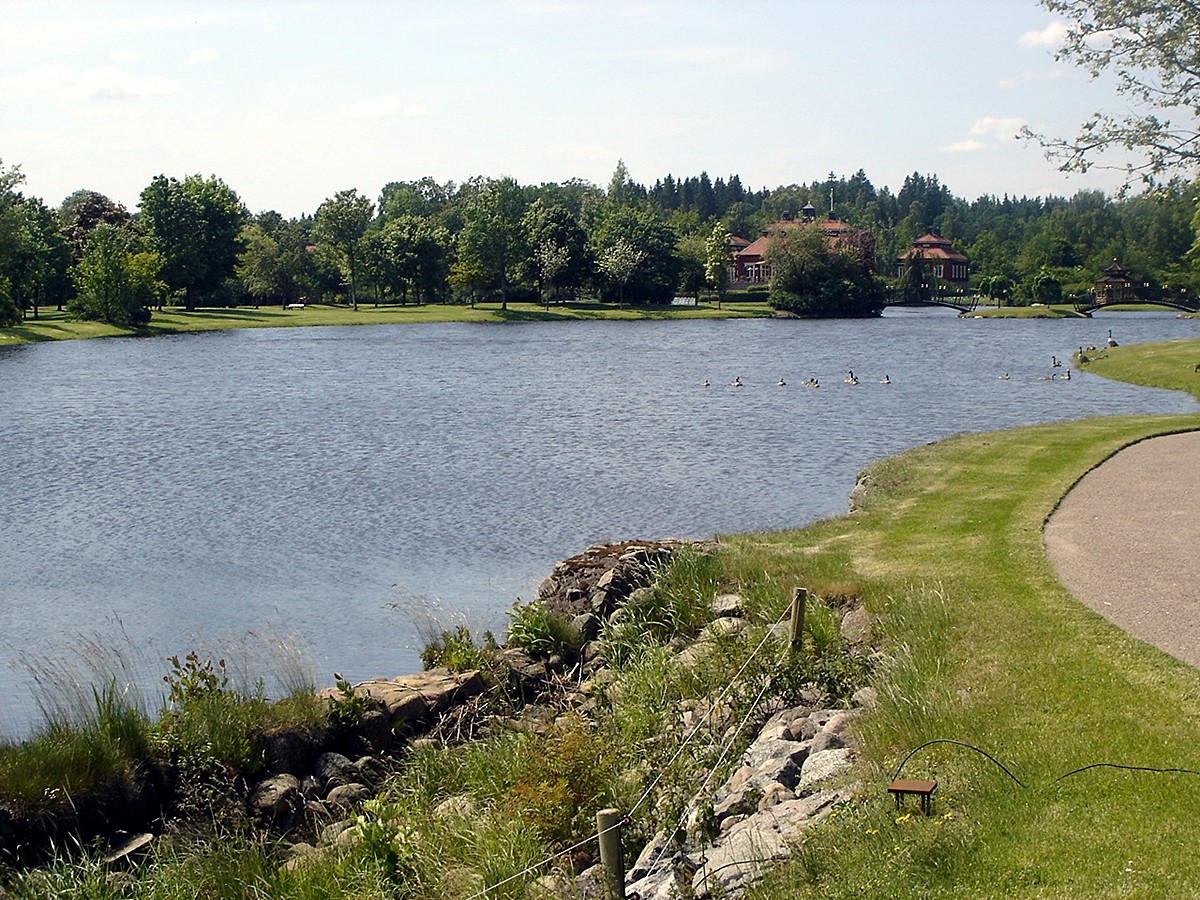
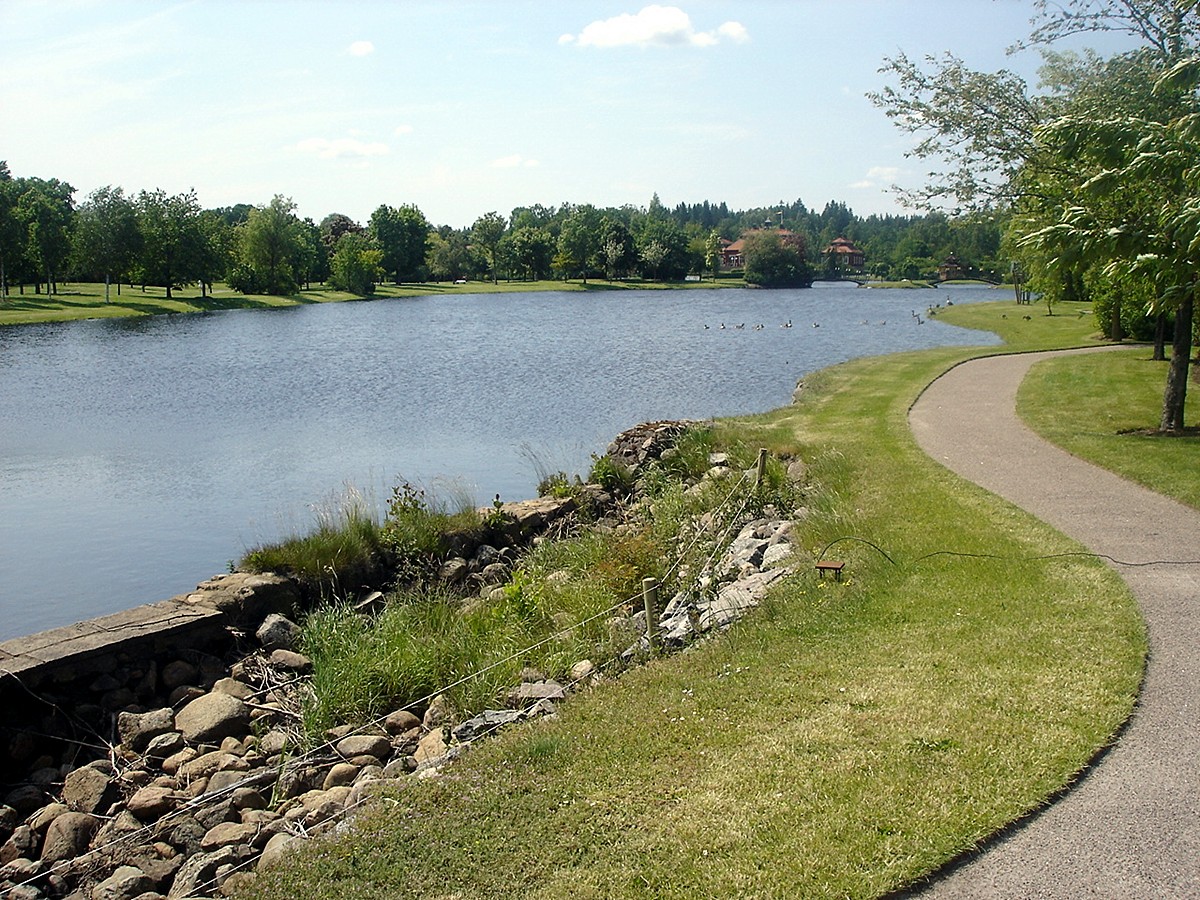
June 29, 2009
Hi, Leigh!
Here comes some photos from Hallasjö.
The first known ancestors who lived in Hallasjö was Holme Bildt. There was at that time only one farm. Over the years this situation has changed and today there are plenty. I have made a list showing the owners in Hallasjö 1535-1613.
1535-1537 Holme Bildt (our ancestor)
1539 Anders Bildt
1540 Lasse Bildt and Anders Bildt
1543-1553 Anders Bildt
1553 Sone Bildt, Anders Bildt and Holme Bildt
1558-1562 Holme Bildt
1558 Sone Bildt
1569-1613 Bonde Holmesson (Bildt); Holme Bildt's son. In 1611 Bonde Holmesson Bildt had two daughters living at home too.
How Holme Bildt, Lasse Bildt, Anders Bildt and Sone Bildt were related I don't know. I haven't been able to find found out whether our Bildt family was related to the Danish noble family with the same name. Some of other ancestors, Lars Svensson and Kirstin Månsdotter, arrived to Hallasjö 1667. The farm was split into two, between the brothers; Oluf Larsson and Bonde Larsson (1680-1761). Oluf Larsson d. January 22, 1699. His widow remarried and moved. This part was taken over by another brother Lars Larsson and his wife Karin Jönsdotter. They both died in the plague 1711. The next owner was Lars Larsson's sister, Elin Larsdotter and her husband Måns Andersson. They were succeeded by their son, Lars Månsson and so on. On June 6, 1706, the brothers Lars Larsson and Bonde Larsson bought the property rights to their farms. Bonde Larsson married Brita Nilsdotter (d.1766) and took over the farm. Then this farm was also split between his sons; Nils Bondesson (1726-1810) and Olof Bondesson (1712-1773). Olof Bondesson was married to Sigrid Svensdotter (d.1797) and they were succeeded by their son, Nils Olofsson (1749-1821). Our ancestor, Per Olofsson (b.1752), was younger brother to Nils Olofsson.
Bonde Larsson died of weakness due to old age, Brita Nilsdotter died of swelling and weakness due to old age, Olof Bondesson died of bloody flux and Sigrid Svensdotter died of cough and asthma. The attached photos show the farm where Per Olofsson was born. Hallasjö4 also shows where the barn stood. It was destroyed when a tree fell over it. The farm in the background was Nils Bondesson's. Outside the village it's said to have been a cholera cemetery. Bones have been found there.
More to come.
Regards, Per
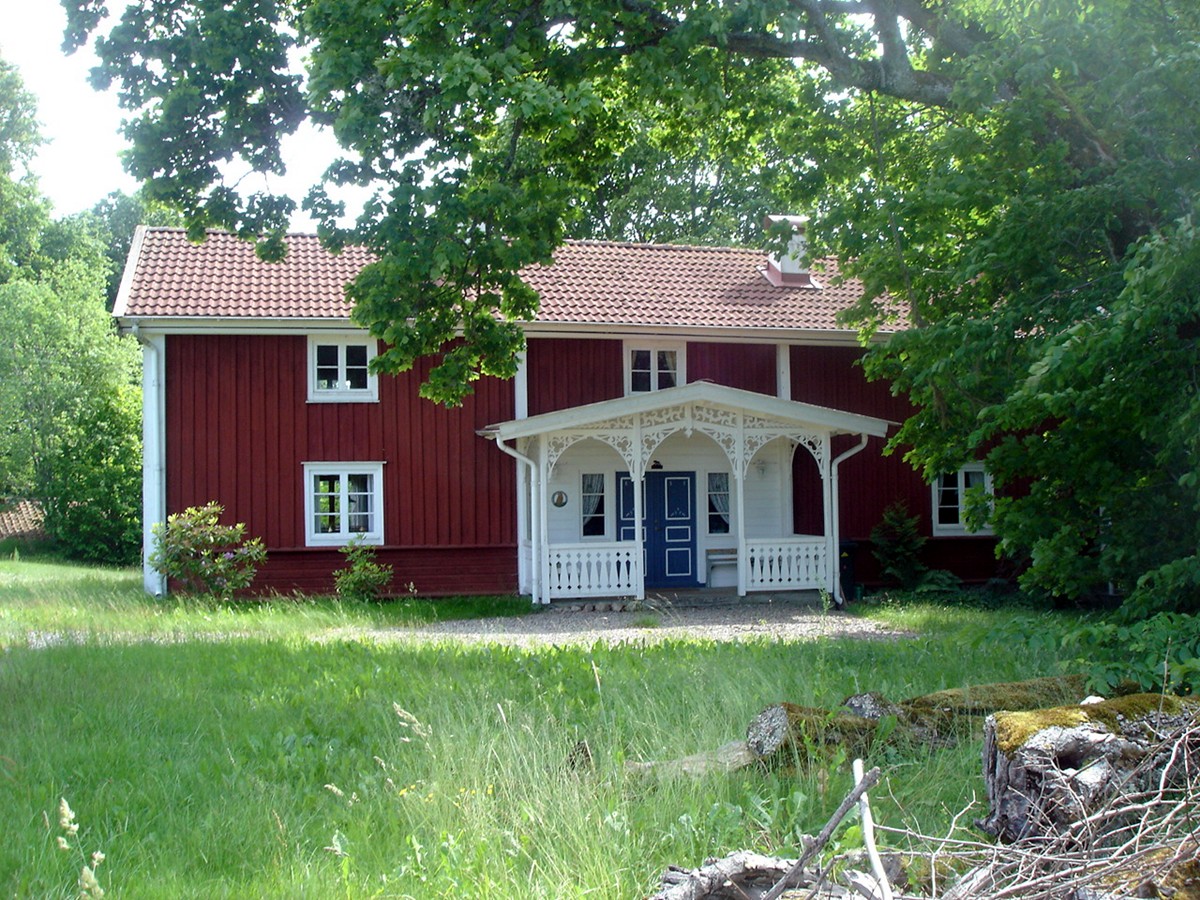
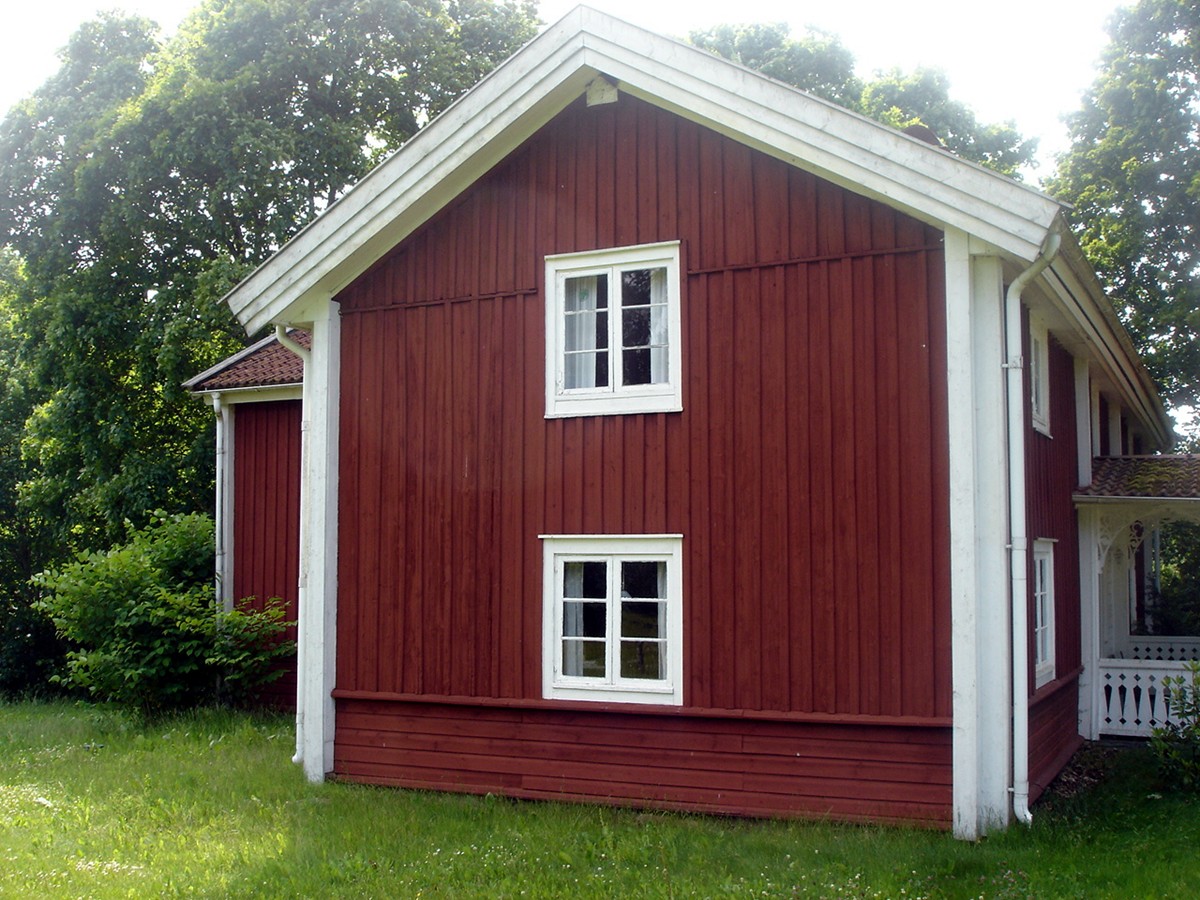
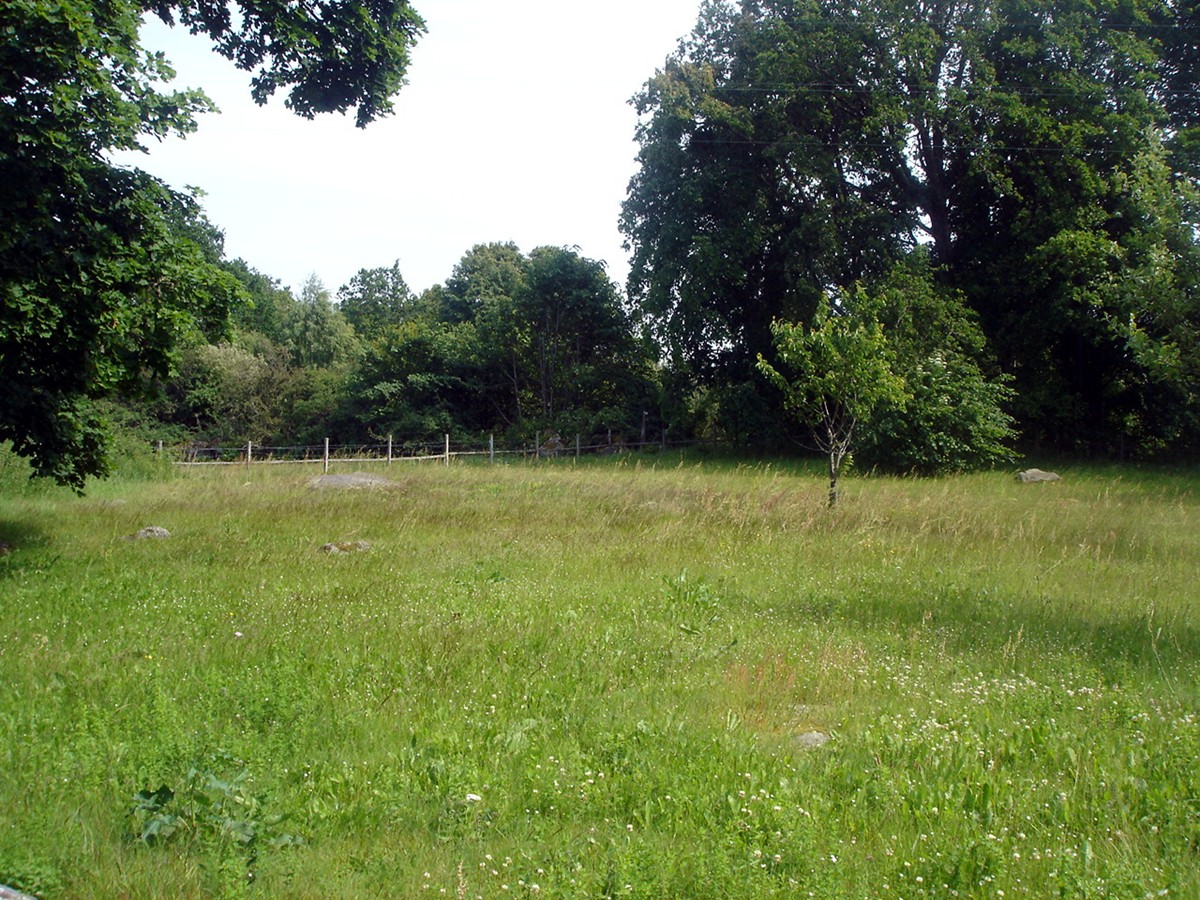
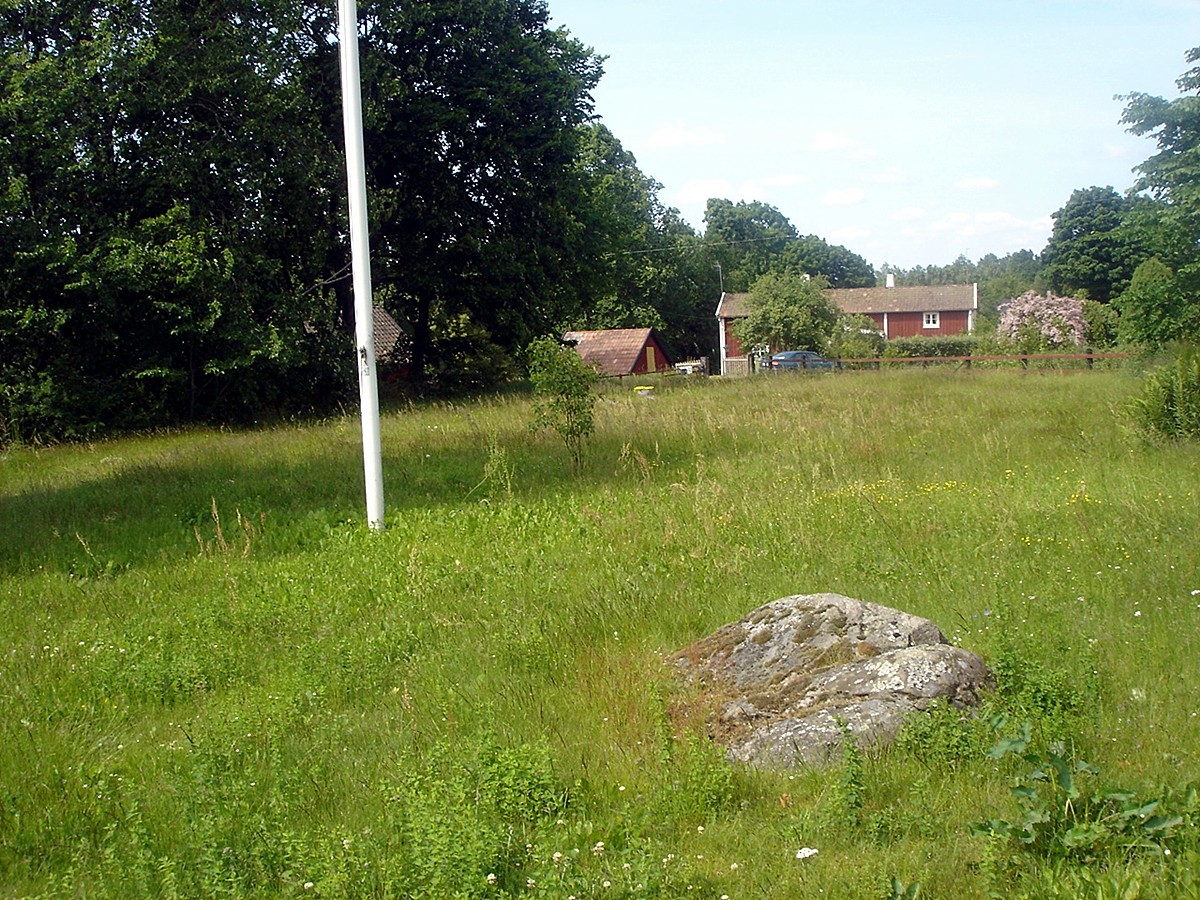
June 26, 2009
Hi, Leigh!
How are you? I have just had a visit from
Bob Larsen. We spent a couple of days together and visited places connected with
the family history. He said that he had talked with you. Well, I will send you
some photos and maybe Bob will do as well as soon as he has returned back to
USA. In any case, I have attached the gravestone of Magnus Larsson. By the way,
Peter Larsson Fröberg's great grandson, Peter Ingesson Fröberg, joined us. I
have attached a photo of four relatives standing in front of the farm in
Hallasjö (where Lars Pehrsson's maternal grandfather was born in 1752). It's
Peter, Bob, Robert (my cousin) and me.
More to come.
Regards, Per
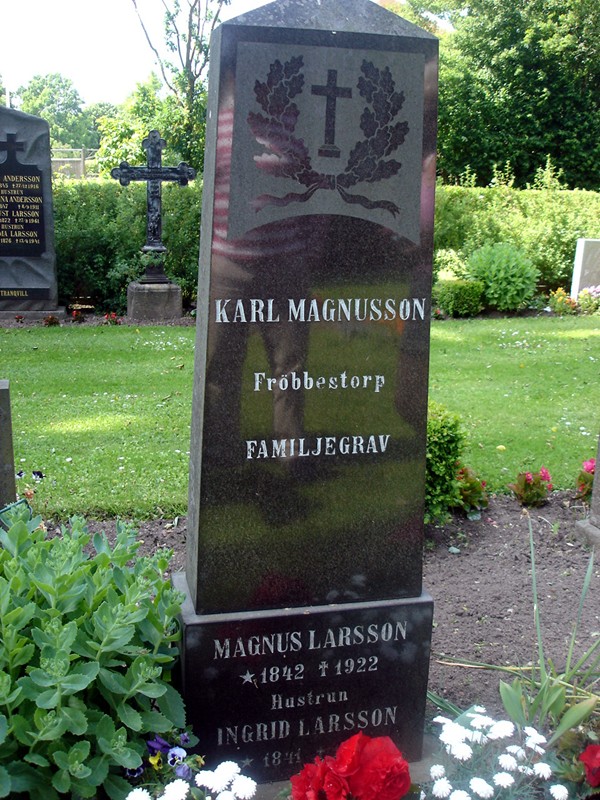
June 14, 2009
Hi, Evan, Gordon, Leigh and Velma!
How are you? It's soon Midsummer.
Anyway, I am going to attach a photo of Södra Kyrkeby which I assume is the farm
where our ancestors Per Nilsson (1641-1704) and Ingrid Nilsdotter (d.1711) lived
on. The farm has going through changes over the years. Today Peter and Elisabeth
Ljungström live there. She is a distant relative to us.
Regards, Per
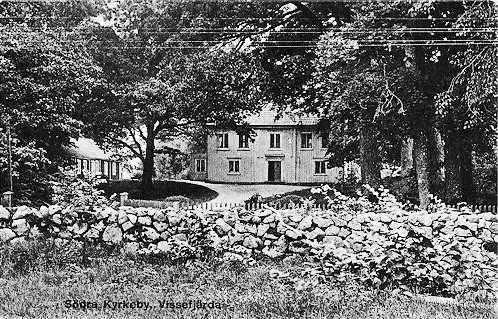
June 7, 2009
Hi, Evan, Gordon, Leigh and Velma!
I forgot to tell you, but yesterday it was Sweden's National Day. Actually it's not a very extended and big celebration as it is in other countries. You can always wonder why. Maybe part of the explanation is that Sweden hasn't been forced to defend it's country in any war since 1814. During WWII, for example, Norway and Denmark were occupied and Finland was attacked. Our war memories dates back to the 17th and 18th centuries. We have statues of war heroes 200-300 years ago. A park in Karlskrona is named Hoglands Park named after a battle that took place 1788. I don't know if it will change in the era of globalization, that the Swedes will be more nationalistic. When Swedes become nationalistic is when the soccer team and tennis player Robin Söderling play etc. Attached are some links about the national day and anthem.
Regards, Per
http://www.sweden.se/eng/Home/Lifestyle/Traditions/Celebrating-the-Swedish-way/National-Day/
http://www.sweden.se/eng/Home/
http://www.youtube.com/watch?v=EBQlcLb5ocw&feature=related
May 31, 2009
Hi, Leigh and Velma!
I have some photos taken of me and Steven Cain.
VISSEFJÄRDA CHURCH
It was first built in the 13th century. According to the tradition some of the material came from a fortress which had been at the place before the church. It's hard to say whether this fortress has existed or not. What we know is that the church was rebuilt 1761-1773. But parts of it are older, from the old church. Recent discoveries have revealed that some of our ancestors lived in Vissefjärda and of course on a regular basis attended the divine services in the church. There was no place for discussions. They were forced to go there and if they didnt they were punished harsh. The baptismal (also attached) is from the 17th century. Maybe our ancestors were baptized in it. It's not impossible. Our ancestors, Per Nilsson and Ingrid Nilsdotter, lived in Kyrkeby Södergård, Vissefjärda parish, at least, in 1681. They had four children; Lars, Karin (our ancestor), Ingeborg and Elin. Lars Pehrsson (d.1711 in Kyrkeby), Elin Persdotter (d.1732 in Kyrkeby), Ingeborg Persdotter (d.1770 in Rörsbo, Vissefjärda) and Karin Persdotter (d.1711 in Torhult). Those who died in 1711, probably died in the plague. Per Nilsson (b.abt. 1641-1704 in Kyrkeby) and Ingrid Nilsdotter (d.1711 in Kyrkeby) were running a farm. Vissefjärda was until the peace treaty in Roskilde in 1658 a neighboring village to Denmark. Just south of Vissefjärda was Denmark situated. But after Roskilde those provinces became Swedish.
Regards, Per
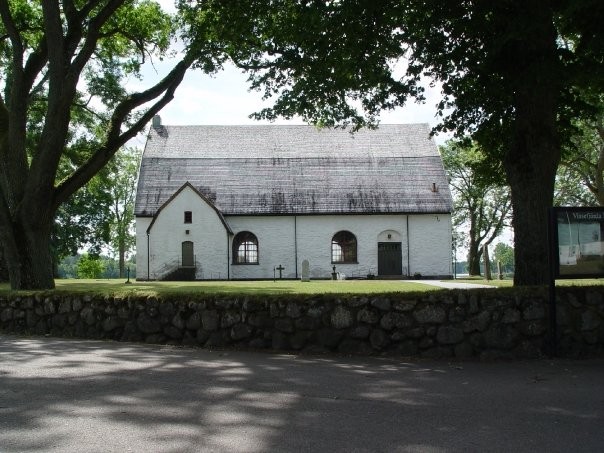
May 22, 2009
Hi, Judy, Leigh, Paul, Steven and Velma!
One way to pay the troops back then was to give them farms. The lieutenant at Småland's Cavalry Ingemar Wastesson received at three occassions during the 1620's all together six farms in lifetime fief for him and his wife. Wastesson was killed in Lutzen (Germany) 1632. His widow probably became exempted from the farms about 1642 because of mismanagement.
The farms are situated in Kristdala if you are interested to find out exactly where.
Regards, Per
May 21, 2009
Hi, Leigh and Velma!
I have attached some information about an relative. The links are about the, in Swedish history, famous battle.
Best regards, Per
Ingemar Wastesson became a nobility on
August 9, 1631. He got this because of his military service. Wastesson
had served two Swedish kings Carl IX and Gustav II Adolf. He had served well.
The attached picture shows his coat of arms. It's made by Jan-Olof Johansson
based on the descriptions of the coat of arms which belonged to Ingemar
Wastesson. Ingemar Wastesson was an officer in Småland's Cavalry Regiment and
was killed in the battle of Lutzen on November 6, 1632.
http://en.wikipedia.org/wiki/Battle_of_L%C3%BCtzen_(1632)
http://www.fortunecity.com/victorian/riley/787/30/war/lutzen.html
http://militaryhistory.about.com/od/battleswars16011800/p/lutzen.htm
May 19, 2009
Hi, Leigh!
How are you? I have attached a coat
of arms. It belonged to Ingemar Wastesson. The intention was that this would be
the coat of arms for Ingemar Wastesson's family. He became a nobleman, but was
killed in the battle of Lutzen at November 6, 1632. This picture is made by Jan-Olof
Johansson from descriptions of what the coat of arms were supposed to look like.
Regards, Per
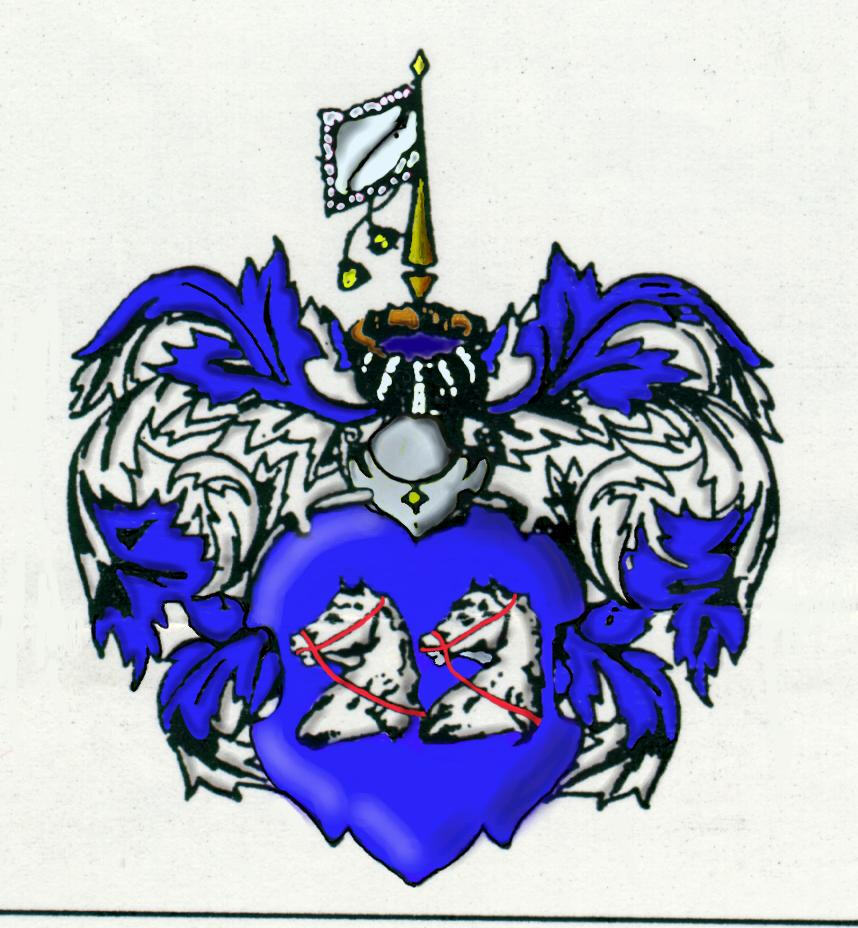
April 28, 2009
Hi, Judy, Laura, Leigh, Paul, Steven and Velma!
How are you? We are preparing for the Walpurgis night in the of the week. It will not be celebrated the way it did before. But that is another issue. I am going through "old" photos to see what I have and not had sent you and what you can find interesting, valuable and exciting. I have been busy the last days. I have taken part in an exchange with a Polish school, but now I am back in business again. I hope my translated text about the Plague was easy to read and understand. There will be more to come. This time I have attached photos from Hallasjö where our ancestors lived. Our ancestors, Bonde Larsson and Brita Nilsdotter, cultivated one farm, but divided into two farm for their sons; Olof and Nils. Olof was our ancestor. Nils and Olof became neighbors. I have attached photos of Nils' farm. As you can see it's an old farmhouse.
Regards, Per
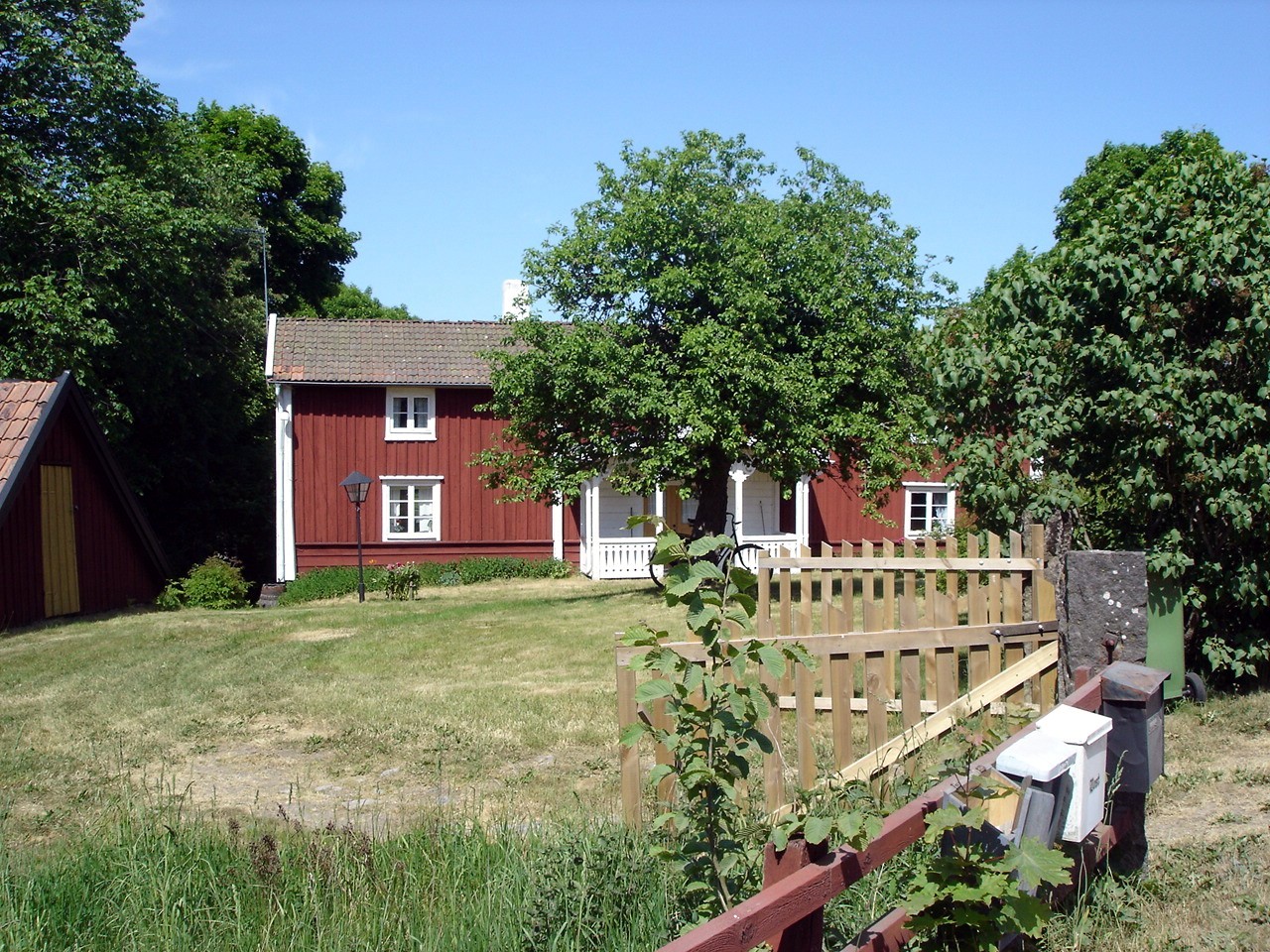
A Photo of the Nils Bondesson farmhouse in Hallasjö, Sweden. Bonde Larsson divided his farm land into two farms, one for each of his two sons, Nils Bondesson and Olof Bondesson, who became neighbors.
April 22, 2009
Hi, Leigh!
How are you? I have tried to translate an text about the plague 1710-1712 who influenced our ancestors' life.
More to come.
Regards, Per
THE PLAGUE THAT INFLUENCED OUR ANCESTORS 1710-1712
Prologue
Many of our ancestors and relatives died because of the plague. Most of them lived in Torsås parish, Vissefjärda's neighbour. Torsås went through nearly the same process. It gives you a good picture of what your ancestors had to deal with, experienced and what their lifes looked like 300 years ago. If you look in the family tree for those relatives who died in 1710-1712, the most likely cause of death was the plague. The plague arrived in the end of September 1710 to Vissefjärda. It stayed for 15 months and then vanished in the new year 1711/1712. 465 people died in Vissefjärda during this period of the plague. The first victim was the farmer Per Åkesson in Norra Brinkabo. The last one was Jöns Jönsson, a farmer's son, in Lekaremåla. The plagues has hit Europe many times. The most devastating plague was around 1350. It's estimated that 1/3 of Europe's population died. Sweden was no exception. It was the same figure here. Farms were abandoned since the owners had died. Much has been written about it from Boccaccio and Petrarca who experienced it in Italy to Albert Camus and the Swedish director Ingmar Bergman (who got an Academy award for the movie in 1957). The plague came and went. Sweden was hit in the end of the 15th century, in the 1560's, 1602-1603, 1619-1620, 1650's, 1660's and 1710-1712. In Södra Möre (which Torsås belongs to) a total of 3253 died 1710-1712 in the plague. In the city of Kalmar, 863 civilians died plus some military personnel. The southern part of southeast Sweden is said to have lost 1/3 of it's population. In the parish, Bräkne Hoby, the figure was 2/3. The city of Karlskrona was especially severely hit. It started in Riga, Latvia, which at that time belonged to Sweden, in May 1710. A ship brought the plague from Latvia to Stockholm, Sweden. Danish troops brought it to the southern Sweden (the province of Skåne). The disease was active in Stockholm in the summer of 1710. It was then spread over the country. Some areas were not very affected. The plague arrived to Kalmar in September 1710. In November 1710 the government decided that every house owner in the cities and rural areas should get: tar, pitch, resin, wormwood, nitre and sulfur to smoke in the churches and on the graveyards. In April 1711 the priest in Vissefjärda, Nils Swebilius, died. His successor, Bryniel Kinnerus, had a tough and heavy job. He wasn't able to manage to documenting all death, so he did it instead after the plague. Swebilius had started the documentation, but couldn't for obvious reasons finish what he once started. The priests were not allowed to arrange any burials. Those who didn't obey had to pay a fine of 50 dlr Silvermynt (silver coins). But the relatives took care of the burial on their own on the graveyard in Vissefjärda. The last victim, Jöns' son in Lekaremåla, who because of being stricken by the plague wasn't allowed to visit the church. When the rest of the people in the village went to the church's divine service on Christmas day they brought him with them. But he became sick “three days Christmas and a couple of days later died”. Kinnerus who was often on “sockenbud”1 was thankful for not being hit by the plague. The father of Jöns in Lekaremåla gave 8 öre in “testament” after his son to the church. The authorities decided that the people should bury the dead “in the nearest remote hill”. If it was obeyed in Vissefjärda to some bigger extent it's impossible to tell. Information provided from the priest says that many people was buried on Veseboryd's tongue of land. Bones have later been found there. Even a cranium. In the village of Lindehult a family is said to have been buried in a field. At the church it was traces of an old castle called Vesaborg. Many corpses were laid to rest in it's moat. There was after all only one place for burials for our religious ancestors and that was of course the church and it's graveyard. They didn't care too much about the orders from above. But when more and more people died in the villages, it became impossible to take the dead people to Vissefjärda church and they were instead buried closer to the villages. Failure of crops in 1708 and 1709 with enclosed undernourishment and general difficulties as a consequence of the long wars laid the foundation for the plague's high mortality. In average 50 people died each year between 1700 and 1709. But a dramatic change occurred in 1710. In that year the figure was 135. 119 of them died before the plague had arrived. The children were hardest affected. 62 of 135 was under 16 years. One example representing all small and young victims: “a small beggar-boy from Bromboda, 10 years”. People starved. 29 children in 1710 died before their 1 year birthday. All together 1116 people died in Vissefjärda parish 1700-1711. 615 of them 1710-1711. People who traveled and soldiers spread the disease via the main roads. Neighbour parishes were hit too. Fridlevstad: 461 deaths and Algutsboda: 452 deaths. Parishes who were not situated at the main roads were not hit that hard. Ljuder lost 95 people 1710-1711. Far from everyone died of the plague in Ljuder. The village in Vissefjärda who had the highest death figures was Karamåla. 63 died of the plague died there. In spite of their problem, the people in Vissefjärda took good care of their church. Maybe they wanted to please God. A new window was put in “at the altar”, an hourglass was acquired, the church's conter-windows were given a coating of tar and between June 1 and June 6, 1711, the church was whitewashed. People, back then, lived closer to death than we do. Everything was God's will. They were used to diseases as small poxes, dysentery and measles were common and often deadly. Many kids were hit by small poxes. In 1806 people was vaccinated in Vissefjärda. The priest wrote down who had natural poxes and who were vaccinated. In 1741 Vissefjärda was wasted by dysentery. 120 died of the disease. But of all diseases none was as deadly and feared as the plague. In mild cases the disease it was disclosed through spots and blisters on the skin. The more serious cases gave boils, red and blue streals under the skin, fever, attacks of vomiting and pain. The ill person also had problems breathing, hemorrhage and gangrene in hands and feet. The death came within three days.
SOME OF THE VICTIMS IN THE PLAGUE IN VISSEFJÄRDA PARISH
Dina 17 p Trinit Per Åkesson died. The plague came from Karlskrona. In one day the villages Målatorp, Kyrkeby södergård, Brinkabo (both farms), Emmaboda österby and many croft.
Many servants in Emmabo inn.
Nils' and Gumme's households in Södra Brinkabo together with Gert's offsprings were buried and a young daughter to Gert, “old” Nils and daughter, wife Ingrid. In N Brinkabo Per Åkesson's wife with many children.
N Gusemåla: Per's wife and children.
Skutaryd: Mattis and his wife.
Kimramåla: Per's wife. Gert and his son Jon. Gumme, his wife and children.
S Kyrkeby: Per's widow Sissa. Carl and wife. Lars Gummesson, wife and children.
Fiddekulla: a bunch of children.
Flädingstorp: the crofter Nils and 2 brothers of “the German people”.
Bamsekulla: Israel and children.
Backa: Hemming, the maid and children.
Bromboda: some children and Sven's widow.
Karamåla: all farms. Håkan Svensson, his wife Ingrid and many children. Per Andersson and wife Botilda. Per, wife Ingiär, Berge's wife Kirstin and many children. Staffan and some children.
Skeppebo: Karin who lived at the “half-farmer”.
Rörsbo: some children and boatswain people.
Stekaremåla: a boatswain.
Törsbo: Anders' wife Marie and children.
Bungemåla: everyone who lived there.
Förlångsö: Nils' and Eskil's households.
Bredasjö: Håkan and his son, Sune.
Björnabygden: Håkan's household.
Bussamåla: Sven Jonsson's children. Sven and wife. Gumme and his children. Inge and his wife. Erengisle's wife, son-in-law, daughter with children.
Stålberga: Håkan and all.
Nickamåla: Hindrik.
Lindön: Ingel and his whole household.
Gajemåla: Sven Trulsson. Håkan, his wife and children. Olsson's wife.
Parismåla: a bunch of children.
Bockabo: the sheriff's father Per Thorsson, his mother and many children at Per Persson's, the sheriff's wife Maria and many children.
Krukö: Olof.
Öremåla: a bunch of children.
Hyltan: Bonde, his wife, children and housed people with children.
Muggetorp: Ingel.
Ingelsmåla: Sven and children.
Storegården: children.
Lekaremåla: Gumme and his children.
Öjasjömåla: Carl's wife.
Eremitemåla: many housed.
Sutaremåla: wife and children.
Pellamåla: both farms and children.
Bläsemåla: Sten.
Buemåla: maids.
Tången, Hofgården.
Fåglasjö, Prämbo and Stångsmåla were also hit by the plague. The last destinations were Fiddekulla and Lekaremåla.
When the priest visit a dying person to pray with and give him communion.
April 20, 2009
Hi, Leigh and Velma!
I am going the material I have and step by step translate it so you can have any use of it. Here is something that you can add to the family tree. In 1674 one of the ancestors, Tygge Sunesson, came in argument with the soldier Gumme Nilsson about who had the right to the farm in Löfsmåla. Sunesson killed Gumme Nilsson with an axe. His penalty was to financially support the widow.
More to come.
Regards, Per
April 19, 2009
Hi, Denise, Donna, Judy, Laura,
Leigh, Paul and Steven!
How are you? I have
attached a document consisting of several old photos and pictures showing the
outside and inside of different farmhouses and farm buildings in the southeast
Sweden, the area where your ancestors lived. This can give you a good picture of
how they lived. I will try to translate the text later.
Regards, Per
PS. The first picture is a
barn. Ds.
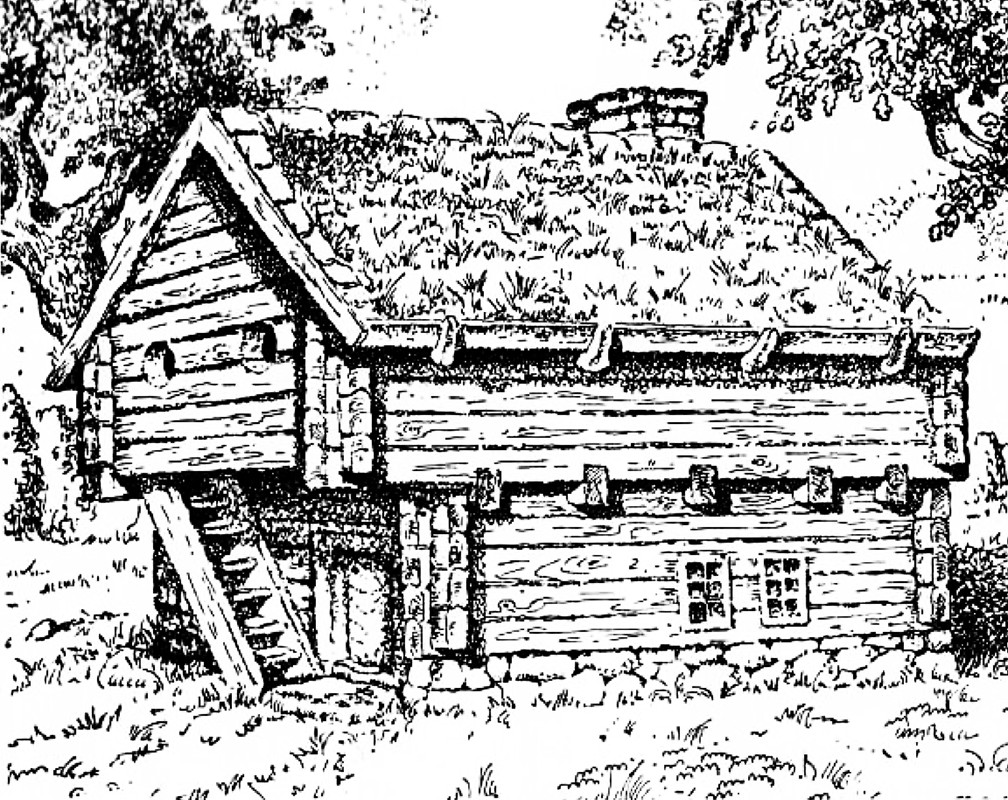
April 10, 2009
Hi, Bob and Leigh!
I found some photos which
might be of interest for you, since they show how your ancestors were dressed.
This how they were dressed in the 18th century. They might not have been dressed
like the woman in red and man in blue, but as the others.
More to come.
Regards, Per
.jpg)
.jpg)
April 9, 2009
Hi, Leigh!
How are you? I just wanted to wish you a Happy Easter. The Spring has arrived. The temperature is perfect. I have added two articles about Easter in Sweden.
Regards, Per
EASTER IN SWEDEN
Easter, by Po Tidholm
Sweden is a large country with a lengthy coastline, as the tourist brochures keep telling us. So when the big seasonal holidays come round, Swedes embark on long journeys to visit friends and relatives.
Celebrations in the countryside
Although contemporary Swedes are an urban people, most of whom live in cities or large towns, the vast majority still have one foot in the countryside. If they don’t have any family left in rural parts, they often possess a holiday cottage there. An agrarian strain runs through Sweden’s self-image: this is a nation of strong, sinewy peasants, raised on meat and turnips. Most people are agreed that festive occasions in Sweden should be celebrated in the countryside. Easter is no exception. Easter is the first extended weekend of the spring, and for many this means the first trip out to their holiday cottage, which has been locked and deserted all winter. There are window shutters to be opened and stuffy rooms to be aired. The woodstoves are lit, and the smoke fills the kitchen, naturally. Coughing and spluttering, you flee out to the yard, where the wagtails — if you live in southern Sweden, that is — have just begun their mating ritual and the last of the snowdrifts are melting in the pale spring sunshine. In the north, Easter is more of a skiing holiday. Once the cottage has been cleaned, swept and warmed up, Easter can begin. The members of the family arrive from near and far. At Easter, the aim is to gather as many relatives together as possible.
Secular holiday
While in other countries Easter is specifically a religious holiday, it has become a secular one in Sweden. The Swedes are well down in the statistics when it comes to church visits per year, and even if Easter swells the numbers slightly, most people celebrate it at home with their families and relatives. Many of the practices associated with Easter have religious origins, but this is not something that bothers Swedes much. They eat eggs because they have always done so — not because they have just completed a fast. Nowadays, eggs are a favourite accompaniment to the dish of pickled herring that is the centrepiece of most Swedes’ Easter meals. And few associate the omnipresent birch twigs — nowadays decorated with brightly coloured feathers — with the suffering of Christ. Easter has its own rituals.
From sweets to salmon
Children dress up as Easter witches; clad in discarded clothes, gaily coloured headscarves and red-painted cheeks, they go from house to house in the neighbourhood and present the occupants with paintings and drawings in the hope of getting sweets in return. Having consumed all these sweets, they are then given Easter eggs filled with yet more. Parents of a more ambitious turn of mind let the children search for the eggs themselves in a treasure hunt — following clues and solving riddles until they find their prizes. A traditional Easter lunch is likely to consist of different varieties of pickled herring, cured salmon and Jansson’s Temptation (potato, onion and pickled sprats baked in cream). The table is often laid like a traditional smörgåsbord. Spiced schnapps is also a feature of the Easter table. At dinner, people eat roast lamb with potatoes au gratin and asparagus or some other suitable side dish.
Easter
by Agneta Lilja, Södertörn University College
In Sweden, the
Easter celebrations used to begin with the three days of Shrovetide, full of
carnivals, games and revelry. One of the more popular activities was to
playfully thrash each other with birch twigs on Shrove Tuesday. Another
Shrovetide practice was to toboggan down steep slopes so that the flax would
grow tall. People were also supposed to mark Shrove Tuesday by eating seven
hearty meals. A 40-day fast then followed, with its own rules concerning food,
such as a ban on eating meat or eggs.
Easter, the most important
Christian festival of all, commemorates the resurrection of Christ. It begins on
Palm Sunday in celebration of his triumphant entry into Jerusalem. In olden time
the red-letter days in Holy Week before Easter were governed by church decree.
On Maundy Thursday, you were not allowed to spin or chop wood, as this might
intensify Christ’s suffering. Also on that day, witches flew off to consort with
the Devil at Mount Blåkulla, and people used to protect themselves by painting
crosses on their front doors and hiding broomsticks and rakes so that the
witches could not fly on them. Good Friday was spent in quiet contemplation.
People dressed in black and ate salty food without anything to drink. Young
people thrashed each other with birch twigs. The whole week was designed to
recall Christ’s suffering and death on the cross.
On Easter Saturday, the
celebrations turned joyful, and people began eating eggs again. Eggs were
sometimes painted in different colours, probably because they were often given
away as presents. In the 19th century, Swedes began filling paper eggs with
sweets. In western Sweden, the practice was to light bonfires, fire shotguns and
shout to scare away witches. People sent one another anonymous Easter letters
with their own designs. The custom of bringing birch twigs into the house and
decorating them with coloured feathers dates back to the 1880s. In southern
Sweden, egg games, such as egg-bashing, have long been popular. Trick-or-treat
became an Eastertime tradition in the 19th century, originally practised by
adults in masks and costumes, but later by young girls.
April 7, 2009
Hi, Leigh, Paul and Steven!
Oluf Kryp was farmer in Brändabo 1630-1651. In 1639, he was older than 60 years. He was most likely the same person as Oluf Bondesson Kryp. If so, he was brother to Ölfving Persson Kryp's grandfather. Ölfving Persson succeeded his relative in 1652. He cultivated the farm until 1680 when he moved to Karsbo. One of his sons, Måns Ölfvingsson, succeeeded him. His wife died in the plague 1711. Maybe he did too. He had a child when he was not married. This child was born June 10, 1677. According to the District Courthelp they would help each other to support the child. But Ölfving Persson was also succeeded by his daughter, Ingrid Ölfvingsdotter, and her husband and their family. They moved to Torhult before 1689. Then suddenly another of Ölfving Persson's children owned the whole farm. His name was Oluf Ölvingsson. He was married three times.
The
second wife died in 1711, probably the plague. Oluf Ölvingsson's descendants ran
the farm at least until 1821.
Ölfving Persson Kryp was living in Karsbo 1644. He was then the State's sawyer.
In 1645 he was "housed". Do you what I mean? 1649-1651 he was farmer in Slätafly.
About 1680 he moved to Karsbo again. According to the church accounts he, at Christmas Day, 1698 donated "all the candles in the big chandelier". It was of course Torsås church.
Best regards, Per
April 7, 2009
Hi, Leigh, Paul and Steven!
I searched the internet yesterday and found information about our ancestors. I
haven't confirmed it yet though. A few minutes ago I wrote the woman responsible
for the site to see where she had got the information from.
Per Germundsson (1654-1723) in Torhult was married to Karin. According to the
site her name was Karin Persdotter. I have earlier read that she carried that
last name. But on the site it said that she was from Vissefjärda. Her parents,
according to the site, were Per Nilsson (b.abt. 1641-1704) and Ingrid Nilsdotter.
They lived in Kyrkeby Södergård, Vissefjärda. Per Nilsson was buried May 15,
1704. If Per Nilsson was the father of Karin Persdotter, he might have been born
in the 1630's rather than 1641. She got her first child in 1679. She might have
been born around 1660, then her father would have been around 20-25 I guess and
then he must have been born 1635-1640. I dont know whether to put to much trust
in this information right now, before learning anything about her sources, but
you can at least put a question mark before Karin Persdotter's parents.
I have also found information about Germund Gudmundsson's heritage, but I will
check that with her first.
Paul, you asked about Oluf Bondesson Kryp. I have extended story about he and
his family, which I intend to translate for you and I can do it for Leigh and
Steven as well.
More to come.
Regards, Per
April 4, 2009
Hi, Leigh!
I have added an article about a revolt where our ancestors took part in. There
is only a short summary of it. Many more could be added. Let me know if you have
trouble finding the ancestors in the family tree.
Regards, Per
Nils Dacke was the leader of a 16th century peasant revolt in Småland, southern Sweden called the Dacke War (Swedish: Dackefejden), fought against the Swedish king Gustav Vasa. It was the most widespread and serious civil war in Swedish history and almost toppled the king.
Gustav Vasa had come to power at the
head of a peasant army in 1523. He had established
Sweden's independence from Denmark and made
Protestantism the national religion. Småland found itself
on the border between Sweden and Denmark and was hard hit by Vasa's ban on cross
border trade. In addition, the hard-handed way the church was reformed and the
increasing tax burden led to much dissatisfaction among the poor peasants.
Already in 1536, Nils Dacke was tried at a local court for killing a
sheriff: according to court records he was fined 10
oxen.
The uprising started in June 1542 with the assassination of more sherrifs and
tax collectors. Gustav Vasa underestimated the military prowess of the peasants
and sent his German mercenaries to quell the revolt. The
landsknechts were however unsuited for battle in the
rugged forests and suffered heavy losses. Dacke had devised defensive tactics
which allowed the peasants to use their steel crossbows
with devastating effect. Dacke's successes helped spread the revolt over all the
southern provinces of Sweden. The situation was so
serious that the king was forced to sue for peace and a one-year
ceasefire was signed on November 8. During the ceasefire
Dacke was the de facto ruler of southern Sweden and received (and declined)
offers of foreign support. He reinstated the ceremonies of the
Roman Catholic Church and reopened the cross border trade
in the areas under his control.
The king broke the ceasefire in January 1543 and sent a new and larger army into
the rebellious area. Royal propaganda had been spread to win over the population
and turn them against Dacke. Nils Dacke himself had become overconfident after
earlier successes and met the Royal army in a pitched battle
in March. The trained soldiers fighting on their own terms shattered the peasant
army and Dacke was severely wounded himself. After this defeat the rebellion was
all but over and Dacke became an outlaw. He was shot and
killed in 1543 on the border between the two nowadays southern Swedish provinces
Småland and Blekinge, then a border between Sweden and
Denmark, while trying to escape from the king's mercenaries. Dacke was
executed posthumously and his bodyparts were sent for
public display in larger communities that had supported him during the
rebellion. Gustav Vasa ordered the annihilation of Dacke's entire family, but
was milder against those who had given themselves up. Thus, the unity of the
realm was restored.
As a result of the war the king was henceforth more careful when dealing with
his subjects. The reliance on foreign mercenaries in the army was reduced in
favour of soldiers of Swedish extraction (many of which
were recruited in Småland) and this laid the foundation for Sweden's military
successes in later wars.
Dackefejden (English: The Dacke feud or Dacke war) was a peasant uprising led by Nils Dacke in Småland, Sweden, in 1542 against the rule of Gustav Vasa. Dacke and his followers were dissatisfied with the heavy burden of the taxes, the introduction of lutheranism and the confiscations of the churches property. In 1543 the uprising was crushed, and Nils Dacke killed.
Nils Dacke and his peasants were dissatisfied with the policies of the king Gustav Vasa. In his effort to modernize Sweden and gain more power, the king had instituted a more efficient system for tax collection. The heavy burden of the taxes angered many peasants. Gustav Vasa had also broken relations with Rome and promoted lutheranism instead of Catholicism, to be able to confiscate the properties of the church. In 1541 the kings men had confiscated many of the belongings of the churches in Småland, such as the church silver and even the church bells, to finance the army. Dacke criticised the new church order and promoted the old faith. He was also supported by many local priests. The rebellion was one of many rebellions during the rule of Gustav Vasa. In contrast with other contemporary rebellions in Sweden, this one was led by peasants, and not supported by the local nobility.
The uprising
The uprising began in the summer of 1542 when the kings bailiffs were attacked and killed when they came to collect taxes. Gustav Vasa responded by sending a military force led by his own brother-in-law Gustav Olovsson Stenbock. Hes attempt to crush the rebellion failed, and he was defeated by Dackes constantly growing army of peasants. Other attempts to defeat Dacke military also failed. Instead all supplies of provision and other necessities to the region were stopped. This weakened the rebellions considerably. Defaming propaganda about Dacke was also spread, labelling him a traitor and a heretic. In March 1543 Gustav Vasa ordered his army of Swedish recruits and German landsknecht mercenaries to attack Småland. This time bigger forces were deployed, and Dacks forces was attacked from two directions - from Östergötland and Västergötland. The uprising was crushed, and Dacke was wounded but managed to flee.
Aftermath
The kings revenge on the instigators of the rebellion was hard. The leaders that were caught were executed together with the priests that had supported Dacke. Peasants that had supported the rebellion was deported to Finland where they had to serve in the army, and the counties where the rebellion had taken place had to pay a big fine to the king. Dacke himself was caught and killed in August 1543 when trying to escape the country. According to the legend, his body was taken to Kalmar where his head was publicly displayed wearing a crown of copper, as a warning to others. The rebellion had been the most serious threat to the rule of Gustav Vasa, but after having defeated it he managed to consolidate his power, concentrating more and more power at the hands of the monarch.
The feud from a family perspective: A couple of spontaneous revolt attempts took place in the border area. In 1536 a few peasants from Torsås parish killed Jakob Skrivare. He was one of the king's men. One of the killers were our ancestors Bonde Olsson (Torsås). Jon Andersson (one of Nils Dacke's allies) was seeking conciliation with the king's people. In a letter in August to the Governor at Kalmar castle, Ernst Jonsson, he demanded that the conciliation should include all 9 or none. The other seven had killed Jakob Skrivare and gone in the woods as outlaws. After a few days Ernst Jonsson declared that all nine had been given ”day and self-conduct”. He let them go free after the bargain. ”He had given them friendship, since they had promised a stately amount in silver, money and oxes”.
After the revolt or the Dacke feud the Gertorn(sson) brothers were killed in May 1543 by a couple of farmers. Two of our ancestors took part; Bonde Olsson (Torsås) and Mårten Olsson (Gettnabo). At that time they were awarded instead by the king with tax-exempt for 3 years. As with all internal conflicts people will be divided. The Dacke feud was no exception. Bonde Olsson and Mårten Olsson were no forest farmers and had probably not supported Nils Dacke. Torsås parish was ruined after the feud. A failure of crops came in the 1540's too. A collective punishment was given to the area. Every farmer had to pay 2 Mark. Gustav Vasa used the same method as the Soviet Union leader Josef Stalin did after WWII when he deported people who he found disloyal.
The famous American actress Michelle Pfeiffer has Swedish roots and is a descendant of the Dacke Family in Blekinge. It's possible that she in one way or the other is an offspring of Nils Dacke, the revolt leader.
March 18, 2009
Hi, Leigh!
How are you?
I have attached two maps showing Sweden and
what Sweden looked like in 1658, when Sweden was one of the greatest powers in
Europe. The following wars decimated Sweden's strength step by step. In one of
the maps I have marked where Torsås is situated with black colour. Hopefully
this can be of some help understanding the situation our ancestors had to deal
with. The brown area south of Torsås was until 1658 Danish. More to come.
Regards, Per
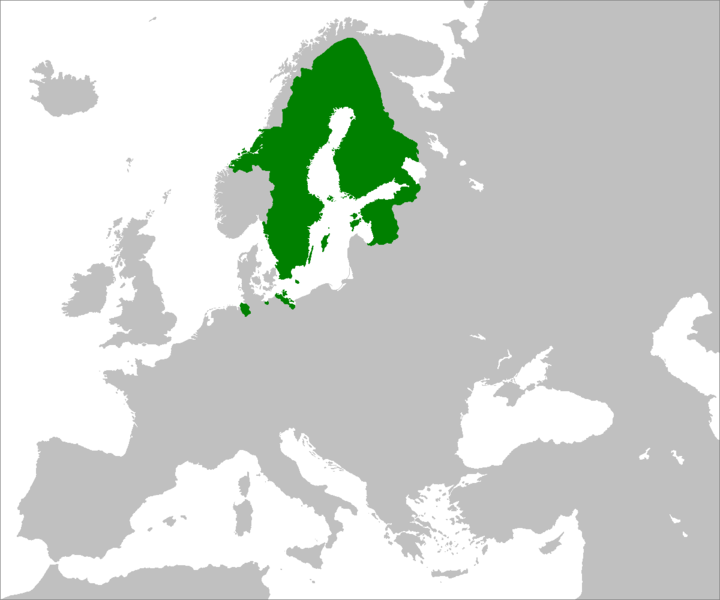
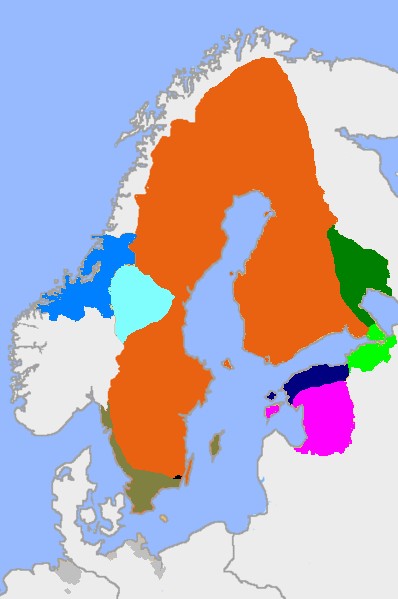
February 17, 2009
Hi, Leigh and Velma! How are
you? I have translated and copied some information about our ancestors and
relatives which shows that they according to the law back then is some way acted
like Al Capone during the Volsted Act, and I haven't even written about the
speakeasies placed nearby the churches that our ancestors attended. In other
words; more to come. Regards, Per
Al Capone and his fellows were no inventors of smuggling.
Our ancestors were involved 400 years before Capone and his gang. The Swedish
king Gustav Vasa tried to stop the trade in 16th century, but was unsuccesful.
The ancestors got more paid for the cattle in Denmark than Sweden, so they
brought their cattle to Denmark instead and sold it there. Vasa wanted them to
make business in Kalmar (Sweden) rather than Ronneby, Avaskär and Lyckå
(Denmark). It was a question of losing income for Sweden. But he also didnt want
Sweden to become depended on Denmark. Several wars were fought between Denmark
and Sweden. In 1658 at the peace in Roskilde the map changed. A couple of Danish
provinces became Swedish and the border was moved south. Lyckå, Avaskär and
Ronneby were now Swedish, but still the government were reluctant to have a
totally free trade (see below).
Nils Dacke rebellion in the 1500s was not a single proof
of Småland's despite against state power. Their despite resistance and
resentment lived on for centuries. The Age of Liberty (1718-1772) didn't change
the situation. Since Gustav Vasa's days it was strictly forbidden to trade in
the countryside. It was only selling its own products. It also had to buy
supplies for their own use. But it was only in the cities that it was
permissible to professionally do the buying and selling others' products. This
was something that strongly dismissed by the peasant. In return, it was
difficult to prosecute this illegal trade. Gustav Vasa said it was equally
difficult to "take all these buyers for the head", as capture all the wolves
which ran in the woods. In the 1740's the peasants were warned even from the
pulpit not to transfer any timber, such as timber, beams, boards and the like.
But apparently our relatives did not respond positively to the Church words and
admonitions, as they continued to bring their goods to Karlskrona. In November
1748 some farmers and a rural police chief were brought to trial. They were the
owners of three boats with illegal timber cargo board. Some of them had
delivered to trade man Paul Pihlgaard in Karlskrona, which in turn had delivered
to the Karlskrona shipyard for Royal Admiralty's behalf. In February 1749 the
proceedings resumed and the farmers who had delivered wood to Nils Petersson and
Carl Stensson's shipload were also at the trial. Including Lars Israelsson in
Törnemåla and Olof Andersson in St Skörebo. It emerged during the trial that
Carl Stensson and Nils Petersson was not the sole owner of the boat. One of the
owners above mentioned Olof Andersson, though not convicted in the trial.
Olof Andersson was our ancestor. Lars Israelsson was
brother to one our ancestors.
The Age of Liberty
When Charles XII. died, Sweden found
itself in a kind of political vacuum. Charles XII. had ruled from his camp.
Unlike Gustav Adolf, he did not delegate authority on ministers, but decided
mostly himself in a truly absolutist style. And so, government perished with him
in 1718. Back in Stockholm were Baron Goertz, Charles XII. confidant, Ulrika
Eleonora, Charles' sister, her husband Frederik of Hessen, then Karl Fredrik of
Holstein-Gottorp, another candidate to the Swedish throne, and the Swedish
Estates (Riksdag). Ulrika Eleonora had the unpopular Baron Goertz arrested and -
after accepting a number of conditions - was payd homage by the estates. These
conditions limited royal power; they are regarded being a contract between
sovereign and people. Actually, power shifted to the Rigsrad which was
responsible to the estates. The period dominated by Rigsrad, the estates and
their parties is called Sweden's ERA OF LIBERTY (1718-1772). Two rival parties
emerged, the hats and the caps. At first, the older CAPS, a group around Arvid
Horn, dominated Swedish politics until 1738. They generally were pro-Russian and
pursued a policy of peace. From 1739 to 1765 the HATS, generally pro-French,
mercantilist and aimed to regain Sweden's status as a great power. From 1765 to
1765, it was the caps again, from 1769 to 1772 the hats again. The age of
liberty came into being, because the influential politicians in the estates -
foremost the noblemen - took advantage of the power vacuum which appeared at
Charles XII. death in 1718. There were several claimants to the Swedish throne,
and the estates, by paying homage to ULRIKA ELEONORA, were kingmakers. They
assured, that the future kings resp. queens would not rule absolute. The
privileges obtained by the estates limited royal power so far, that Sweden in
fact became what later historians described as an aristocratic republic . The
king's say in politics was limited. The crown was passed on frequently, and
every new king had to sign the estates' privileges before being paid homage.
During Sweden's age of liberty (a more contemporary expression), the country's
constitution was based upon the ideas formulated by ERIC SPARRE (-1600) : the
constitutional principle, the democratic principle, the bureaucratic principle,
the corporative principle, the secrecy principle. The constitution foresaw the
separation of the branches of government, with clearly defined responsibilities.
However, the corporative principle assured that only the property owning segment
of population, organised by estate, could participate in political decisions, a
principle which clearly favoured the nobility and clergy. The older caps (until
1738), aware of Russia's military power and Sweden's inferiority, preserved
peace. When the hats took over in 1739, they looked for an opportunity to
recover territories ceded to Russia in 1721. In the Russo-Swedish War of
1761-1743, the regiment from Dal had suffered extraordinary losses; here in May
1743 dissatisfied Dalecarls met and marched on Stockholm, demanding Prince Karl
Peter Ulrich to be crowned King of Sweden. They camped on a market aquare in
central Stockholm; violence erupted and the Dalecarls were suppressed. The
event, under the name of Store Daldansen (great Dalecarl dance), entered the
history books as Sweden's last peasant rebellion.
The wars showed that Sweden was too weak to defend itself without having a
strong ally. Foreign states interfered in Sweden's politics, the Russians and
English supporting the caps, the French supporting the hats - this support
included bribes. Sweden's politicians increasingly became dependent on foreign
subsidies, as an extraordinary source of income.
In 1766 the Riksdag enacted PRESS FREEDOM, which has been a pillar of Swedish
society ever since.
In the late 1760es Swedish politics underwent a transformation. Traditionally
the noble estate provided active leadership in Sweden's Riksdag (parliament). In
1772 the non-noble estates demanded that non-nobles and nobles alike should be
appointed to higher office only on their merits and capability, an affront to
nobility.
The last WITCH TRIAL in Sweden was held in 1720.
In 1774 the first Jewish family was permitted to take up permanent residence in
Stockholm.
From Per Carlzon, March 2009:
Attached is information about our ancestor Måns Larsson (b. abt 1615).
Måns Larsson was called "the state's sawyer", which might have something to do with the oak forests in Tjärekulla where he lived. The state needed the oak to building ships and it was forbidden to cut down or delimbing the oaks. The state was responsible for the logging. Måns Larsson was a trusted man. He signed the 1670 years Census and was a juryman too and is mentioned in the court records 1669 and 1670. In 1674 the people in Torsås tried to get Johan Wallerman selected to parson in Torsås. A letter was sent to the bishop and the church administration in Kalmar. It was undersigned "of some of the parishe's oldest bailies and jurymen, together with some men of honour". Among them was Måns Larsson. Their efforts were fruitful. Johan Wallerman was selected. In his youth he was too hot for porridge when he found his soul love Anna Andersdotter. They had to pay 2 Daler for making love before marriage. It took place in 1642. He was an enterprising man. In 1669 he expanded his domains and together with his brother-in-law Per in Tånghult bought a farm in neighbouring village in Björsebo. Anders Olufsson in Björsebo was indigent. Maybe Anders Olufsson was Måns Larsson's father-in-law?
It was not uncommon back then that the farms were deserted. The Danes ravaged at the border. After Gustav II Adolf invaded and burned Kristianopel, the Danes revenged by burning down all farms in Torsås on Christmas 1611. The same thing happened in 1616. "1616 Torsås was totally ravaged and burned by the Danes" the record says. In 1629 there was 87 farms deserted, in 1631 the figure was 67. In 1644 Swedish forces tried to invade Kristianopel. The border parishes (Danish and Swedish) made own peace agreements. It had happened several times before. It angered the Danish commander of Kristianopel that he sent his troops to Torsås the same year. Torsås was once again ravaged with killings and fire. In 1645, there was 137 farms deserted. When Queen Kristina gave the Södra Möre (where Torsås belongs to) to Axel Oxenstierna many left their farms. In 1651, 37 farms were deserted in Torsås. 1653-1655 a severe plague hit Torsås and nearby parishes. Many people died and farms were left deserted. Whole families died. Another war hit Torsås in 1657. The Danes burned 37 farms in Torsås. Half of Björsebo was deserted in 1658 and in 1659 the whole farm. 1660 and 1661 half was deserted again. Måns Larsson's farm in Björsebo was split between his son Per Månsson and Sven Månsson. In 1689 Per Månsson became in a financial difficult situation. Even though Björsebo was in our relatives' hands for nearly 300 years.
December 25, 2008
Hi, Leigh and Paul!
We celebrated Christmas yesterday. We ate, talked, opened presents and played Trivial Pursuit. It was a very pleasant time, so for obvious reasons you were very tired when you went to bed. I think it was a pretty traditional Swedish Christmas. There was sausages, potatoes, egg, fish, Jansson's temptation (I don't think it's the opposite of temptation, but many people like it - so if you want the recipe just tell I will send it your way), kroppkakor and pork etc. Anyway, I will make a test in this email. I have this year written an article to Vissefjärda folklore society's book I Dackebygd about the wars and peaces in Torsås and nearby parishes. I have translated it in "translate google" and I am not sure the translation is 100 % accurate. I have attached it and you can read and see if you understand. Just ask and I will clarify and explain what I mean. Sveno Nicolai was Paul's ancestor (and related on Olaus Larson's stepmother's side).
Regards, Per
A
ROUGH TRANSLATION OF MY CHAPTER IN I DACKEBYGD 08
TRANSLATE GOOGLE
In 1566 at, Mikaelitid (I dont know how you translate this time of year), the vicar Sveno Nicolai to Torsås. According to Kalmar pin herdaminne he had related to the Storegården, St Väcklinge, Reftele, Jönköping. An area that had suffered even worse by the war than Torsås. Southern Möre, however, were hard hit. The Danes had ravaged the game and many farms in Torsås was devastated, including the vicarage. At the bishop of searches in 1590 told Sveno Nicolai priest on the farm's permit; "Everything was destroyed. Fields were not sown, and diaphragm farms were burnt up." In 1565 there were 123 farms in Torsås. Of those, 55 have been burned, 21 rövade, 1 destiny, 1 rövade and destiny, 4 burnt and deserted. [1] Southern Möre had suffered many wars and civil wars in 1400 - and 1500s. An experience which we shared with its neighbors in the then Danish Blekinge. The population on both sides of the border had a rule no quarrel with each other. Quite the contrary. They married across the border and in spite of unrest and hostilities between the countries named Blekinge residents their children in Vissefjärda church. There was also a major trade. Animal husbandry was important and the demand for livestock products was high in Danish and Swedish köporter. It was particularly the Danish köporterna that attracted the Småland farmers. For towns Avaskär, happiness and Nasir were horses, bullocks, hides and butter. The price of these goods was higher than in Blekinge in Småland. Gustav Vasa, however, imposed ban on this trade, but it seemed ineffective. It was probably a major smuggling and there was no opportunity for the king's servant to prosecute trafficking. Gustav Vasa suspect and even the servants were puppet. But cross-border cooperation is also the case for peace.
Blekinge Farmers and Småland Farmers had more in common with each other than the
opposite, and little access to Copenhagen and Stockholm. The war fought over in
their area are mired in problems. Experience of the war led to the Monday, 1505
gathered at the Hjortsberga Blekinge. There were representatives from Småland,
Blekinge and Scania. It was decided that it would warn each other in the event
of war, not to follow his men beyond the limit, all trade and communications
across the border would be free and offenders would have no sanctuary. The
border area was otherwise a hold on society's offenders. He renewed since 1506,
1509, 1510 and 1523. At peace in 1510 tightened further, and Monday the tone of
a letter written by the bailiff Jens Munk of the peace, at Lyckås castle, says:
"that they wanted no tax ration until they had received the peace. And I can not
get by them, neither the castle's needs or to myself, not so much as a chicken!
"
The summer of 1542 broke out Dacke Feud. The arrest and execution of Per in the
Hult was the triggering factor. Seeking revenge is not forthcoming. Dacke and
his followers soon to hit. First unlawful and killed during the bailiff Nils
Andersson and his men a piece of Voxtorp. The next target was the bailiff Nils
Larsson's farm. Nils Larsson and Arvid West Göte rested dinner in a cottage. The
cottage surrounded by Dacke and his men. Fogdarna awakened and was invited to
give itself, which it did. Then there was a fierce debate among Dackes men,
whether to allow fogdarna buy their way out or not. It appeared initially as if
everything was set for a redemption tion. But then reeve farm was looted
fogdarna out in the woods where they shot to death. According to information
shall Nils Dacke affinity Sven Gertornsson have played a crucial role and it was
decided that if fogdarnas death. Next stop was NOBLEMEN man Gudmund hay farm
located in the Grass Garden. Since a number of years was Gudmund lay seriously
ill and was basically waiting for death. And it came, probably in a different
guise than he had believed. Nils Dacke and his men shot to death hay with three
solders [2] through life. As usual, which destroyed since this farm. Allmogens
reaction to this bloody drama was at first very cautious, but Dacke was
purposeful approach, called the farmers to things and searched where persuade
the congregation to a joint decision. The other side's reaction was initially
cautious. The King in Kalmar, Germund Smith, tried to gain time by getting
allmogen to stay calm. But the avalanche had already set in the rolling. Gustav
Vasa had recruiting thousands of German mercenaries. Although it was
professional warriors, while enormously expensive. The German mercenaries
devoured (almost literally) huge sums. [3] The soldiers proved to be enormously
adept at battlegrounds. But Dacke looking up mercenary soldiers Achilles heel,
and they chose him as DOMESTICATED deep Småland forests. Frontier forests as
Dacke and his men knew inside and out, was their best allies. They knew every
branch, cave, stones and spruce. Here, they were unbeatable. An old proven
method was to benefit from the forests and often stone-bound Småland terrain.
For a long time used to it abatis, called debris, halting the enemy advance
while the enemy's retreat roads blocked by trees prepared precipitates. Then the
enemy was easy prey for guerrilla war the crossbows archers.
The simplified it significantly was the German mercenary soldiers far from quiet
entrance into the dark forests. It announced its arrival with the sound of the
drum swirls. That, plus the colorful outfits, did they became easy prey tire
guerrilla war. They were armed with crossbows, which usually was made of steel
and sometimes the horns. You could send arrows up to 350 meters. They were,
however, direct killing of hundreds of meters. Every man had a quiver with eight
dozen arrows, pålyxa, spears or swords. It also bore a steel HARNESS and any
kind of iron hat. The rebellion spread like wildfire. Nils Dacke sent out a
relay. This meant that it was serious. Budkaveln was usually a short Wooden rod.
You who have seen and read Vilhelm Moberg's Ride of the Night know that it was
burnt in one end. At the other end was hanging on a rope. It symbolized that
unless the kaveln further would be hanged, and even farm would be burned.
When kaveln arrived were each required to pay up to rural defense. It was shown
no mercy for those who refused to either pass on kaveln or stand. "He will be
all traitors and punish non with a fine, but with life."
Nils Dacke made a master-stroke, and the summer of 1542 concluded a border of
peace in Kolshult, Blekinge, with the Danish Blekinge Farmers. It was agreed
that Blekinge farmers would warn and help smålänning shares if the Danish king
tried to assist his Swedish colleague. Thus was also backs secured. Thereafter,
intensified the military actions from the sidewall.
But soon turned the war happiness and Gustav Vasa took command and after a
victory in the northern part of Kalmar, were wounded, and eventually Nils Dacke
were killed and the rebellion was then only a memory. Then it was quiet for
almost 20 years.
1563 Nordic sjuårskriget broke out. During the war was peace between the Småland herea procedures, Sunnerbo, Allbo and Kinne Elected and Scanian Göinge. Erik XIV called it a "traitor bond of peace". Even a nobleman and a sheriff who had their own interests to defend was involved in peace. In that case shared the same view as farmers, that is to keep war away from their farms. But this sort of action was not seen kindly by Erik XIV. In a diary note from October 1566 writes Erik XIV: "Did the Procurator Jöran Persson to me, that the Småland peasants were punished by the King without permission had concluded peace with Göinge inhabitants in Denmark anno 1564."
Nordic sjuårskriget is the longest and most devastating of all Danish-Swedish
war. Both sides engaged in extensive looting in the border region. In Småland,
il and Östergötland ravaged more than 7 000 farms and many cities. [4] A
particularly brutal incident in this war was Nasir carnage when the entire
population is said to have been executed.
1611 Kalmar War broke out. It lasted two years. Once again South Möre hit hard
by the Danes' ravages. Many farms were burnt down. IS Örjan Gårds book Anor and
memories are following that read: "The year 1611 was Prince Gustaf Adolf
Christian Opel in Blekinge, looted and burned the town. Seeking revenge is not
forthcoming. Christmas 1611, the night after last Christmas Day, burned every
farm in Torsås. The residents were in the then very tough winter cold seek
refuge in the woods. Many died but the survivors became a hardened generation. "
Now the truth was clearly not as pitch-black. But the neighborhood was hit hard by the war there can be no doubt. Papal Shepherd John Simonius Falkius [5] (probably Sveno NICOLAIS son-in-law) were forced to leave Torsås, which was due to two things: that the parish was the ravage of the enemy and that the vicarage had been burnt down. During the Kalmar War reached a peace, but now will be peace are more geographically limited. Southern Möre and the adjacent parts of Blekinge included peace with each other. Again punished this act.
The wars between Denmark and Sweden continued. In the 1640s fought another. Danish troops crossed the border and with the following looting and death. 1644 concluded a peace between Vissefjärda and Fridlevstad at the initiative of parish priests. The place was Fur, which until the peace in Roskilde in 1658 constituted the border between Sweden and Denmark. This agreement was renewed in the next war between Sweden and Denmark 1657-1658. Vissefjärda represented when the vicar Nils Petri Bock and county Supervisor Per in Bockabo. The first had in fact been at peace in 1644. Nothing in the relations between farmers on both sides of the border seems to have changed. Poisons targets across the border continued. On 26 February 1658 signed peace in Roskilde. It changed in a few pen the Nordic map. It meant including to Skåne, Blekinge, Halland, Bornholm, Bohuslän and Trond Heims county was Swedish. Fur, Holmsjö and Fridlevstad o.s.v. since the early Middle Ages had been was now Danish and Swedish tax paid to Stockholm instead of Copenhagen. The last war that directly affected South Möre of war was Scanian War 1675-1679. Once again concluded a peace in Fur. If the latter, peace writes Vissefjärdasonen Gösta Hultén: "Fred papers are unfortunately not been preserved. Several states have been destroyed in the main building on the farm peninsula in Vissefjärda burned down in 1700. In its quest for peace, reconciliation and brotherhood in the raging war, is the Danish-Swedish gränsfreder that the ethnic cleansing, the absolute opposite. Bond Fred are meant to the peoples on both sides of the border came to peace, despite the fact that the kings of Stockholm and Copenhagen declared another war. "Bond Fred Erna during 1500 - and 1600 figures represent a rare example of the English and even European history at the borders sometimes have a tendency to be just a bureaucratic product rather than something natural. The Swedes and Danes, on both sides of the border, had more in common with each other than with other parts of their own countries or the kings who ruled them in the same way that some people in the North African countries today where they have more in common with the neighbor in the other country than with their own countrymen. Oskar Schindler says in the movie Schindlers list that war brings out the worst in man, never the best. Border farmers agreements with each other during the wars of 1500 - and 1600-figures to disprove Schindlers reasoning. Wars picked up the best of them.
A thanks to Karin on perusal, views and inspiration.
January 18, 2009
Hi, Leigh!
How are you? I have attached some photos. The first one shows the farm in Kulebo where our ancestors lived from, around, 1712 to 1762. The farm looked much different back then. This "house" was built by a distant relative to us a few years ago. When our ancestors lived in Kulebo, the farm might have looked like picture 2 and 3. Even though our ancestors died or moved from the village the farm was still kept within the family for generations. Our ancestor, Karin, had a brother - named - Börge Olufsson who was running the farm when he was succeeded by his son, Olof Börgesson, and so on. Kulebo could be traced back, at least, to 1535, but it's probably older than that. At that time it was only one farm. Around 1700 it became two farms. Usually a Swedish farm back then consisted of a couple of farm buildings. In spite of all building it wasn't unusual to, during the winter, keep the animals inside the house together with the family. The beds were situated at the walls and a couple of people slept in the same bed.
Best regards, Per
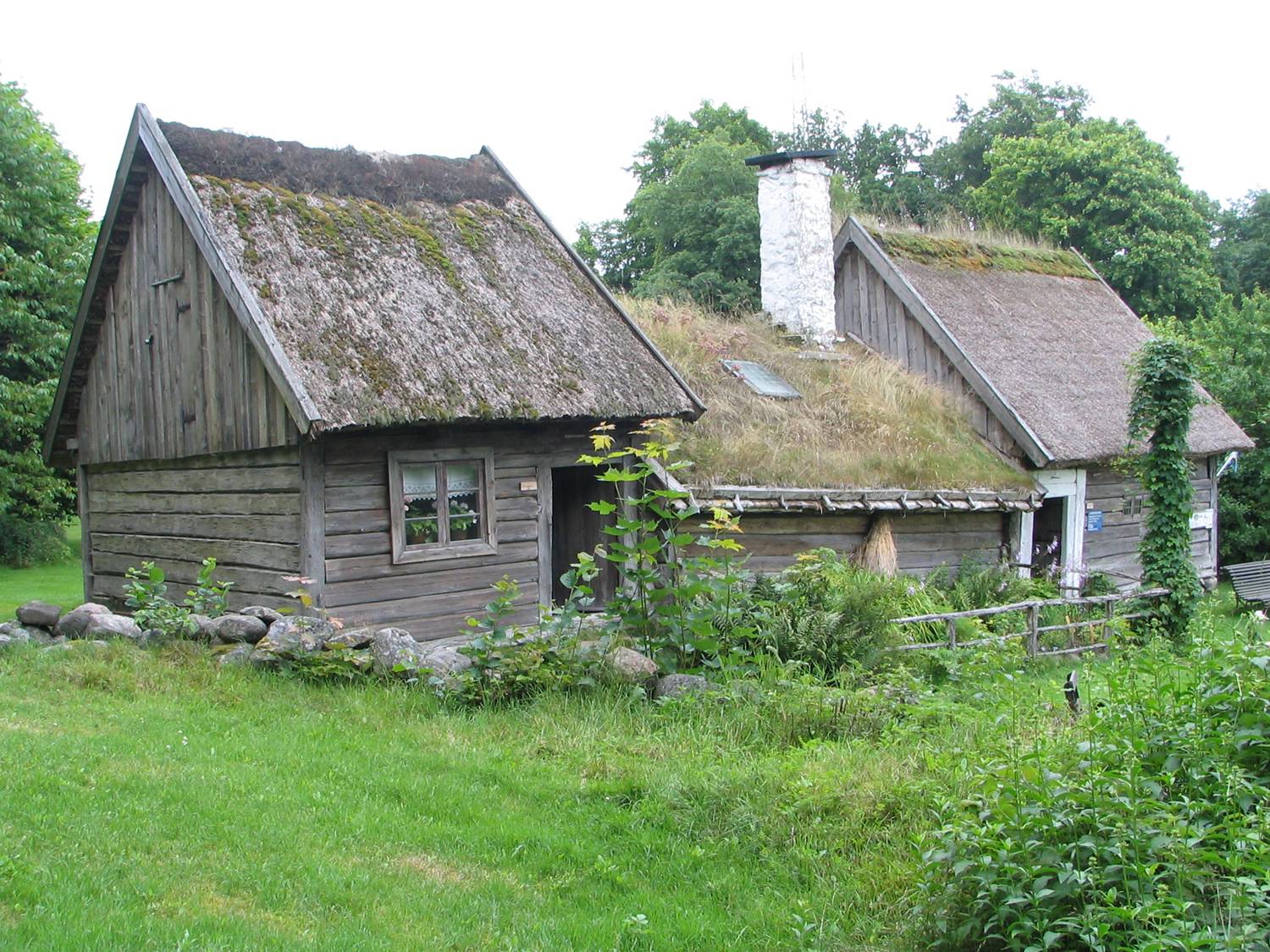
Picture 3
January 31, 2009
Hi!
How are you? I did a search on the internet yesterday and found some additions to the family tree. Let me know if I can't find the head characters. The head characters are our ancestors Lars Andersson and Brita Anundsdotter. They were married in 1666. Brita Anundsdotter was from Glosebo. She was the daughter of Anund Olufsson, farmer 1611-1644, and had a couple of siblings; Karin (d.1675-10-24), Måns (b.1616) – soldier (in 1638) and farmer (from 1645), Mårten – soldier 1650-1655 and Sten (b.1636) – soldier 1660.
Anund Olufsson's father was Oluf Anundsson, farmer 1576-1604 and soldier 1582-1589, his father was Anund Persson, farmer 1550-1579 and his father Per Mårtensson, farmer 1535-1550. They all lived in Glosebo 1. Per Mårtensson had a brother, Oluf Mårtensson Pung, farmer 1535-1564, Glosebo 2. Their father's name must have been Mårten. He was probably a farmer, maybe born 1470 and maybe living in Glosebo/
Sweden was regularly in wars in the 16th and 17th centuries. The main enemy was Denmark, but also Poland and Russia, and from 1630 Sweden took part in the Thirty Years War in Germany. It's estimated that Sweden, from 1620 to 1640, lost 90 000 men in the wars. The Swedish population was around 1 500 000. Stockholm, the capital, had around 9 000 citizens. Sweden was Sweden, Estonia and Finland. Estonia was Swedish 1561-1721 and Finland was Swedish maybe 1150-1809. Most of the Swedish soldiers didnt die on the battlefields, but in the garrison cities instead. This was 200 years before Florence Nightingale changed the situation in the Crimean War. The diseases and the bad hygiene killed more than the enemies did. In the end of the 1640's about 4/5 were foreign mercenaries in the Swedish armed forces.
Lars Andersson was a farmer, juryman, barber and respected member of the society. His barn had once functioned as a custody. He was someone to be counted on in Torsås parish. His father was juryman and his grandfather was a sheriff. He was married twice. His second marriage was with Brita Anundsdotter.
There'll more to come.
Best regards, Per
February 1, 2009
Hi! I have attached a website:
http://www.glosebodhatimmergard.se/?page=buildings
This shows Glosebo which I wrote about in the last email. The house on the site is not from the 16th century. It's instead from 2008, but shows how it looked when our ancestors lived in Glosebo. Per Mårtensson hired the farm from the church. He had to pay every year to the church for cultivating the farm.
Byggnader means buildings.
Glosebo is first mentioned in 1390.
Regards, Per
February 3, 2009
Hi!
I take the opportunity to
send the same message to all of you. This small picture shows what farms in
Sweden looked like back in the 16th century. It might give you a good picture of
how your ancestors lived. It's small, but it's something. There'll more to come.
Regards, Per
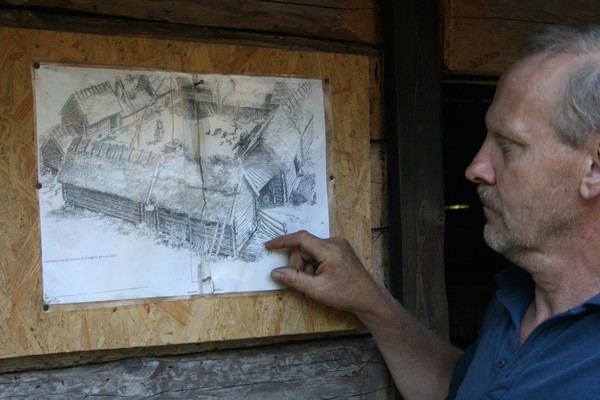
March 8, 2009
Hi, Leigh!
I have attached a few photos and a
link to the rest of the photos. They show the inside of Torsås church, for
example the baptismal. I cannot fully express how important Torsås church was
for our ancestors. It was central and essential for them. The church has gone
through many changes over the years. The biggest changes were made 1777 to 1778,
but the olde
July 2, 2011
Hi, Leigh!
How are you? Finally my Internet has started to work again. Its a rainy day, which gives a marvellous opportunity for spending time at the computer.
In a book I newly bought there was information which inspired to write something about an important and interesting ancestor who I earlier just have mentioned in the passing. His name was Per Erlandsson.
Sweden was, when Per Erlandsson was a member of the Swedish parliament, at its height of power. It was fighting a couple of wars at the same time (against the Catholics, Russia, Poland and Denmark). Most of the wars were succesful and Sweden was able to expand its territory. The human and economical losses were of course the price Sweden had to pay. Researchers estimates that Sweden (between 1620-1640) lost 90 000 men in the war. Sweden and Finland were the same country until 1809 and together the population was around 1 800 000.
Our ancestor, Per Erlandsson, was a member of the parliament at five occassions; in 1643, 1647, 1650, 1652 and 1668. He represented the farmers. This group was about 90-95 % of the whole population. The parliament consisted of four groups; the farmers, the nobility, the priests and the city inhabitants.
Every area had the right to elect a member of the parliament. It was most likely not the richest or the poorest in the parish that was selected. They were not destituted either. He must have been prepared to pay some of the expenses during the stay in Stockholm. In some cases it was needed to have a replacement at the farm. Local stewards were overrepresented. Per Erlandsson was a juryman. He probably traveled with boat from Kalmar (which was the closest port) to Stockholm. Maybe the trip was not so uncomfortable, even though the farmers didnt used the first class. The parliament was often situated in Stockholm. The proceedings were opened by the king in the castle of Tre Kronor (it burned down in 1697). He held a speech where the condition of the country were revealed and what the problems were. It was up to the four different groups to find solutions to the problems. The four groups had then own meetings where they debated and discussed the problems. The farmers met in an informal lounge in the city (now Old Town). Sometimes the discussions developed into fist fights. Usually they could make a decision without violence. After that the parliament reassembled and more discussions continued until they all could agree to a decision. It was then published and spread over the country. The parliament usually met every four year. There were of course exceptions. The parliament duties were to enact and amend laws and approve various resource extractions for the crown needs. In 1668, at the age of 78, Per Erlandsson thought it was about time to resign his political duties. Age and health had an impact on his decision. You should keep in mind that the life expectancy was around 40. Traveling to and from Stockholm, even with boat, maybe wasnt something for a 78-year man back then. He seems after all to have been a tough old boy and eager to serve his country in different areas for a long time. Keep in mind that Per Erlandsson, except his political and court duties, had a farm to run. Per Erlandsson must have been considered to have been a man of honor and someone you could trust, since he repeatledly was elected to the parliament. He wasnt elected in a normal election, but choosen at the session at the court instead.
More information will follow.
Regards, Per
December 21, 2011
Hi, Leigh!
How are you? I just want to wish you and your family a Merry Christmas and a Happy New Year.
Most Swedes are familiar with the poem by Viktor Rydberg (1828-1895). For many it represents Christmas back in the old days – a melancholy and nostalgic look back. I have attached both the Swedish and the English version plus something about the Swedish Christmas traditions which might be of interest for you.
Best regards, Per
Christmas
After nearly a month of waiting, Christmas Eve finally arrives — the height of the celebration in Sweden. Work is at an end, schoolchildren are on holiday and the Christmas preparations are complete.
A family affair
People have bought their presents
and their Christmas food in crowded shops and department stores, and the
home has been cleaned and decorated according to each family’s traditional
habits.
Christmas is the main family event of the year, and there is always a
certain amount of discussion about where to celebrate it this time round.
Sweden, as we have mentioned, is a large country, and those wishing to be
reunited with their families often have to travel far. Train and air tickets
need be booked at least two months in advance, and motorists are advised to
start their journeys in good time.
Modernisation of Christmas
Christmas in Sweden is a
blend of domestic and foreign customs that have been re-interpreted, refined
and commercialised on their way from agrarian society to the modern age.
Today, most Swedes celebrate Christmas in roughly the same way, and many of
the local customs and specialities have disappeared, although each family
claims to celebrate it in true fashion in their own particular way.
The food you eat at Christmas may still depend on where you live in the
country, or where you came from originally. But here, too, homogenisation
has set in, due in no small part to the uniform offerings of the department
stores and the ready availability of convenience foods. Few have time to
salt their own hams or stuff their own pork sausages nowadays.
Ingmar Bergman's Oscar-winning film Fanny and Alexander, although
set in the late 19th century, nevertheless reflects Swedish Christmas
celebrations today: a bright and lively occasion, full of excess, good food
and happiness, but also a time during which family secrets tend to surface.
Christmas holidays
Holiday leave over Christmas and the New Year is fairly long, usually
extending a week into January. Once Christmas Eve is over, a series of
enjoyable — or, in some cases, dutiful — visits to friends and relatives
ensues.
Swedes travel many a mile during the holiday period. Christmas Day with the
Olssons, Boxing Day with the Perssons and a week’s skiing in the mountains
with the Svenssons.
Perhaps celebrating Christmas is more
complicated than ever nowadays. Present-day family constellations,
comprising ex-wives and ex-husbands, children from marriages old and new,
newly-acquired relatives and mothers-in-law, are all hard to fit into the
nuclear family celebration that, deep down, all Swedes prefer. As though
they weren't already under enough pressure to celebrate a perfect Christmas.
High expectations
As a rule, Swedes expect a great deal from their Christmases. There should
be snow on the ground but blue skies and sunshine, everyone is expected to
be in good health, the ham must be succulent and tasty, and presents must be
numerous. Moreover, the children are expected to be happy and well-behaved
and the home is expected to be warm and bright.
Everyone does their best, and the Swedes perhaps are better placed than most
to celebrate Christmas. The ever-present candles and lights provide a nice
contrast to the winter dark, the red wooden cottages are at their most
attractive when embedded in snow, and the fir trees stand dark and sedate at
the edge of the forest. Santa Claus moves about the land and the North Star
pulsates up there in the night sky.
The perfect Christmas tree?
On the day before Christmas Eve,
Swedes venture forth to look for the perfect Christmas tree. This is a
serious matter — the tree is the very symbol of Christmas, and it must be
densely and evenly branched, and straight. If you live in a city or town,
you buy the tree in the street or square.
Those who live in the country fell their Christmas trees themselves. Many
Swedes believe — mistakenly — that their legal right of access to the
countryside allows them to fetch a tree from the woods wherever they like,
with an axe, a bucksaw or — as in western Värmland on the Norwegian border —
with a shotgun. Not to be recommended.
Trees are decorated according to family tradition. Some are bedecked with
flags, others with tinsel and many with coloured baubles. Electric lights
are usually preferred to candles on the tree because of the risk of fire.
Homes are also decorated with wall hangings depicting brownies and winter
scenes, with tablecloths in Christmas patterns, and with candlesticks,
little Father Christmas figures and angels. The home is filled with the
powerful scent of hyacinths.
At 3 p.m., the whole of Sweden turns on the tv to watch a cavalcade of
Disney film scenes that have been shown ever since the 1960s without anyone
tiring of them. Only then can the celebrations begin in earnest.
Abundance of food
Christmas presents are under the lighted tree, candles shine brightly and
the smörgåsbord has been prepared with all the classic dishes: Christmas
ham, pork sausage, an egg and anchovy mixture (gubbröra), herring
salad, pickled herring, home-made liver patty, wort-flavoured rye bread
(vörtbröd), potatoes and a special fish dish, lutfisk. The ham
is first boiled, then painted and glazed with a mixture of egg, breadcrumbs
and mustard. Lutfisk is dried ling or sathe soaked in water and lye to swell
before it is cooked.
Once all have eaten their fill, Santa Claus himself arrives to wish the
gathering a Merry Christmas and distribute the presents.
- - - - - - - - - - - - - - - - - - - - - - - - - - - - - - - - - - - - - -
- - - - -
Po Tidholm is a freelance journalist and
a critic with the Stockholm daily, Dagens Nyheter. Po Tidholm wrote the main
sections about how we celebrate in Sweden today.
Agneta Lilja is a lecturer in ethnology at Södertörn University College,
Stockholm. Agneta Lilja wrote the sections about the history of Swedish
traditions and festivities.
The authors alone are responsible for the opinions expressed on this web
page.
Translation: Stephen Croall/Lingon
Copyright: 2004 Agneta Lilja, Po Tidholm and the Swedish Institute. This text is published by the Swedish Institute on www.sweden.se.
Christmas
by Agneta Lilja, Södertörn University College
Christmas, which commemorates the birth of Christ, has long been the most important festivity of the year. In the old days, it was a feast for the whole household as there was plenty of fresh food to be had. The Christmas table was laid with ham, pickled herring, jellied pig’s feet, sausage, rice porridge and lutfisk (ling). The food was to be left on the table overnight, as it was then that the dead came to feast.
Homes were cleaned and decorated with wall hangings, and fresh straw was laid on floors. The birds were given an oatsheaf and the mythical farmyard brownie a plate of porridge. The practice of bringing a Christmas tree into the house and decorating it was imported from Germany in the 1880s. Initially, Christmas presents were given anonymously, and playfully, often in the form of a log of wood or the like wrapped up and tossed through a front door. In the 20th century, people began giving one another real presents, handed out by Santa Claus, who was modelled on St. Nicholas, the patron saint of schoolchildren.
At the early-morning church service (julotta) on Christmas Day, traces of earth could be seen in the pews where the dead had held their own service overnight. After the service, people raced to get home first. The winner would harvest his crops before anyone else that year.
On Boxing Day, you got up early to water the horses in streams running north, as Saint Stephen, the patron saint of horses, was said to have done. Another practice, which breached the no-work rule,was to muck out other people’s barns.
Twelfth Night commemorates the arrival of the Three Wise Men in Bethlehem. The Swedish tradition of ‘star boys’ (stjärngossar) derives from this. In former times, boys often went round the farms carrying a paper star, singing songs in return for schnapps. Today, the star boys are a part of the Lucia celebration.
Hilarymas (Knutsdagen) on 13 January marked the end of the Christmas holiday in Sweden, and was celebrated with a final medieval-style feast. People scared one another with straw figures hung from trees. In bourgeois circles, the Christmas tree was plundered of its edible decorations. Tree-plundering is still practised in Sweden today.
Hi, Leigh!
I have tried to write down a short story about ancestors’ life in Fröbbestorp. Its focused on the 18th century and most of the information have I gathered from a history book. Through the help of Google Translate I have tried as best I could to translate it for you. I am fully aware that the translation is far from perfect, but hopefully you will get a rather good picture of the life your ancestors lived in Fröbbestorp. Of course I have more information but I will, as soon as I have translated it, share it with you.
Regards, Per
THE ANCESTORS LIFE IN FRÖBBESTORP
When our ancestors Per Andersson and Maria Nilsdotter arrived and settled down in Fröbbestorp in 1691 it was during a peace period in the Swedish history. Sweden had been involved in several wars that century. There was however a severe famine. Uneven weather was a major contributing factor. In 1695 was the Summer cold. The Autumn frost came early. In many places before an unusually late harvest had been salvaged. The crop failure was already a fact. The weather then switched to a mild autumn and the beginning of the winter was also warm. Fresh grass grew a finger’s length in the beginning of February. Trees and shrubs buds themselves and the Autumn sowing began to germinate. Then the cold and snow came. The Spring was exceptionally late and the Summer was extremely cold.
The late Summer of 1696 was visited by night frost. In many places were the majority of the fields fallow, since the starving population, the winter before, was forced to eat most of the seeds. Strawberries ripened only in September and raspberries in October. The harvest, in the places the crop matured at all, was of course disastrous. The winter that followed was severe and even in 1697, the Spring came very late. Winter cold was in some places so severe that it even was difficult to remove the bark from trees to make bark bread. Worst hit was northern Sweden. Its estimated that 100 000 died as a result. The failure of crops was a perennial scourge. There were small margins in the Swedish peasant society. The population rebounded, however, surprisingly fast.
Between 1697 and 1708 the harvest seems to have been fairly good. To pay for the war that began in 1700 the Swedish crown gave the farmers the opportunity to buy their farms. Per and Maria accepted the offer. But tell the happiness that lasts. 1708-1709 another failure of crops arrived. It was followed (1710-1712) by a very serious plague. Many of our ancestors died. 1/3 of Stockholm’s population died in the plague. Then occurred a few years of good harvests. However, it was only the calm before the storm. For in the year of 1716 the crop was shaken by hard rain, followed by two years of distinct crop failure.
In 1721 the peace came and also some years that were beneficial to the farmers. More and more farmers had enough money to buy their farms. There were low rates of mortality, peace, mild winters and good harvests. Those who survived the waryears were relatively immune to epidemics and perhaps even unusually viable at all. There were, moreover, plenty of uncultivated land. But then the situation once again changed. In the 1730’s the mortality rate rose sharply, due to international epidemics and several bad harvests. Between 1741 and 1743 Sweden was once again in war with Russia. Southern Sweden was not affected by any direct acts of war.
But in 1741 the dysentery hit with devastating force. Hundreds of peole died in “our” area. The cold winter was a significant factor. The heating was by modern concepts flawed and mortality was significantly higher in winter than summer. Especially devastating was the late winter and early spring strong temperature fluctuations that often broke the old and sick people. The winters were generally cold and long, until the 1800s. The second half of the 1700s also named the Little Ice Age. 20% of all children died during the first year of life.
February 21, 2013
Hi!
How are you? I hope everything is ok with all of you. This email will be a little different since I am going to involve another Swedish relative into our correspondence. I am going to explain how everyone is related. We are all off-springs to Lars Pehrsson, farmer in Fröbbestorp from the 1830’s to the 1870’s. He had eight children in his first marriage; Ingrid, Peter, Andreas, Magnus, Abraham, Gustav, Olaus and Erik, and four children in his second marriage; Christina, Sven, Gertrud and Ingrid.
Gordon, Laura and Leigh are descendants of Olaus, Jim and Lisa are descended from Gustav, Judy and Steven are descendants of Sven, Peter is descended from Peter, Bob is descended from Erik, Paul is descended from Christina, and finally me who is an offspring of Ingrid (in the second marriage).
Sweden has had a long history of peace. Not since 1814 has Sweden been involved in any war. In the 17th century the situation was the opposite. Sweden fought several wars, with mixed success. Sweden went from a relatively insignificant state to a signifcant power in Europe. One of the reasons was the powerful and well-oiled armed forces. After the devastating civil war, called Dackefejden, 1542-1543 the Swedish king, Gustav Vasa, came to the conclusion that the German mecenaries – who served the Swedish king – should be replaced by domestic troops. The rebellion army had quite clearly shown that there was combat effectiveness peoples within Sweden. These troops were cheaper and often more loyal. There were of course exceptions to the rule. In the 1550’s the army consisted of 15 000 men (the Swedish population was under 1 000 000) and state – in order to recruit people – could be pretty generous. Officers and soldiers could receive a farm or a crofts.
In 1619 king Gustav II Adolf decided that the army should get their soldiers through “requisition” (forced recruitment). Sweden was in desperat need of a strong army. Especially since it was involved in wars in Estonia, Latvia and Germany. The soldiers died like flies. Many of them didnt even reach the battlefield, but died instead in the garrison towns instead. Between 1621 and 1632 Sweden lost 50 000 men in the wars. The country’s population was about 1 000 000. In 1630 Sweden entered The Thirty Years War. More and more Swedish soldiers were shipped over to Germany where many of them ended up in Stralsund, Greifwald and Rostock etc. The hygiene was miserable. This was 200 years before Florence Nightingale. The majority died of diseases rather than of enemies bullets or saber cuts. These forced recruitments usually meant a certain death, which of course made it less attractive. Therefore some soldiers decided to flee to Denmark. Very little could stop them from escaping.
The local fiduciares could influence who would be selected to the armed forces. The state and farmers had the same goal. They didnt want farmers and their sons to be killed so that there was no one left to run the farm and therefore the state would lose taxes. Another way to avoid recruitment was to pay someone to take your place instead. The minimum age was 15. Horses were expensive. Those who could afford one horse and a cavalier received tax credits. Peder Kryp – one of our ancestors – was attracted by this offer. In 1632 he was a cavalryman under Ingemar Wastesson’s command. They belonged to Småland’s cavalry regiment. The unit fought at the battle of Lutzen on November 6, 1632, where Gustav II Adolf and Ingemar Wastesson were killed.
Peder [Månsson] Kryp was born around 1595 and a farmer from 1616 in Karsbo. The village was situated at the Danish border. Kryp had experienced war as a teenager. A few of his relatives had served in the armed forces. When he died – in 1682 – the priest called him “danneman” (farmer or even ‘man of honor’). In 1626 Peder Kryp owned 2 old mare, 2 young mare, 2 oxen, 9 cows, 9 steers, 6 heifers, 25 sheep and 3 pigs. His brother, Bonde, also freely or was forced to join the army. Between 1626 and 1631 he served in colonel Patrik Ruthwen’s company. His company fought in the battles of Mewe 1626 and Dirschau 1627 etc. Ruthwen had alcohol problems and was called Redwine. He was rather despised and some of his soldiers even planned to kill him. Another ancestor, Olof Bondesson, Magdegärde, served in this company (at least 1630 and 1631). If you search for Patrik Ruthwen you can find more information about the company where our ancestors served in. Both Olof Bondesson and Bonde Kryp survived the war or wars. I have attached some information about Sweden’s war history in the 17th century. There will be more to come.
Regards, Per
Sweden as Military Power
During the 16th century Sweden entered a period of expansion. The Reval district of Estonia put itself voluntarily under Swedish protection in 1561, and as a result of the Livonia War of 1557 to 1582, Sweden acquired all of Estonia from Poland, including the district of Narva. Gradually the kingdom became a power in the Baltic area, and its expansionist policies were furthered by Gustav II Adolph, considered the greatest Swedish king, who succeeded to the throne in 1611. At the beginning of his reign, Sweden was at war with Russia, and in 1617 Gustav ended the conflict with a treaty by which Sweden obtained eastern Karelia and Ingria. A war with Poland (1621-1629) gave Sweden all Livonia, which was, however, not formally renounced by Poland until 1660. In 1630 Gustav, as the champion of Protestantism, entered the Thirty Years’ War. The king died in 1632, but his policies were continued and brilliantly fulfilled by his chancellor, Count Axel Oxenstierna, who directed the Swedish government during the minority of the monarch’s daughter, Christina. Christina came of age and was crowned in 1644.
By the Peace of Westphalia of 1648, which ended the Thirty Years’ War, Sweden acquired a large part of Pomerania, the island of Rügen, Wismar, the sees of Bremen and Verden, and other German territory, which entitled the Swedish sovereign to three votes in the diet of the Holy Roman Empire. Sweden then became the greatest power in the Baltic area. In 1654 Queen Christina abdicated, naming her cousin Charles X Gustav as her successor; she lived the rest of her life in Rome. Charles, who ruled until 1660, declared war on Poland (the First Northern War, 1655-1660), overran that country, and by the Peace of Oliva in April 1660, Poland formally conceded Livonia to Sweden. Charles X invaded Denmark twice in 1658 and wrested from it the provinces in southern Sweden that Denmark had retained in the 16th century.
Charles’s son and successor, Charles XI, allied himself with King Louis XIV of France in the French wars of the late 17th century. Sweden, however, a small and not overly wealthy country, did not have the resources to implement such militarism despite its Baltic conquests. In 1675 the Swedes, as French allies, were severely defeated by Frederick William, elector of Brandenburg, at Fehrbellin. At the same time, Charles struck at fundamental Swedish liberties in a reorganization of the Swedish government, weakening the council of state and the Riksdag, and making himself an absolute monarch. In 1680 he confiscated all large estates. Sweden again became an efficient military state, but only temporarily.
"Sweden," Microsoft® Encarta® 98 Encyclopedia. © 1993-1997 Microsoft Corporation. All rights reserved.
March 3, 2013
Hi!
I continue to share some information about our ancestors who served in the
Swedish army (both infantry and cavalry). I have attached excerpts from the
recruitment register (1626 and 1632). The first – 1626 – shows Bonde Månsson [Kryp]
and the other – his brother in 1632 – Peder Kryp. Both lived in Karsbo. The
village was situated at the border (there is a map attached too from 1652 where
you can see the name Karsbo at the bottom of it) to Denmark. The dots shows the
number of farms.
In 1658 there was a peace treaty at the Danish city of Roskilde where the Danish
provinces Blekinge, Halland and Skåne etc became Swedish. The vulnerability that
had previously existed and caused so much misery for the people living – on both
sides of the border – had disappeared. The Danes, however, tried - without
success - to recapture the provinces seventeen years later.
By that time the brothers Bonde and Peder Månsson Kryp were retired and
according to the tradition most likely was lovingly cared for by their children
on the farm in Karsbo. Maybe the brothers – at the many family gatherings –with
windswept and lined faces and ailments after a hard working life but with a
phenomenal memory and spellbinding stories shared their war stories with the
younger family members. Their parents had probably heard the stories before.
Attached is also a photo showing Swedish infantry (Thirty Years War). These can
be seen at Armémuseum in Stockholm.
There will be more to come.
Regards, Per
September 5, 2013
Hi, Leigh!
In 1558 the Swedish king, Gustav Vasa, decided that it was forbidden to cut down
so-called "bearing-trees." But Vasa was no tree-huggers. Rather the opposite.
The trees, he claimed, was his property. They were to protected because they
were needed for ship-building. The farmers, for obvious reasons, didnt agree
with the king. The trees that the king had protected were; oak, nut-tree,
whitebeam, rowan and beech etc. In 1647 the
strict forest
policy was adopted
that confirmed the ban. The law
was no respected by everyone. In 1660 one of our ancestor - former cavalryman -
Peder (Per) Månsson Kryp was sentenced to bay a fine for cutting down beeches.
He was not, however, alone. He is the seventh name to the left. Peder Kryp had
experienced tough times. Between 1649 and 1651 it was a failure of crops, then a
few years later the plague and the war came.
Regards, Per
September 6, 2013
Hi, Leigh!
Sometimes when I have got time I have been digging deeper into this with Per Månsson Kryp and his military career. I contacted one of the most renowned military historians (Lars Ericsson Wolke) in Sweden and he answered me and there seems no doubt that our ancestors fought in the battle of Lutzen, November 6, 1632. Its very famous in the Swedish history. Many historians and authors have written about the battle. It has been said that it was a Swedish victory, even though the Swedish king, Gustav II Adolf, was killed. Småland’s cavalry regiment (which Per Månsson Kryp belonged to) fought in the epicenter of the battle and had apparently heavy losses. Kryp’s closest chief, Ingemar Wastesson, was killed and the regiment chief, Fredrik Stenbock, was wounded, so the king took the immediate command over the regiment. In the disarray the king lost contact with the regiment which at the moment was busy fighting the Catholics armored cavalry. But it was total disarray, enemies and friends were mixed up with each other. It was nothing more than a chaos. Kryp and his comrades in the cavalry were armed with a pistol and a rapier. Probably they didn’t have any armor. To the Catholics they looked shabby and dirty. But the appearance was deceiving. They were very skillful warriors on the battlefield. They were an effective and feared war machine. It took time to load the pistol. A skillful cavalryman could fire three shots in one minute. The idea was to get really close to the enemy before firing the pistol and then use the rapier. It’s hard to imagine anyone surviving this bloodbath. It seems that Per Månsson Kryp – at least physically– returned home unscathed to Karsbo. The last time I find him in the military records is in the muster/parade in 1635. Maybe he was dismissed around 1635/1636. He was, at that time, around 40 years old and I suspect that he didn’t serve in the armed forces after that. He had by far fulfilled his duties. We don’t know why he ended up in the cavalry in the first place. The only thing we can do it is to speculate. Maybe he volunteered. The chances of surviving were bigger in the cavalry than the infantry. We’ll never know what his thoughts were that Summer day when Ingemar Wastesson had gathered his cavalrymen in the city of Kalmar in 1630 before going abroad fighting the Catholics. Did he think that he would return to Karsbo someday? Interesting questions without answers. More to come.
Regards, Per
October 11, 2013
Hi, Leigh!
How are you?
I have managed to dig up more information about our ancestors. I take the information step by step.
Our ancestor Ölfving Persson had apparently trouble with the law. Around 1680 – you’ll get the correct year later – his case was brought up and examined at the court in Vassmolösa. For some reason he was in conflict with Bengt in Trollefjäll and Jöns in Juanslycke. They had used gossips and – probably also (the Swedish word “munbruk” can be interpreted in many ways) – profanities against each other. The court managed to reconcile the adversaries. They had however to pay 20 rix-dollar silver coins in fine.
He - Ölfving Persson - was married three times and it’s not easy to know who the mother of which child is. One of the wives – and maybe one of our ancestors – was Elin Olufsdotter. She came from Kroka, Söderåkra parish, and she had a brother, Buge (Bue) Olufsson, who was born around 1641. According to the church records he had been a cavalryman in Skåne for 2 years, farmer for 30 years and married for 43 years. He died 1714 in Kroka. I assume that Buge Olufsson served in Skåne in the late 1670’s when Sweden and Denmark was in war against each other and fightings occurred in Skåne. You can find more information about the war:
http://en.wikipedia.org/wiki/Scanian_War
http://www.historyofwar.org/articles/wars_scanian.html
http://www.britannica.com/EBchecked/topic/526558/Scanian-War
Regards, Per
Hallo Herr Larson,
meine Vorfahren kommen aus Schweden. Mein Ururgroßvater Olaus Bondesson wurde am 5.8.1937 in Lilla Getnabo, Gemeinde Torsas, Kalmar Län geboren. Wie finde ich evtl. Familienmitglieder ?
Können Sie mir helfen ??
Freundliche Grüße Dagmar Schilling
Hi Mr Larson,
my ancestors come from Sweden. My business Olaus Bondesson was born on the 5.8.1937 in Lilla Getnabo, municipality of Torsås, Kalmar län. How do I find any family members?
Can you help me??
Friendly greetings Dagmar Schilling
In the archive, October 21, 1618, Lars Hanson accused Truls Wastesson for shooting his relative Per Larsson to death (Per Larsson was Truls Wastesson's stepbrother). Per Larsson had hired a man (could it be enlistment?). Per Larsson shall pay with a horse or maybe keep him with a horse. [The text is quite disconnected]. Therefor Per Larsson traveled together with his wife to Slätafly (where Truls Wastesson lived) and asked for Truls' colt. In the archive it says that Truls lied in defense. At the end of the protocol it was clear that Truls Wastesson and Matz Nilsson came to Per Larsson to retake the horse which he had taken from Truls, and not to unlawful entering Larssons residence. Back to the events. Truls and his stepfather didn't agree about the horses (now it was a question of several horses). Under the quarrel Per Larsson cut Truls Wastesson with an axe in his own home (Per Larsson's home). Truls crawled under the table and when he came to the other side of the table, Per Larsson again cut after Truls. If the axe hadn't get stacked (maybe in table?), he had killed Truls Wastesson. When they came out from the house and Per saw that Truls had a rifle, he begged him two-three times to shoot. (Maybe in a provoke way. Shoot if you dare!) At the same time Truls Wastesson shot him to death. The whole jurisdictional district prayed for Truls life to be spared. If it was possible, because Per Larsson had always been restless and many times escaped from Sweden to Denmark and back again. February 18, 1620 Lars Hanson declared that the family gave Truls Wastesson the possibility to pay a fine for his freedom. Truls continued to cultivate the farm in Slätafly.
It never rains but it pours. In the 1640's there was war between Denmark and Sweden, and the borderlands were hard affected. In 1644 the Danes killed Waste Trulsson (son to Truls Wastesson). His whole property was stolen. The farm became free from taxes. In 1645 it says that the farm was deserted.
st parts could be traced back to medieval time. Torsås was from time
to time a warzone. In 1519 the Danes attacked Torsås. It was repeated in 1564,
1611 and 1644. In 1644 Danish mercenaries plundered, killed and burned. 137
farms were deserted. The vicarage was burned down in 1611. Our ancestors were
forced to attend the divine services every Sunday. If they didnt show up, they
were reported and risked punishment. The church worked as a propaganda central
for the king.
Regards, Per
The link is: www.orgelanders.se
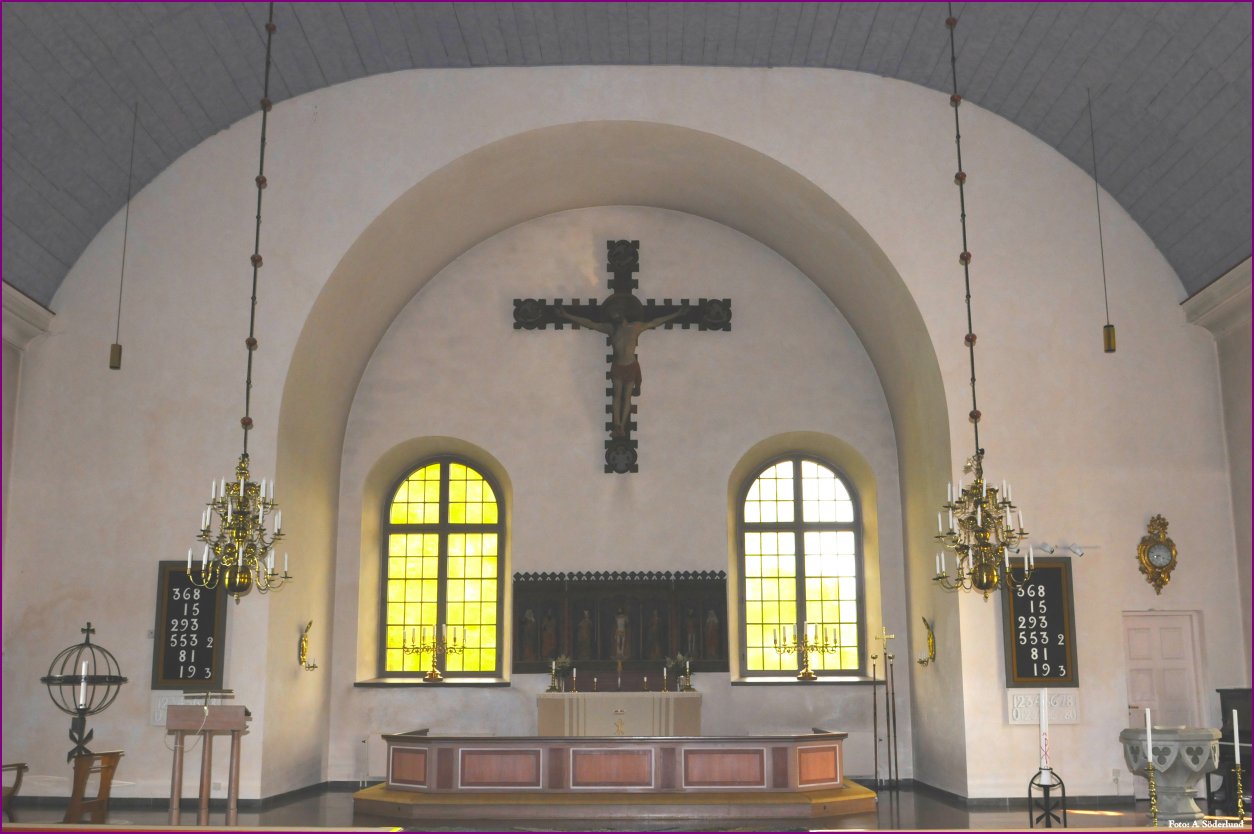
June 14, 2008
Hi, Leigh!
Last weekend Karin, I and Tassa went to our ancestors’ area in Torsås parish. We walked the same roads as our ancestors did in the 16, 17 and 18 centuries. We passed their farms which they cultivated for generations. The name of the village is Hallasjö. The attached photo shows where our ancestor was born in 1752. (Leigh-Wilbur-Almo-Olaus-Lars-Gertrud-Per). Per’s older brother (Nils b.1749) took over the farm. The house is rather old and has traces back to 18 and early 19 centuries. Our family could be trace back here to 1535. The first farmer was Holme Bildt (1535-1537), then Anders Bildt (1539), Lasse Bildt and Anders Bildt (1540), Anders Bildt (1543-1553), again Holme Bildt and Sone Bildt (1553), Holme Bildt (1558-1562) and Sone Bildt (1558). How the Bildt’s were related I dont know. But Holme Bildt was one of our ancestors. Holme Bildt was succeeded by his son Bonde Holmesson (a brother to our ancestor Jon Holmesson). Bonde Holmesson was a farmer in Hallasjö from 1569 to 1613. He was succeeded by his son Anders Bondesson. He was farmer from 1615 to 1652. He was succeeded by his son Bonde Andersson and who was the farmer from 1644 to 1660. Then his sons came Olof Bondesson (farmer from 1667 to 1673) and Håkan Bondesson (farmer from 1668 to 1671). Håkan Bondesson then became soldier and military boatswain. In 1669 he didn't need to pay tax, since he was a soldier. From 1667 there was another branch in the family who lived in Hallasjö. Their names were Lars Svensson and Kirstin Månsdotter. The farm was then divided between four of Lars Svensson’s children. On December 21, 1664, Lars Svensson so severly wounded a guy that he later died. I have an extended description of the whole case which I can send you. There will be more photos and information later.
Regards, Per
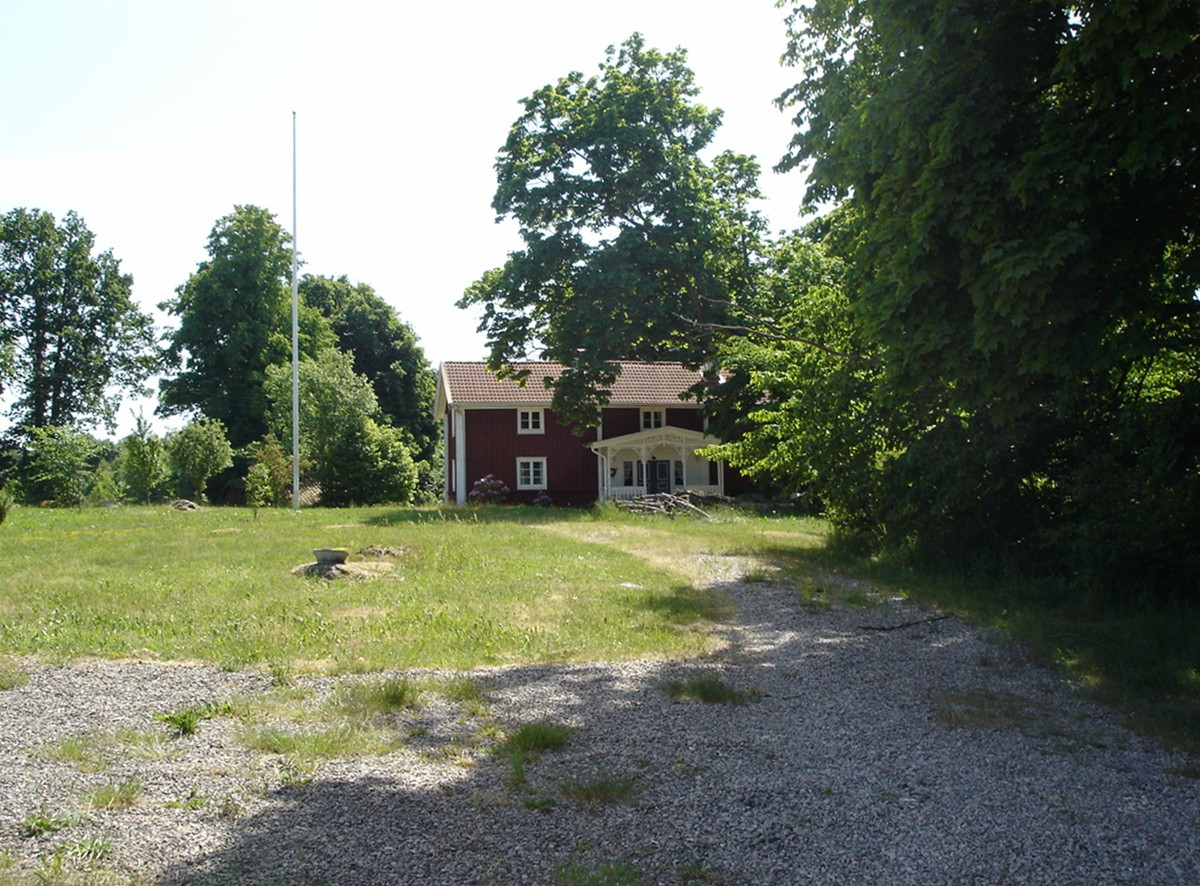
May 8, 2008
Hi, Leigh!
I was in Torsås and took some photographs, which might be of interest for you. The attached photo shows the church in Torsås, a place where some many of our ancestors and relatives have been at baptisms, funerals and weddings etc over the years. The church, as it looks today, was built 1777-1778. I have gotten in touch with a relative, Craig Freeberg, who had visited your website. He has some photos which you might find interesting. Have you been in contact with them?
Regards, Per
January 8, 2007
Hi, Amy, Beth, Bob, Dennis, Diane, Don, Durenne, Evan, Gary, Gordon, Jaime, Jan, Jenny, Jim, Judy, Judy, Laurie, Leigh, Lisa, Martin, Norman, Paul, Roy, Steven and Tom!
I am just going to share some old paintings showing how your ancestors lived around 1850-1900. Even though there aren’t any specific and named individuals in the pictures you can easily imagine that it could have shown your ancestors and relatives in Sweden during the period. I will very roughly describe the events. The first shows woover’s proxy. Sometimes the man looking for a bride sent a man (or in some cases a woman) to find a wife for him. This man (wooer’s proxy) went to farms and asked the girl’s parents for permission. It wasn’t necessary to ask her about her opinion. He was, in other words, a matchmaker. In this picture the matchmaker wears the glasses. The man that has sent him is sitting in the other room. The second picture shows the hay-making. According to the old rule the hay-making had to be finished on August 10. Then the rye harvest began. The third picture is the childbirth, a complicated process surrounded with many myths and different methods, which I can describe more detailed later. The midwife was a skilful and experienced woman who helped the pregnant woman. The fourth shows how the Swedes were dressed and how they drank coffee back in 1881. The coffee came to Sweden in the end of 17th century, but was prohibited 1756, 1766-1769, 1794-1796, 1799-1802 and 1817-1822. The reason was economics. They wanted to decrease the import, but the opposition was so strong that it in the end became ineffective and in 1822 the prohibited was cancelled and in the same century coffee was a widely spread drink.
Best regards, Per
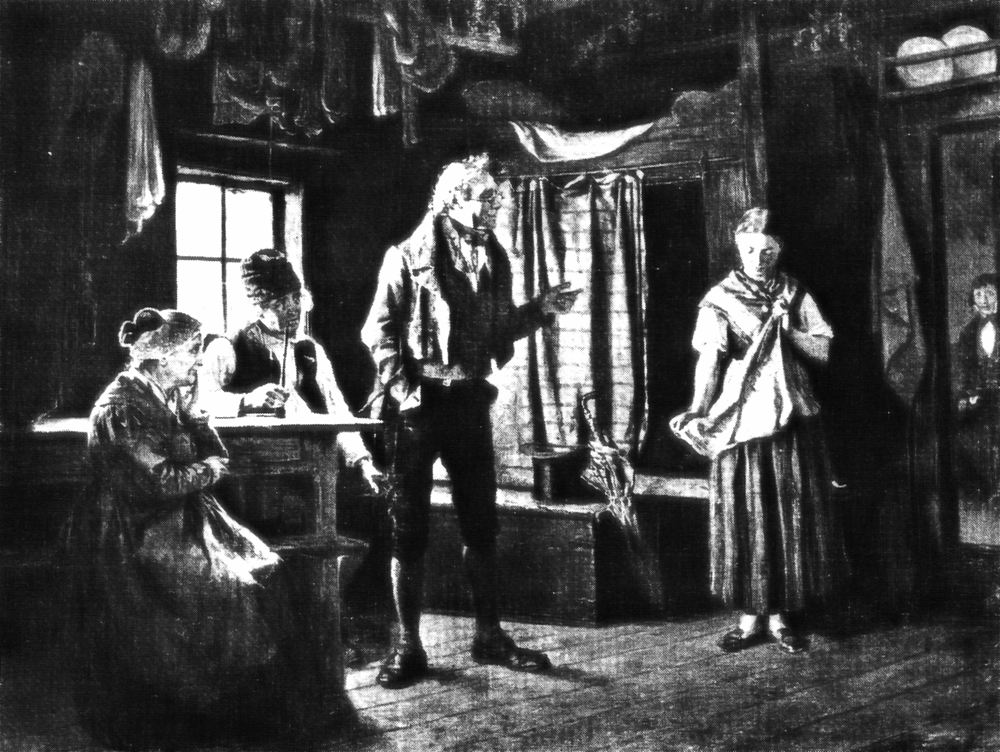
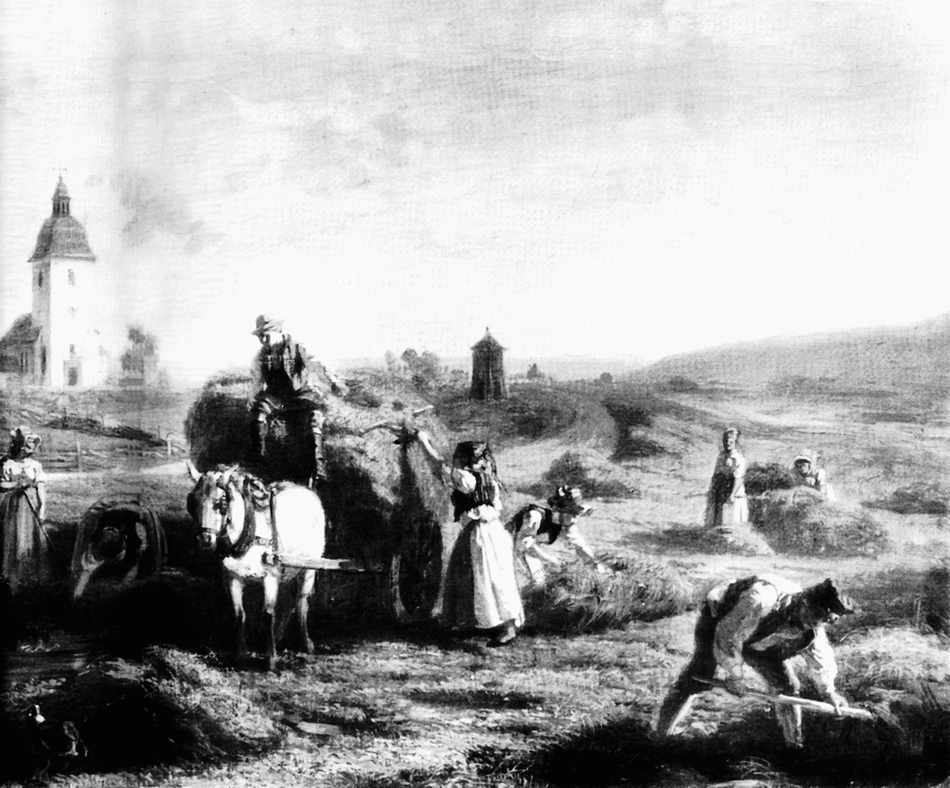
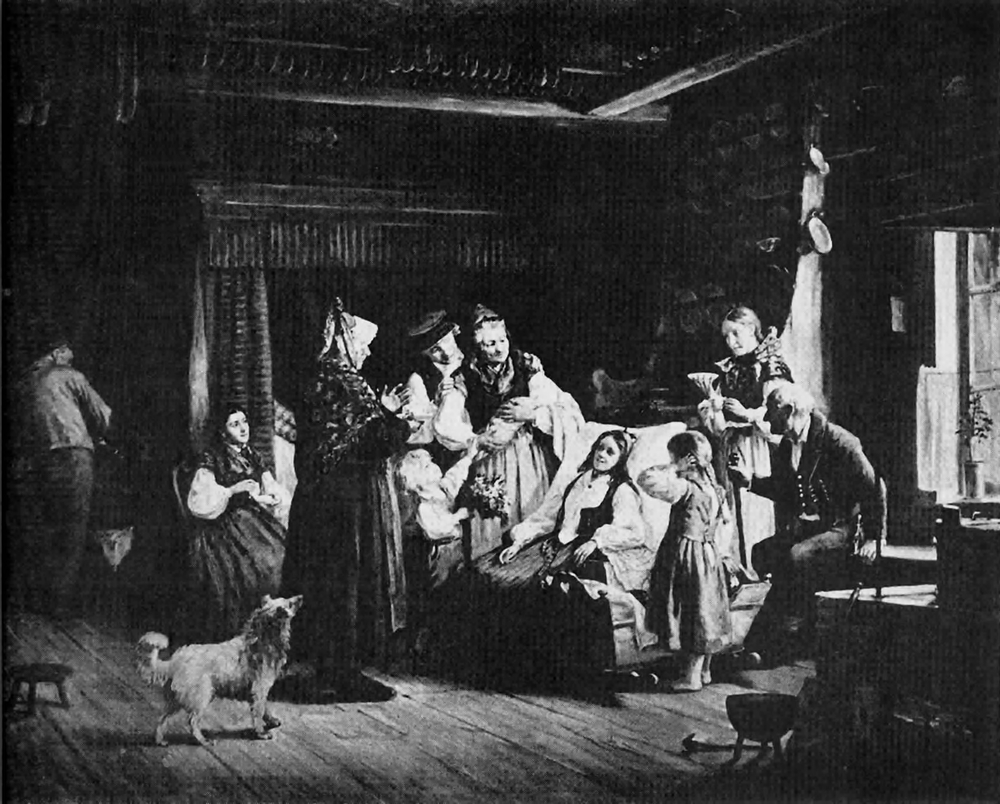
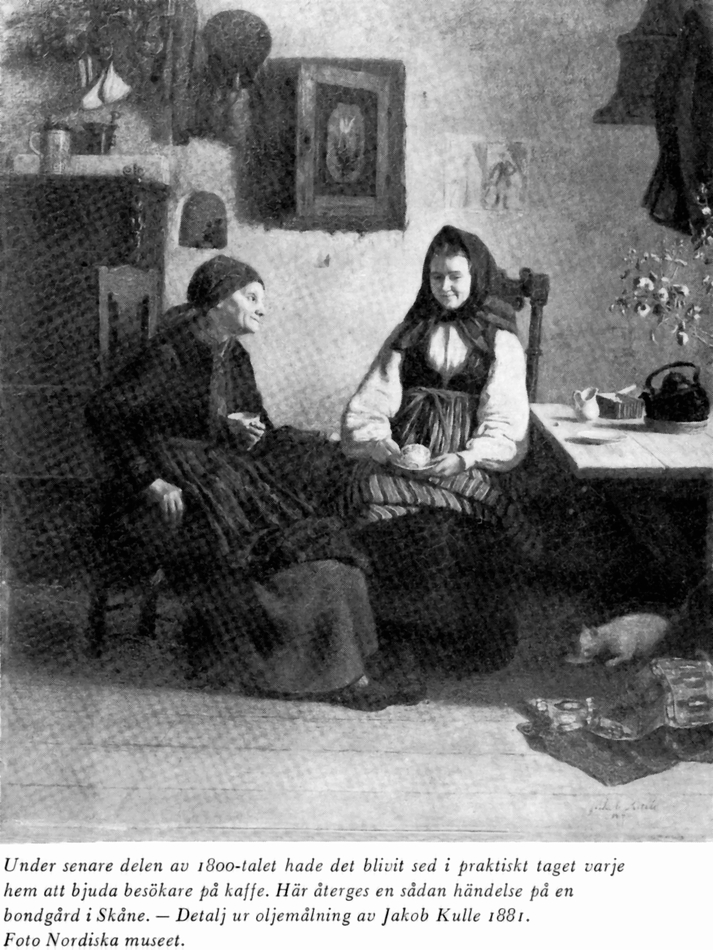
Here are some notes about how the life was for common Swedish people in the 16th, 17th and 18th centuries. I think it’s more valuable to be able to put the relatives in their historical context. But this is just a very short summary. The main source is Peter Englund's Ofredsår. It might also be translated to English, but the title is not available at this time.
Food. What did the ordinary people eat in the 17th century? They ate soup, porridge, gruel, peas, cabbage, turnips, berries and fish. Another important part of the diet was dry dark bread. It may have been baked every other month, made by rye or barley and in the best cases flavored with wort or fennel. Along with all this everyone (even the children) drank beer. Meat and light bread were considered to be luxuries. If they ate meat, it was often sprinkled with salt. There was way to preserve the food. In fact they preserved fish with salt, too.
Clothing. How were they dressed? The farmers wore simple, home made trousers and coats in rough homespun (or you may call it frieze and/or russet), which often was grey and thick sheep’s wool.
Family. Wedding and the family. When a child was born, it was often a matter for the immediate family. One example was when the child was to be baptized. The child was given a name to honor one of the dead ancestors. You can see it in your own family tree. For example, Lars Pehrsson was probably named Lars to honor his grandfather, Lars Andersson. Since there was no child welfare program, the grandparents took care of the child. To become accepted as an adult, the youths had to prove certain things. In several villages there were special stones that the young men had to carry or throw. They had to steer the plow or carry a sack of corn. In the next stage, after being accepted as an adult, it was time for marriage. Again, it was a matter for the family. Without any doubt the family played a role in deciding who was going to marry who, even though the church declared that the marriage was an agreement between man and woman. But in the 17th century love more and more played a bigger role. For the bride, the marriage changed a few things. Since she was married she had to cover her hair with a so-called “female hood”. Before marriage she could show her hair. It was forbidden for people who weren’t married to have any physical love. People were punished, either with whipping or fine, or in some cases both. Sometimes even worse penalties waited.
Death. It was a matter for the neighbor as well as for the family. The neighbors were responsible for the death knell and grave opening and followed the family to the burial and to the funeral feast. It was often magnificent, sometimes even elaborate. After this the heir and heiress decided together about what to do with the deceased’s belongings. We shall remember that until 1845 the women inherited only 50 percent of what the men inherited. But in 1845 they inherited equally. In 1858, an unmarried woman over 25 year could be "of age" after a court decision. If she got married she was again "under age". It was not until 1921, the same year that women were allowed to vote, that women were "of age".
Alcohol. The view of alcohol in the history. Servants had the right to take a dram. It was a glassful of Scandinavian vodka which was taken six o’clock in the morning, often on an empty stomach. At noon, it was not uncommon to take another dram. You can then understand that there were many drunken people in the country. In the mid 18th century, the countess Eva de la Gardie came upon the idea of making Scandinavian Vodka from potatoes. Before then it had been made from corn. We shall keep in mind that people made their own Scandinavian Vodka. In the late 18th century the government tried to stop home distilling, but they had to retreat. But as the year passed on something alarming happened in Sweden. The drinking increased in an alarming and uncontrollable extent. The population was close to “drinking themselves to death”. Home distilling was gradually forbidden, and to control the alcohol distribution the government created a state-controlled company for the sale of wines and spirits. To take even more control, the liquor ration book was introduced. It was used from 1914 to 1955. People had to make application to get the liquor ration book. After approval of the applicant’s order, thereafter he or she was given a large amount of alcohol to buy per month. Every purchase was registered in the book. If there was abuse of alcohol, the book could be withdrawn. Home distilling for household use, as it was called, was first forbidden in 1718 but was made lawful in 1731 for farmers if they paid a fee to the State. After 1776 it was forbidden from time-to-time. It was permanently forbidden in 1860. Today only people age 20 and over are allowed to buy liquor.
Religion. The church was very important for the people in Sweden. It was from the pulpit they got the news. In some cases the church was some sort of propaganda central for the State, especially in times of war. Sweden decided in 1593 to formally leave Catholicism and go over to being Lutheran. In centuries to come it was forbidden to have any other religion. People who practiced against this could be executed. The church was in sole control, but was an instrument for the State.
Military. When the enlistment in the early 17th century took place in the church, the state realized that it had to have some sort of control system knowing who could be of current for military service. That was the first step for the Swedish parish registration. In the early 17th century the State decided to reorganize the armed forces. In the 16th century the army had consisted of mercenary soldiers. Even though the soldiers were professional, there was a huge problem. It was expensive and cost a lot of money. The State realized it wasn’t worth it and they had to find other solutions. The solution became a domestic army. The soldiers were men over 15 years old, in the theory that there was no “top” age. So in principle all men over 15 years old could be enlisted. But in practice men between 18 and 40 were selected first. In fact, they didn’t choose all men. There was a system where out of ten men, one was chosen. This enlistment, which is not a good word since they didn’t get paid and they had not volunteered, took place in the church. But there were loopholes in the system. People, often rich people, could pay anyone to take their place in the armed forces. Many poor young men came this way into the army. People in general realized what the war meant...a sure death. There were people who wouldn’t accept this and escaped into the forests. They were considered to be outlaws and could therefore be killed. But those in the army all died on the battlefields that were sent to the far-away places where Sweden fought. Many soldiers died in the garrison stations. The hygiene was bad and diseases spread quickly and with devastating result and extent. Very few survived the wars. Conscriptions increased and more soldiers were sent to the front. But in the long run the situation became precarious. The State started to fill the gaps with mercenary soldiers again. Again problems came. The mercenaries were professional and skillful soldiers, but their only loyalty was money. If they didn’t get money, they didn’t fight. It wasn’t more difficult than that. Once again the State had to reorganize the armed forces. This time the solution was an army built on professional, domestic and volunteer soldiers. But again it wasn't 100 percent voluntary because vagabonds and the unemployed could be forced to join the army. Even so, it was more voluntary than before. In peacetime the soldiers were ordinary crofters. They had a crofter’s holding. It was regulated. The farmers living in the area, I think you will call it a "file", paid the soldier’s house. They paid reparations of the house too. In exchange the farmers didn’t have to enter the war. The same system existed for the navy’s personnel. But as the years passed by, the war changed step-by-step. The armies of the world became bigger and bigger. Napoleon the First created an army of compulsory military service. All-in-all, around 2 million men. Even though it took time, Sweden changed gradually from a professional army to an army like Napoleon’s. In 1901, Sweden formally went over to an army of compulsory military service. But for some decades before, young men did some sort of military service. I am convinced that your great-grandfather, Olaus Larsson, did too. But it came step-by-step.
This is just a a quick overview of life in ancient Sweden.
February 17, 2009
Hi, Leigh and Velma! How are you?
I have translated and copied some information about our
ancestors and relatives which shows that they according to the law back then is
some way acted like Al Capone during the Volsted Act, and I haven't even written
about the speakeasies placed nearby the churches that our ancestors attended. In
other words; more to come. Regards, Per
Al Capone and his fellows were no inventors of smuggling.
Our ancestors were involved 400 years before Capone and his gang. The Swedish
king Gustav Vasa tried to stop the trade in 16th century, but was unsuccesful.
The ancestors got more paid for the cattle in Denmark than Sweden, so they
brought their cattle to Denmark instead and sold it there. Vasa wanted them to
make business in Kalmar (Sweden) rather than Ronneby, Avaskär and Lyckå
(Denmark). It was a question of losing income for Sweden. But he also didn't
want Sweden to become depended on Denmark. Several wars were fought between
Denmark and Sweden. In 1658 at the peace in Roskilde the map changed. A couple
of Danish provinces became Swedish and the border was moved south. Lyckå,
Avaskär and Ronneby were now Swedish, but still the government were reluctant to
have a totally free trade (see below).
Nils Dacke rebellion in the 1500s was not a single proof
of Småland's despite against state power. Their despite resistance and
resentment lived on for centuries. The Age of Liberty (1718-1772) didn't change
the situation. Since Gustav Vasa's days it was strictly forbidden to trade in
the countryside. It was only selling its own products. It also had to buy
supplies for their own use. But it was only in the cities that it was
permissible to professionally do the buying and selling others' products. This
was something that strongly dismissed by the peasant. In return, it was
difficult to prosecute this illegal trade. Gustav Vasa said it was equally
difficult to "take all these buyers for the head", as capture all the wolves
which ran in the woods. In the 1740's the peasants were warned even from the
pulpit not to transfer any timber, such as timber, beams, boards and the like.
But apparently our relatives did not respond positively to the Church words and
admonitions, as they continued to bring their goods to Karlskrona. In November
1748 some farmers and a rural police chief were brought to trial. They were the
owners of three boats with illegal timber cargo board. Some of them had
delivered to trade man Paul Pihlgaard in Karlskrona, which in turn had delivered
to the Karlskrona shipyard for Royal Admiralty's behalf. In February 1749 the
proceedings resumed and the farmers who had delivered wood to Nils Petersson and
Carl Stensson's shipload were also at the trial. Including Lars Israelsson in
Törnemåla and Olof Andersson in St Skörebo. It emerged during the trial that
Carl Stensson and Nils Petersson was not the sole owner of the boat. One of the
owners above mentioned Olof Andersson, though not convicted in the trial.
Olof Andersson was our ancestor. Lars Israelsson was
brother to one our ancestors.
The Age of Liberty
When Charles XII. died, Sweden found itself
in a kind of political vacuum. Charles XII. had ruled from his camp. Unlike
Gustav Adolf, he did not delegate authority on ministers, but decided mostly
himself in a truly absolutist style. And so, government perished with him in
1718. Back in Stockholm were Baron Goertz, Charles XII. confidant, Ulrika
Eleonora, Charles' sister, her husband Frederik of Hessen, then Karl Fredrik of
Holstein-Gottorp, another candidate to the Swedish throne, and the Swedish
Estates (Riksdag). Ulrika Eleonora had the unpopular Baron Goertz arrested and -
after accepting a number of conditions - was payd homage by the estates. These
conditions limited royal power; they are regarded being a contract between
sovereign and people. Actually, power shifted to the Rigsrad which was
responsible to the estates. The period dominated by Rigsrad, the estates and
their parties is called Sweden's ERA OF LIBERTY (1718-1772). Two rival parties
emerged, the hats and the caps. At first, the older CAPS, a group around Arvid
Horn, dominated Swedish politics until 1738. They generally were pro-Russian and
pursued a policy of peace. From 1739 to 1765 the HATS, generally pro-French,
mercantilist and aimed to regain Sweden's status as a great power. From 1765 to
1765, it was the caps again, from 1769 to 1772 the hats again. The age of
liberty came into being, because the influential politicians in the estates -
foremost the noblemen - took advantage of the power vacuum which appeared at
Charles XII. death in 1718. There were several claimants to the Swedish throne,
and the estates, by paying homage to ULRIKA ELEONORA, were kingmakers. They
assured, that the future kings resp. queens would not rule absolute. The
privileges obtained by the estates limited royal power so far, that Sweden in
fact became what later historians described as an aristocratic republic . The
king's say in politics was limited. The crown was passed on frequently, and
every new king had to sign the estates' privileges before being paid homage.
During Sweden's age of liberty (a more contemporary expression), the country's
constitution was based upon the ideas formulated by ERIC SPARRE (-1600) : the
constitutional principle, the democratic principle, the bureaucratic principle,
the corporative principle, the secrecy principle. The constitution foresaw the
separation of the branches of government, with clearly defined responsibilities.
However, the corporative principle assured that only the property owning segment
of population, organised by estate, could participate in political decisions, a
principle which clearly favoured the nobility and clergy. The older caps (until
1738), aware of Russia's military power and Sweden's inferiority, preserved
peace. When the hats took over in 1739, they looked for an opportunity to
recover territories ceded to Russia in 1721. In the Russo-Swedish War of
1761-1743, the regiment from Dal had suffered extraordinary losses; here in May
1743 dissatisfied Dalecarls met and marched on Stockholm, demanding Prince Karl
Peter Ulrich to be crowned King of Sweden. They camped on a market aquare in
central Stockholm; violence erupted and the Dalecarls were suppressed. The
event, under the name of Store Daldansen (great Dalecarl dance), entered the
history books as Sweden's last peasant rebellion.
The wars showed that Sweden was too weak to defend itself without having a
strong ally. Foreign states interfered in Sweden's politics, the Russians and
English supporting the caps, the French supporting the hats - this support
included bribes. Sweden's politicians increasingly became dependent on foreign
subsidies, as an extraordinary source of income.
In 1766 the Riksdag enacted PRESS FREEDOM, which has been a pillar of Swedish
society ever since.
In the late 1760es Swedish politics underwent a transformation. Traditionally
the noble estate provided active leadership in Sweden's Riksdag (parliament). In
1772 the non-noble estates demanded that non-nobles and nobles alike should be
appointed to higher office only on their merits and capability, an affront to
nobility.
The last WITCH TRIAL in Sweden was held in 1720.
In 1774 the first Jewish family was permitted to take up permanent residence in Stockholm.
From Dick Harrison’s Jarlens Sekel, freely translated from Swedish to English
Wedding. Weddings were often held in the autumn since the food supply was the greatest after the harvest.
Some of us maybe believe that the stag party for the groom-to-be and the hen party for bride-to-be are quite new phenomena. But they aren’t. They have existed for centuries. In the 16th and 17th centuries, the bride was led by female friends to a bathing cottage, where they drank and had fun. After the bath they went out from the cottage, where the virgins were wearing wreaths in their hair. They ate the evening meal and some of the participants stayed the whole night together. Meanwhile, the bridegroom and his fellows feasted and sometimes it was a real roughhouse when the beer was abundantly flowing.
The climax during the wedding after the bride's journey, however, was the party. They ate and drank in huge amounts during the evening and night and the host's did their best so everyone had fun; so much fun that they would talk about the event for years to come, praising the good beer (or mead), and the fat meat. Between the turns, jolly dances occurred. One famous in all of Scandinavia was the so-called “stabbedansen”; where the bridal couple was placed in the middle of the hall and the guests were dancing all around them.
After all had enough partying, it was time for the end of the wedding and the most important part from a juridical perspective. The bride and the bridegroom were removed to bed. They marched or staggered to the “bride room”, followed by relatives and friends with candles and torches. Normally the woman and her company went first, then the man and his group. When the march was over and the couple safely had come together in the bed, the others returned to the party, which wasn’t over just because the leading figures had left the scene. All this was worldly and open. Beer drinking, jokes, gormandize and rough sexual illusions. The church had nothing to do with it.
Hi, Evan, Gordon, Leigh and Velma! Here comes more criminals and a brutal crime, where one of our relatives took part in. His name was Lars Olufsson. I will write more about him later, when he have finished translating all his crimes. Because he was a notorious criminal in the Torsås area in the 17th century.
Best regards, cousin Per
A great problem in 17th century was the many highwaymen and bandits who operated in the borderlands between Småland and Blekinge. Stealing, fights, killings and other crimes were frequent. Thick-skinned and indecent fellows who ranged in the forests committed these crimes. Such bandits were Anders Smålänning, Joan Styckie, Lowa-Jonn, Bastare-Håkan etc. Most notorious of them all were Håkan Trulsson (called Tjuva Håkan=thief Håkan) and Lars Olofsson (called Lönbo-Lasse).
In 1686, the Sunday after Midsummer Day, came Håkan Tyggesson together with Lönbo-Lasse and Tjuva-Håkan to Jöns Nilsson in Glosebo. But he was in the church at the moment, so they could easily fish pikes in the mere near to the farm. When Jöns Nilsson came home, they started to argue about the fishing earlier that day. Tjuva-Håkan and Lönbo-Lasse mingled in the fight, and Tjuva-Håkan went forward to Jöns and said that he (Jöns) had spoken badly about Tjuva-Håkan to the parson. Jöns denied that, but Håkan took a few steps back, raised the rifle and shot Jöns. The criminals fled from the scene of their crime, and the next day Jöns died.
Håkan Tyggesson was judged for the participation in the murder. But in front of judge he told a story of how the day of the killing of Jöns, had done innocent pleasures. Fishing of pikes and hunting wild-ducks. He managed to convince the judge that he was innocent. He was set free, but he was judged to pay fine for trade with stolen properties (another crime not related to the killing of Jöns Nilsson). Tjuva-Håkan was judged for the murder, but he managed to flee. Soldiers were sent after him, but it took nearly two years before the justice caught him up. In May 1688 Tjuva-Håkan visited Amund in Skälstången. Amund gave him food and Scandinavian vodka. When Tjuva-Håkan swaggered about all crimes he had done, Amund lost his temper and with an axe-head hit him twice in the head. Tjuva-Håkan died, but Amund wasn't charged for the killing. The legality in the killing of Tjuva-Håkan was never questioned.
Hi, Leigh! Thanks for the attached files. I have put in some in the data about Christina and August and their children. In fact I was in contact with Andrew Peterson, and he thought that August Norlin's first wife Louise was a sister to Christina. But I don't believe that, because I haven't found any evidence for that theory, and now on the pages you send me I saw he had written a John Anderson as Louise Norlin's father. Anyway, have you got in contact with Andrew Peterson? I haven't heard anything from Jörgen Danielsson yet. He wrote that he was busy this week, but that he at the end of the week will try to send some pictures. I look forward to see them. When I get them I will send them to you. Maybe it will take some time. I noticed you have changed a little bit on your homepage. Are you preparing for more picture of Wilbur Larson's offsprings? I have thought of a couple of questions, I want to ask you. Have Peter I:son Fröberg been in contact with you? I gave him the address to your homepage. But in fact I don't know if he has Internet at all. Then I wonder whether someone other Lars Pehrsson relative have been in contact with you. You had written the names of Clara Johanna Lewis and Henry Lewis, but still there were no information, only their names. I also notice that you haven't got all information of the crimes, so I send you the next part of "Lönbo-Lasse" crimes.
Best regards, Per
People was satisfied and calmed down when Tjuva-Håkan was executed. Earlier that year Lönbo-Lasse had also been condemned to death and was now in safe custody on Kalmar castle. They just awaited the court of appeal to ratify the death sentence. But they shouldn't be rid of him that easy.
His origin name was Lars Olsson/Olufsson. In his youth he served four years as a soldier. Even then he had stolen things and had to run the gauntlet six times in Vassmolösa. Later he joined the band of highwaymen, who lived in the forests. During a few years he had operated together with Tjuva-Håkan, who had been a loyal servant to him. The second intercession day 1686, they went to Anders Larsson in Buskabod, Fridlevstad. He was away on the morning service. Every man was in the church, so the thieves could operate undisturbed. A few women were left but Lasse and Håkan got rid of them by lock them up in a cottage on the farm. It was the hope chest they wanted. Håkan kept watch while Lasse in peace and quiet could take the expensive articles: 9 silver belt, 16 silver chains, 5 silver spoons, 2 silver rings, 2 pair of leather breeches, 10 chamois leather, 1 coat with silver buckle, skirts, shoes, trousers, sweaters, gloves, caps, various jewelry in silver etc. In "Danska Flyen" they unlawfully had taken silver and clothes, and in Elmbo, Konga jurisdictional district, they had stolen one silver spoon and on cheese, while the owner watched. But Lasse had much more than these crimes on his conscience, and the jury and the peasantry in Torsås and Vissefjärda parishes complained miserable about his and his fellow's indecent robberies, which filled the people with terror. But now he was jailed in Kalmar castle, in safe custody. They all believed.
The court of appeal changed the verdict, from death to run gauntlet twice and then work the rest of his life with iron collar in Marstrand. After he had ran gauntlet he managed to escape twice from those who should take him to Marstrand. Soon he was back in his home districts, but he didn't dare/risk to stay at his wife's house. Instead he lived in the forests between Lönbo and Glosebo. He hoped to get pardon from the king so he kept quiet for a year without making any people any hurt. There were many that were accused in front of the judge because they during this time had housed or given him food and drink. It was worst for Maria Persdotter in Öjebomåla who had let him in while the manservants tried to catch him. She denied, but was convicted when they found Lasse's coat hanging in her hall. Then she confessed that she had helped him escaped from the window when they sheriff entered. For her offence she was whipped. But it didn't take long time before Lasse was back in the game again. Six weeks before Easter in 1690, he met Ingier Åkesdotter in Långemåla in Tvings parish. She became a loyal companion. The day after Easter they went north on false passport. According to Lars the meaning was that he should get work in Kopparberget and by that save his own life. Outside Linköping they were caught and removed to Kalmar castle. In June 1690 pro tempore district court-session was held in Vassmolösa to hear Lars Olsson. The session continued in two days, during which Lasses whole register of his sins passed in review before a big public. Except for stealing, he was accused of various faults. In Kroksmåla while the people was in church, he had frightened the old man Jon Persson and his wife (who were at home and watched the farm) so they were forced to flee to the forest. Whereupon he undisturbed could grabb whatever he wanted. At Tygge in Skruvemåla, Gumme in Petamåla and Per in Hägemåla, he had stolen silver. In Torhult he had hit Per Germundsson, taken food and drink, barked on his wife and fired his rifle, so the wad had fallen on a maid carrying Per's child. Boatswain Hindrich Malm was hit with the rifle under the left ear.
A purse, which Lasse had when they captured him, consisted of silver (which had stolen from Johan Svensson in Långasjö). A leather purse contained with witchcraft articles, among these a snakehead, a fetal membrane, rowan, a raven heart etc. He had been given the things on the way to Marstrand, but he said that he didn't know what the purpose with the things was or the name of the man who had given him these things. It was illegal to devote to black magic.
Many people came to the judge and accused Lars for thefts, they believed Lars had done. Lasse answered them by saying they shouldn't accuse him for things he hadn't done. Lasse told that there were people who committed crimes. He continued to say that Per Löf's wife in Bungamåla, had asked him to get her arsenic to kill her stepson. Lasse also knew what Gertrud Jonsdotter in Stålberg should mix in the drinks to get rid of an uncomfortable witness. Lars Olsson was exorted consider his eternal souls blessedness and truthful confess what more he had done those years he spent in the forest. But he claimed that he had nothing more to admit and applied for pardon. The Judge for second time condemned him to death. This time the sentence was carried out. He was hanged October 1, 1690.
SOURCE: Laurentius Larsson
Date: Sunday, November 05, 2006 1:59
PM
Hello, Evan, Gordon and Leigh!
How are you? I’ve written before about changes when it comes to
the names in the family. Olaus Larsson kept his name but some of
his brothers didn’t. Gustav Larsson wasn’t the only in the
family who changed name. He had two brothers (Peter and Sven)
who also did it. I’ll provide you with some information about
the family that you might find interesting. Sven changed his
name from Larsson to Freeberg. Sometimes when people are
changing from one name to another its because they want to
escape from something, in some cases – the police. To the best
of my knowledge this wasn’t the situation when Sven decided to
use Freeberg instead of Larsson. But not every one of Sven’s
ancestors had followed the law. One of your ancestors Karin
became widow (around) 1650. She moved to her daughter Gertrud
who lived in Rödeby parish. At that time it was Denmark (since
1658 Rödeby belongs to Sweden), but Gertrud died in 1652. Then
Karin decided to move back to Sweden and to the place that she
lived before she went to her daughter. She was then accused of
smuggling her cattle across the border. I don’t know the
verdict, but the relations between Denmark and Sweden was, at
the time, pretty complicated. It was peace, but it didn’t change
much. Denmark and Sweden were archrivals, seldom allies. But
nothing last forever, between 1657 and 1660 Denmark and Sweden
fought a war against each other. The border area was hard
affected not so much of the regular troops but the paramilitary
units. Torsås (where our ancestors lived) was situated at the
border to Denmark. People like Karin always had the war threat
hanging over them, but still life had to go on. Suddenly the
peace could change into war and they had to choose between stay
at the farm (and hope for the best) or hide in the forest. It
was peace again, between 1660 and 1675, but when Karin died in
1676, there was another war between Denmark and Sweden. When she
died she was described as “an old lady”. She was, as far as I am
concerned, not a victim of the war, but most likely by old age.
But wars weren’t the only problem for our ancestors. Between
1695 and 1697 there was a devastating failure of crops. There
was a long and cold winter which stopped the sowing right until
midsummer. The rest of the summer became cold and rainy and the
night frost came early and ruined the small harvest that they
had hoped on. People died on their farms and on the roads. They
have estimated that 100 000 people died as a consequence, it was
10 % of the Swedish population. In Finland, which belonged to
Sweden from around 1100 to 1809, nearly 1/3 of the population
died. The infant mortality was extremely high during the period.
It never rains but it pours. In 1700 and to 1718 Sweden was in
war, at the same time, with Denmark, Poland and Russia. Between
1710-1711 the plague hit Sweden, and 1716-1718 there was a new
failure of crops. The exact figure is impossible to tell, but in
1697 (according to one source) Sweden had 1 363 000 inhabitants
and in 1718 1 205 000 inhabitants. Its an reduction of 158 000
people. According to one estimation only the plagued killed 100
000 people; for example 1/3 of the population in Stockholm died.
But many of our ancestors and relatives also died because of the
plague. A doctor, named Magnus Bromell, suggested people to “mix
fresh cow dung with vinegar and
then press the sap from it and drink it to some bowls of a
spoon”.
If I shall return to where I started this email, the name Freeberg was probably inspired by the home village Fröbbestorp and Sven’s brother Peter Fröberg. This Peter Fröberg studied at upper secondary school, which at that time was unusual for children whose parents were farmers. Maybe his father wanted to show the rest of the community that he was in cash. Peter Fröberg worked at the county sheriff’s office (and for eleven months as county sheriff), then later at the auctioner’s office, the post office and county secretariat. On November 21, 1868, he became prosecutor in the Swedish navy at one naval base in the city of Karlskrona. At his spare time he was also a barrister. I have attached a picture of Peter Fröberg, which I have received from his great grandson Peter I:sson Fröberg. I don’t know from where Gustav took his name, but there was certainly nothing that had anything to do with his home district in Sweden. Maybe he just “grabbed” a name that happen to pop up in his head. Here its pumpkin time, but we have a Swedish tradition that is much older than Halloween. This weekend is ornamentation of graves. We have been doing this in Sweden for almost 50 yrs, before that the ornamentation took place on Christmas instead. You can see lights placed all over the cemetery. It’s beautiful in the evening. I have found out that it might not have been a coincidence that you served in the military. Our ancestors belonged to the Löf family. One of our ancestors was Hans Larsson Löf. He must have been born around 1510 and was farmer between 1535 and 1575. His widow cultivated the farm in 1578. But as the society looked back then the names of the women were seldom mentioned in the documents, so we don’t know her names. Anyway, a couple of their descendants were soldiers in the Swedish army in the end of 16th century and early 17th century. One (Lars Svensson Löf) was a cavalryman, another (Oluf Svensson Löf) was a foot soldier (armed with a pike). Lars Svensson Löf served in the military between 1618 and 1619, and then in 1624. Oluf Svensson Löf was in the military from 1623 to 1624. Sweden was in the 1620’s engaged in war in the Baltic States. At the time Latvia was a part of Poland-Lithuania. Sweden was successful in the war and in 1629 (the armistice in Altmark, Poland) Latvia became Swedish.
Best regards, Per
Hi, Evan, Gordon and Leigh!
The house and work take up much of my time, but don’t think I have forgotten you. I haven’t.
How are you? I have attached material about your heritage in southeast Sweden. I have tried to sum up some of the extended material that I have. There’ll be more to come, but it takes time to translate.
Regards, Per
Torsås church
It was built around 1250. It was a dramatic and violent period in southeast Sweden’s history. The coastal area was hard affected by Estonian pirates and churches at the coast were built from both a religious and defence perspective. They were called ”defence churches”. The material was stone. In some area the church was the only building made by stone and the purpose was to rescue the whole surrounding population if the enemy came. But Torsås church has going through changes over the years. There was a conversion in the late 17th century. Our relatives took part in the renovations. One of them worked with the roof. Other contributed economically. Radical changes were made 1777 to 1778. Attached is a drawing from 1749 showing what the church looked like back then. There is an altar screen from the 1470’s.
The church was the key place in Sweden in the 16th, 17th, 18th and 19th centuries. This was the State’s propaganda central. They used the priests as their megaphones. They were especially necessary in turbulent times, when Sweden was in war etc. In some of the churches there were loopholes as well.
Southeast Sweden, where our ancestors lived, was for centuries a battlefield. Wars and civil wars replaced each other. There was a civil war 1542-1543 and a war 1563-1570. That war was devastating for the population in southern Sweden. Around 5 000 farms were and some cities had been affected. When our ancestor Sveno Nicolai (Sven Nilsson) came to Torsås in 1566 the vicarage was ravaged. Sven Nilsson was born in 1540 in Stora Väcklinge, Reftele parish. He was married to Unknown in 1579. Maybe her name was Sigrid. I don’t know anything about Sven Nilsson’s background before he came to Torsås in 1566. I can only assume that his father was a priest, a wealthy farmer or maybe nobility who could afford sending his son to education, in Sweden or maybe even France or Germany. As other priests Sven Nilsson changed his name to sound more Latin. Sven became Sveno and Nilsson became Nicolai. It was very common among priests in Sweden to do so. From that we can draw the conclusion that his father’s first name was Nils. We can further assume that he must have been born around 1510. Sveno Nicolai was born in a borderarea to Denmark. Reftele parish, as well as Torsås, had also been hard affected by wars and civil wars, so he was probably used with what he saw when he came to Torsås. But even if his starting position, from an economical perspective, wasn’t good he managed to make a small fortune within a couple of years. In 1571 he was the wealthiest man in Torsås parish and in 1574 he was a member of the Swedish parliament. He attended the queen’s funeral in Uppsala 1584. For that he got tax relief. In 1593 in Uppsala he signed the document that officially made Sweden Lutheran.
In the Kalmar war, fought 1611 to 1613, the entire Torsås parish was burned down. The population was forced to spend the winter in the forest. Kalmar castle, a key in the Swedish defence system, was occupied by Danish forces. Kalmar was burned down too. Wars, as all wars now and then, were brutal. The Kalmar war was no exception. The Danish city of Kristianopel was invaded by Swedish forces on June 26, 1611. Not much to brag about but it appears as at least one of our relatives/ancestors played a leading role in that military operation. The Swedes blew up the gate with a petard (which was an explosive charge that was hanged on fortress gates) and pressed into the city. The Danish army woke up under confusion and was soon wiped out. Only women, children and other “defenceless people” were spared. After that the city was plundered. Big stores and supplies and a huge war chest fell into the hands of the Swedes. As a La Grande Finale the city was then burned down (including the church). Kristianopel existed as a city between 1599 and 1677. The Swedes finally destroyed the city in 1677 in another war with Denmark. In 1606 there was 700 people (1/3 was Danish soldiers) living in Kristianopel. The city had been built on an island surrounded by up to 9 metres high walls. Some of the walls are still there in Kristianopel.
Kristianopel replaced Avaskär. Avaskär was a medieval Danish city which was plundered and burned down by the Swedish on September 15, 1563. Avaskär was also important for our Swedish ancestors. They brought horces, butter, hides and bullocks to Denmark, because they got better paid for them there than in Sweden. There was a huge demand for these products in Denmark. Stock farming was Torsås’ principal industry back then. Avaskär is mentioned, first, 1350. Around 1540 Sweden had 1 000 000 people of whom 90 000 lived in Småland (the province where our ancestors came from). Most of them lived on the 12 000 farms in the province. There were big differences between the farmers. Of the 12 000 farms about 30 % was cultivated of tenant farmers with the exception of the southeast part of the province. There were instead the tenant farmers in majority. Because of the increasing population the competition about available state- or nobility tenancies was tough. The price for hire forced up the price. They who where hardest affected were the small farmers in the wooded districts. In the social pyramid there were even people under the small farmers and in the bottom of it were servants and the crofters. The flat country’s villages could consist of up to 20 farms. Some of them contained between 12 and 15 acres. They cultivated mainly barley and rye. The arable lands, outside the flat country, were small and stony and seldom went beyond 3 acres. There were also woodlands which were grazed by the cattle. Småland, alone, stood for ¼ of Sweden’s “herd of cattle”. They fed up beef and milk was import in the diet. A cow, however, was not bigger than a fattened year-calf today. There were also many laws for our ancestors to follow. They weren’t allowed to cut down oak and beech or hunt moose, roe deer and red deer. But poaching was at the same time common. A wounded roe deer costed one ox in fine. Another important duty was beer brewing. A daily consumption could be 3 litres.
The people on both sides of the border didn’t care much about the nationalities. For them it made no difference whether they were Danes or Swedes. They married each other and they warned each other if the war was coming etc. They traded with each other. There were so many similarities between them. The only thing that separated them was that they had separate capitals. But the Swedish king, Gustav Vasa, wanted to control the trade. From 1526 oxes and horses were not allowed to be sold in Denmark. The merchants were forbidden to make business with the farmers in the rural districts. The Torsås area had, before Gustav Vasa became king, been wealthy. The wealth was built by extended cattle breeding. From horses and neat cattle they got by-products as hides and tallow. At the same time they had tar and lumber from the pasture. The people in the Torsås area didn’t pay much attention to Gustav Vasa’s laws. They continued the trade. The ox- and horsetrade were punished with the death penalty, but since the trade apparently was extended (maybe the whole population in the area was involved) Gustav Vasa changed the penalty in 1541. Instead the criminals had to be a fine. Gustav Vasa suspected that some of the men who were to control this trade were corrupted. He thought them to be wealthier than they should have been.
September 8, 2018
Hi, Leigh!


How are you? I have attached photos from the village Hallasjö, Torsås parish, where our ancestors came from.
Regards, Per